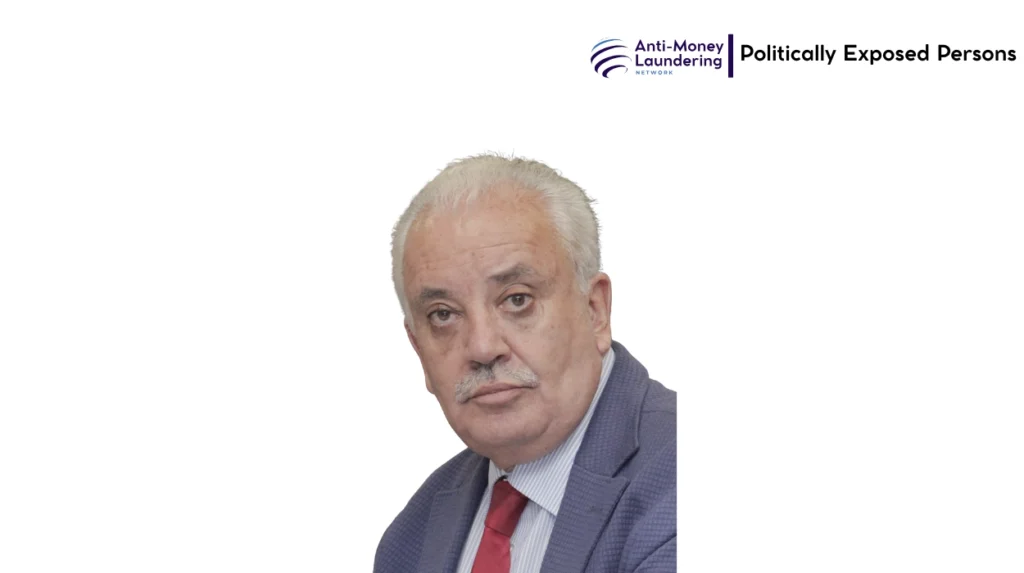
Galo Chiriboga is an Ecuadorian lawyer, politician, and long‑serving high‑ranking official whose career spans oil‑sector governance, labor‑and‑energy ministries, diplomacy, and top‑level prosecutorial power. Known both as an oil‑sector administrator and as a top legal authority in Ecuador, his trajectory reflects the ways in which political, energy, and judicial roles intersect in Latin American republics.
Over decades he has held positions as a petroleum minister, Petroecuador president, labor minister, government minister, and national attorney general, placing him at the center of Ecuador’s economic and legal architecture. At the same time, recurring corruption allegations, offshore‑linked real‑estate transactions, and controversies around asset‑disclosure have woven his name into broader debates on political transparency, financial‑crime risk, and the protections available to senior public officials in Ecuador.
Early life and background
Galo Chiriboga was born Galo Chiriboga Zambrano on 21 de mayo de 1950 in Cuenca, Azuay, Ecuador, a historic university city in the southern Andes. His place of birth situates him within a region long associated with legal professionalism and public‑service elites, both of which would later shape his career trajectory. Public biographies note that his family has ties to influential political networks, including indirect kinship links to former president Rafael Correa, although such ties are rarely foregrounded in official CVs.
These extended‑family connections have, in analysts’ accounts, subtly underpinned his mobility between ministries, embassies, and prosecutorial‑office roles across multiple presidential administrations, illustrating how Ecuadorian state‑elites often rotate through powerful posts within a relatively small, overlapping network.
Chiriboga’s education followed a classic pattern for an Ecuadorian jurist destined for high office. He earned a doctorate in Jurisprudence from the Pontificia Universidad Católica del Ecuador (PUCE) in Quito and later pursued multiple postgraduate‑style credentials in public‑sector management and specialized law.
These include a master’s‑level degree in Administration from the University of Strasbourg in France, a specialization in labor law from the Universidad Central del Ecuador, training in financial and securities law at the Universidad Andina Simón Bolívar, and an additional expertise‑track focused on contracts and public‑works disciplines at the University of Salamanca in Spain.
Together, this academic‑portfolio affirms his profile as a technically grounded lawyer with strong international‑governance literacy, which helped qualify him for ministerial, diplomatic, and prosecutorial‑office appointments. His religious practice, private convictions, and spiritual identity are not prominently documented, in line with many Ecuadorian politicians who foreground legal‑and‑state‑functions over overt religious‑display.
Personal life and family
Little explicit detail exists on Galo Chiriboga’s private‑family structure, but his spouse plays a visible role in one of the most public controversies tied to his offshore‑linked assets. Press reporting on the Tumbaco‑house dispute repeatedly references his wife as the co‑beneficiary behind a Panamanian shell company used to re‑title a suburban Quito‑area residence, an episode that later fed civil‑appropriation‑style allegations and credibility‑questions about undeclared property.
The case illustrates how spouses and extended families become functionally embedded in PEP‑risk‑narratives, even when they do not hold formal public office themselves. Beyond his spouse, public sources contain almost no reliable information about adult children, their occupations, or their possible offshore‑linked holdings, underscoring the opacity typical of elites’ private‑sphere finances.
A more speculative area concerns his net‑worth trajectory across decades. No robust, court‑backed estate‑assessment or independent asset‑reconstruction has been published that would allow a precise dollar‑denominated valuation, yet contextual hints emerge from different quarters.
The real‑estate dispute in Tumbaco, involving a sizable plot and spacious residence, suggests a housing‑portfolio far above median Ecuadorian standards, while legal‑and‑state‑level compensation for former ministers, ambassadors, and national‑level prosecutors typically generates upper‑middle‑income flows rather than megayacht‑level wealth.
When combined with reports that he deployed an offshore‑oriented Panamanian company, the overall picture points toward accumulation patterns that fall short of extreme oligarchic‑style accumulations but exceed what would be expected under fully transparent, fully disclosed, public‑salaried‑career models.
His citizenship is Ecuadorian; like almost all Ecuador politicians of his generation, he has no documented dual‑nationality profile, yet the use of a Panamanian entity to hold Ecuadorian‑soil real estate exemplifies how domestic‑citizen‑elites can still operate within a transnational‑financial‑infrastructure‑layer that complicates effective oversight.
Career and achievements
Galo Chiriboga’s professional journey can be parsed into three broad phases: early‑sector technical‑management posts, mid‑career ministerial‑and‑diplomatic roles, and a late‑phase turn toward prosecutorial authority. Across these phases, he consistently appears as a problem‑solving technocrat: comfortable in legal‑drafting, regulatory‑adjustment, and international‑cooperation modalities, yet embedded deeply within an Ecuadorian political context that at times blurs the line between professional‑merit appointments and politically contiguous loyalty‑tests.
His cumulative service under presidents Alfredo Palacio and Rafael Correa indicates not only longevity but also adaptability, and the fact that he occupied both regulatory‑sector and general‑state‑prosecutor roles renders his commentaries on corruption, transparency, and legal‑reform perennially capable of being read as both reformist and self‑protective, depending on the audience.
One of his first domain‑defining appointments came when he was named president of Petroecuador under Palacio. Petroecuador, Ecuador’s state‑owned oil‑marketing and coordination entity, sits at the heart of the country’s hydrocarbon‑revenue machinery, and leading it places one in direct contact with export‑contract negotiators, foreign‑oil‑partners, tanker‑charterers, and domestic‑fuel‑distributors.
His tenure in that position constitutes the core of his reputation as an oil‑sector administrator, shaping how much control the state asserted over upstream‑production‑shares, refining‑purchase‑agreements, and distribution‑margins during his years at the helm. As Petroecuador president, he engaged with questions of fuel‑pricing, tax‑concession adjustments, and debt‑management in a sector that would later become central to high‑profile graft‑scandals, including the Odebrecht‑related investigations that swept Latin America after 2015.
To this day, analysts sometimes reference his Petroecuador chapter as emblematic of a pragmatic, revenue‑oriented management style rather than ideological‑statism, but critics occasionally point to gaps in transparency‑mechanisms that would have let tighter public‑and‑judicial‑scrutiny into contract‑terms and profit‑flows.
From that sectoral‑management base Chiriboga transitioned into ministerial oversight roles, first as labor minister and later as an internal‑affairs‑style government minister under Palacio. As labor minister, he dealt with collective‑bargaining frameworks, employment‑law‑reforms, and safety‑regulation‑adaptations, work that positioned him as a key interlocutor for union‑leaderships, employers’ associations, and international‑labor‑standards‑watchdogs.
As government minister, his responsibilities in internal‑affairs‑type domains ranged from public‑order‑coordination and civic‑registry‑functions to liaison with national‑security‑related institutions, an assignment that gave him a panoramic view of how state‑power and citizen‑control mechanisms intersect. These portfolio‑rotations reinforced his image as a versatile public‑administrator with an appetite for complex‑bureaucratic‑machines yet no clear demotic‑populist persona.
Instead, his tone has typically favored formal‑legal‑rationale, institutional‑proceduralism, and incremental‑adjustment over ideological‑theatricality.
Under Rafael Correa, Chiriboga’s career took a different yet complementary direction. He served as minister of petroleum and mines, a post that placed him at the heart of Ecuador’s Citizens’ Revolution‑era resource‑nationalism agenda. Correa’s administration sought higher state‑take revenues, renegotiated contract‑terms, and expanded state‑regulatory‑power over multinationals operating in Ecuadorian‑oil‑fields and mineral‑concessions; Chiriboga’s role was to execute that revised policymaking‑script within the petroleum‑and‑mining‑sectoral‑architecture.
In this capacity, he shaped energy‑policy levers such as royalty‑rates, cost‑recovery‑mechanics, and upstream‑investment‑incitement tools, while simultaneously managing diplomatic‑friction that arose whenever foreign‑investors accused Ecuador of contractual‑instability. For some observers, his petroleum‑ministry period signals assertive‑state‑capitulation‑resistance; for others, it hints at a broader contract‑architecture in which opaque‑bonus‑structures and deferred‑compensation‑vehicles partly disguised transaction‑costs while still limiting genuine sectoral‑accountability.
Beyond the cabinet‑room, Correa appointed Chiriboga as Ecuador’s ambassador to Spain, a dual‑track‑assignment that married formal‑diplomacy with de facto‑legal‑advising functions. In Madrid, he advanced bilateral‑energy‑dialogues, investor‑confidence‑oriented messaging, and diaspora‑engagement programs, but he also reportedly continued acting as an informal legal‑counsel to the Correa government on matters that ranged from debt‑registry‑litigation to overseas‑asset‑structuring.
His success‑story‑highlight in that season was a civil‑case victory against Banco Pichincha over a disputed national‑central‑debt‑registry listing, a win his supporters often invoke as evidence of his technical‑motivation rather than primarily politico‑clientelistic‑motive. Yet opponents counter that such victories, however technically sound, also had the effect of shielding the administration from reputational‑costs without necessarily triggering transparency‑enhancing‑corrections in the conduct of underlying economic‑agents.
In sum, the ambassadorship exemplifies how cross‑jurisdictional‑legal‑expertise and state‑representational‑capacities can be mutually reinforcing for figures like Chiriboga, whose identity oscillates between jurist, public‑servant, and unofficial‑strategic‑advisor.
Oil, energy, and economic‑policy roles
If one were to summarize the most economically consequential segment of Galo Chiriboga’s Ecuador career, it would center on his time in hydrocarbons‑sector leadership: first as president of Petroecuador and later as minister of petroleum and mines. Petroecuador, as Ecuador’s national‑oil‑company‑adjacent entity, operates at the fulcrum of the country’s fiscal‑plumbing system, because most crude‑export‑revenues and most refinery‑margin‑taxes transit through its commercial‑and‑regulatory‑scaffolding.
Steering that institution requires not only commercial‑acumen but also political‑navigation capabilities, because the government‑owned‑firm exists as both a statutory‑commercial‑actor and a state‑policy‑implementer. During his Petroecuador presidency, Chiriboga confronted a commodity‑cycle that bottomed periodically, forcing constant recalibration of pricing, hedging, and renegotiation‑strategies with international‑oil‑trading‑houses.
Some technical‑evaluations credit him with stabilizing domestic‑fuel‑supply‑flows during periods of market‑strain, while others fault him for not building stronger auditing‑and‑monitoring‑mechanisms that could later have impeded contract‑kickback‑type arrangements that dogged later administrations.
As petroleum and mines minister under Correa, his policy‑framings edged further toward assertive‑resource‑nationalism, echoing broader Latin‑American‑regional‑trends of the 2000s. His portfolio involved tweaking royalty‑schedules, re‑architecting bidding‑processes for new concessions, and overseeing environmental‑impact‑frameworks around upstream‑activity.
Some analysts draw a sharp distinction between a “technical Chiriboga” concerned with legal‑consistency and a political‑machine that used sector‑regulation as a leverage‑tool, while others argue the distinction is artificial in contexts where malleable‑regulatory‑instruments are wielded deliberately to reward allies and marginalize critics.
In either reading, his tenure coincided with one of the most intense resource‑policy‑renegotiation‑periods in Ecuador’s recent history, underscoring how energy‑policy decisions made by oil ministers ripple through fiscal‑space, foreign‑investor confidence, and social‑sector‑funding levels.
Observers of Ecuador’s energy‑policy evolution sometimes trace a subtle but discernible flavor of continuity in both shape‑and‑substance across his Petroecuador‑presidency and his petroleum‑and‑mining‑ministry years. In both positions, he appears to have favored: state‑level‑enhancement of negotiation‑leverage, gradualist rather than radical‑contract‑overhauls, and strong‑legal‑justification‑as‑shield against jurisdictional‑challenges.
This helps explain why he was later rehabilitated—after a period of distancing from the Correa‑retinue—into prosecutorial‑office leadership, because presidents seeking “technocratic‑credibility‑plus” while maintaining political‑dependence have historically found such figures attractive.
The flip‑side to this continuity‑reading, however, is that reform‑logics prioritizing transparency, competitive‑bidding‑enhancement, and independent‑oversight often remained cautious or partial, leaving vulnerabilities in contracting‑architecture that later crises would expose.
Corporate‑oversight, justice‑role, and attorney‑general tenure
The pivot that most complicated Chiriboga’s legacy came in 2011, when he was appointed fiscal general del Estado, succeeding Washington Pesántez as the national attorney general. This elevation placed him at the helm of Ecuador’s prosecutorial‑apparatus during a period when cross‑border‑financial‑scandals, including the Odebrecht‑related graft‑web and the Panama‑Papers‑style offshore‑leak‑episodes, began reshaping how global‑jurisdictions imagined financial‑crime‑risk and anti‑money‑laundering enforcement.
As fiscal general, he oversaw a sprawling institutional‑chain responsible for civil, constitutional, and sometimes criminal‑prosecutorial‑functions on behalf of the Republic, and his public‑statements frequently emphasized the importance of international‑legal‑cooperation, mutual‑legal‑assistance‑agreements, and digital‑evidence‑sharing‑frameworks.
In formal‑source recountings, his attorney‑general phase is embedded within narratives of modernization: the creation of specialized‑financial‑investigation‑units, the upgrading of cross‑border‑information‑exchange‑infrastructure, and the use of international‑partner‑judicial‑networks to chase fugitive‑assets.
Yet, from alternative‑perspectives—especially among civil‑society watchdogs and opposition‑aligned commentators—this same period is often depicted as one of constrained accountability. Critics argue that while Chiriboga pushed for more rigorous‑tools on paper, execution‑rationales remained politicized, with investigations against political‑allies prioritized differently than those targeting opponents.
The attorney‑general role, in this critical‑reading, allowed him both to claim advanced‑anti‑corruption‑reform and to remain institutionally insulated from aggressive‑probes into his own prior‑sector‑exposures. That interpretive‑tension mirrors wider regional‑debates on whether prosecutors‑in‑presidential‑or quasi‑presidential‑systems can ever function as fully autonomous watchdogs, particularly when they rise from within the same network‑environment they purport to regulate.
In this light, Chiriboga’s attorney‑general chapter stands emblematic of a particularly Latin‑American‑style governance‑dynamic: strong‑legal‑arsenal‑building, weak‑both‑sides‑enforcement.
His prosecutorial‑leadership era also coincided with intensified scrutiny of state‑enterprise‑mismanagement and cross‑sector‑contract‑corruption, extending beyond pure‑energy‑policy matters into infrastructure‑and‑service‑sectors. Global‑investigative‑projects and regional‑judicial‑initiatives exposed multilayered‑bribery‑maps that traced from engineering‑firms to governments‑to‑transnational‑banking‑infrastructures, and Ecuador’s Odebrecht‑related‑episodes became case‑studies in institutional‑weakening and favoritism‑enabling.
Within that broader climate, Chiriboga promoted Ecuador’s participation in coordinated‑legal‑responses and pressured other states to reciprocate investigative‑requests, sometimes pointing to mutual‑legal‑assistance‑treaties as both shield and sword.
But repair‑mechanisms often stopped short of structural‑overhauls in how contracts were originally written, how guarantees were valued, and how executives were vetted, meaning the environment‑of‑temptation remained largely intact. For anti‑corruption‑activists, this pattern resembles a recurring Ecuadorian‑edition of “technocratic‑modernization‑without‑ethical‑hardening,” where digital‑tools and international‑technical‑standards drape themselves over weak institutional‑backbones.
Offshore‑structured‑assets and the Panama‑Papers‑era‑controversy
One of the most defining bribery‑and‑asset‑cloaking‑schema episodes in Chiriboga’s career erupted into public view in the wake of the Panama‑Papers‑sized data‑set and the ICIJ’s Offshore‑Leaks‑style follow‑ons. His name appears linked to a Panamanian‑registered corporation, Madrigal Finance Corp, created by the law‑and‑corporate‑incorporation‑giant Mossack Fonseca, a firm that became synonymous with opaque‑tax‑haven‑structures after the 2016 revelations.
In this iteration, the same Karen‑Leandro‑linked concrete‑Petroecuador structure documented in that moment carried Chiriboga’s name in parallel‑form, although the implication was financial‑structural‑embedding rather than direct‑bribery‑involvement.
The substantial‑revenue‑scope of commercial‑Petroecuador‑contracts and related offshore‑entity‑backed‑vehicles meant that any materially involved‑stratum of intermediaries—for consultants, intermediaries, or conduit‑entities—stood to benefit from poorly‑supervised‑contractual‑flows.
Dominican‑press‑and‑Panama‑Papers‑focused‑reporting emphasize that Madrigal Finance Corp was used in 1999 to re‑title a house in Tumbaco, a Quito‑adjacent suburb, trading previously registered German‑origin‑title‑holders for a Panama‑incorporated entity whose beneficial‑ownership‑trail ultimately pointed toward Galo Chiriboga and his wife.