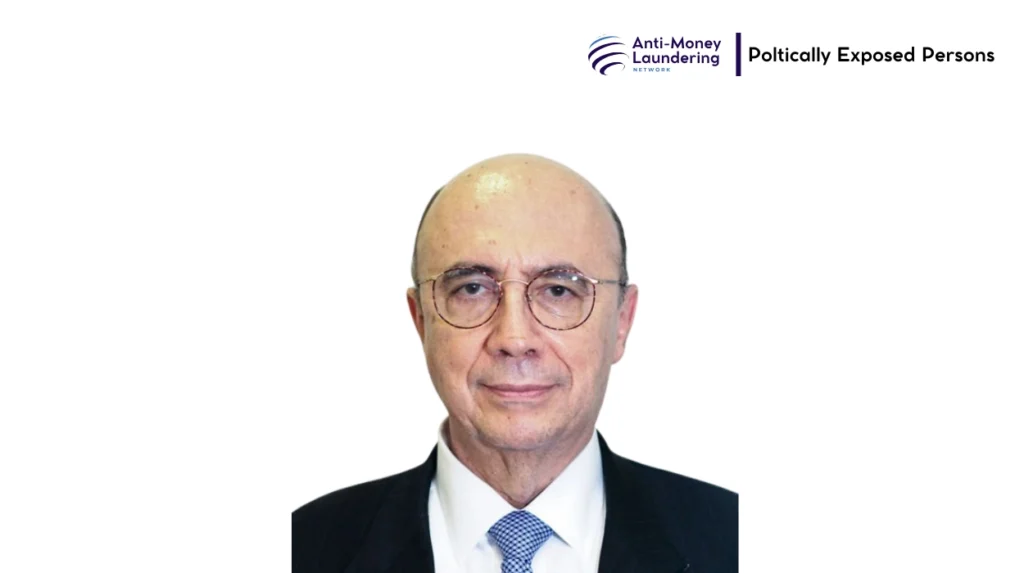
Henrique de Campos Meirelles is a prominent Brazilian economist and financial executive renowned for his leadership roles in Brazil’s government and international finance sector. As a former president of the Central Bank of Brazil and Minister of Finance, his influence has shaped Brazil’s economic framework over decades. This article explores Henrique de Campos Meirelles’ biography, career, personal life, and legacy with an emphasis on financial accountability and public transparency.
Early Life and Background
Born on August 31, 1945, in Anápolis, Goiás, Brazil, Henrique de Campos Meirelles’ date of birth anchors a life devoted to economic and financial management. He holds Brazilian nationality and has built a career grounded in financial expertise and international banking experience. Educated at distinguished institutions, including Harvard Business School’s Advanced Management Program, Meirelles’ education laid the foundation for his substantial contributions to Brazil’s economic policies and management.
Personal Life
Details about Henrique de Campos Meirelles’ family, including his spouse Eva Missine, whom he married in 2003, and his children, reflect a relatively private personal sphere. His home address and office address remain confidential for privacy and security reasons, typical for high-profile public figures. The respected economist’s faith and religion are not widely publicized, focusing public attention instead on his professional and reformist roles.
Career and Achievements
Henrique de Campos Meirelles’ career began in 1974 at BankBoston, where he worked for 28 years, ascending to the presidency of BankBoston Brazil by 1984. He was the first Brazilian to lead a major international bank’s subsidiary in the country. His success in private banking led to his appointment as President of the Central Bank of Brazil in 2003 by then-President Lula da Silva, a role he held till 2011—the longest tenure in this position.
During his presidency, Brazil faced an economic crisis with high inflation and low international reserves. Meirelles implemented policies stabilizing the currency and reducing inflation, catalyzing sustained economic growth. His tenure was marked by prudent financial management in turbulent global economic times.
After leaving the Central Bank, he coordinated investments for the 2016 Rio Olympics and later became Minister of Finance from 2016 to 2018 under President Michel Temer. In this capacity, Meirelles navigated Brazil through fiscal reforms and economic stabilization efforts. He is currently an influential board member of corporations such as JBS, Banco Original, and Azul Brazilian Airlines, reflecting a vast career spanning both the public and private sectors.
Lifestyle, Wealth, and Assets
While Henrique de Campos Meirelles’ net worth and personal wealth details, including any palatial homes or luxury assets, are not publicly detailed, his leadership roles indicate substantial earnings. Noteworthy is his involvement with offshore entities, including the Sabedoria Foundation in Bermuda, revealed in the Paradise Papers leaks, which raised questions about asset transparency. Though no criminal wrongdoing has been established, this offshore trust exemplifies issues faced by Politically Exposed Persons (PEPs) globally regarding financial transparency.
Influence, Legacy, and Global Recognition
Meirelles is regarded not only as a stabilizing figure in Brazil’s financial history but also as a global economic influencer. His long service has shaped sustainable economic policies and represented Brazil on multiple international platforms. Despite his achievements, his legacy includes scrutiny stemming from offshore financial structures, which underscore the tension between political power and public accountability.
Financial Transparency and Global Accountability
As a PEP (Politically Exposed Person), Henrique de Campos Meirelles’ case highlights the challenges in balancing powerful financial stewardship with transparency. The use of offshore trusts during his time in office brings a critical lens to how elites in Brazil and worldwide manage wealth. Brazil’s political system, with histories of corruption and systemic loopholes, can sometimes shield influential figures from full accountability. This duality is central to ongoing debates about AML (Anti-Money Laundering) enforcement and political finance reform in Brazil.
Henrique de Campos Meirelles remains a pivotal figure in Brazil’s economic history. His profound impact encompasses both the successful stabilization of Brazil’s economy and the complex realities of elite financial practices. His career offers vital lessons on leadership, governance, and the need for continual strengthening of transparency and accountability mechanisms to ensure public trust in political and financial institutions.