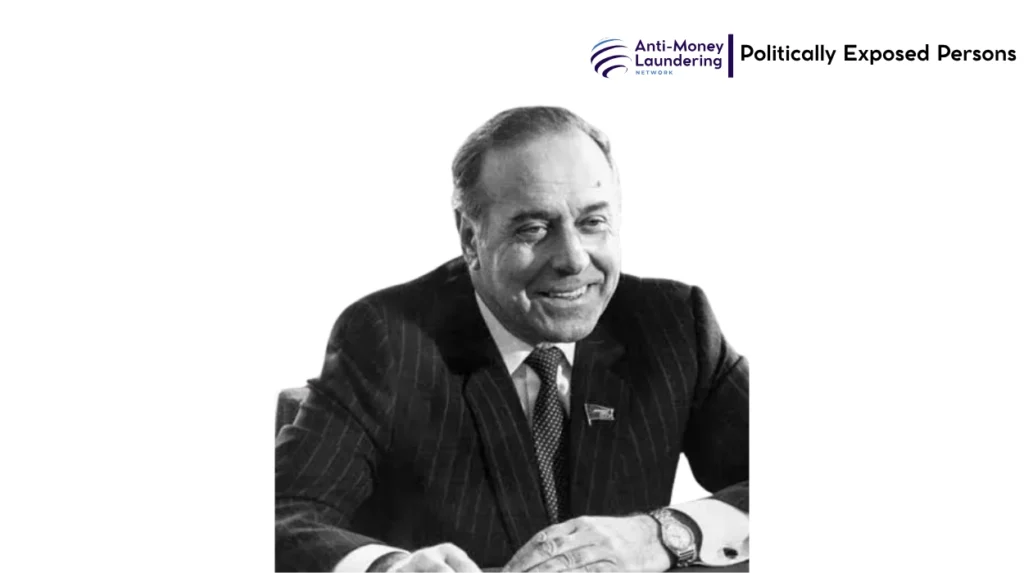
Heydar Aliyev remains one of the most pivotal figures in the post-Soviet landscape of Azerbaijan, a leader whose influence spanned decades and reshaped the nation’s trajectory from communist satellite to independent energy powerhouse. Born in the rugged terrain of Nakhchivan, he navigated the treacherous waters of Soviet politics, rising through the ranks with a blend of cunning, loyalty, and unyielding ambition.
As Heydar Aliyev Azerbaijan president from 1993 until his death in 2003, he orchestrated the country’s economic revival through landmark oil agreements, stabilized its fragile independence, and laid the groundwork for a family dynasty that endures today.
His story is not just a personal ascent but a chronicle of Azerbaijan’s rebirth amid ethnic conflicts, economic collapse, and geopolitical maneuvering. Revered domestically as the national leader, Aliyev’s tenure invites both admiration for his state-building prowess and scrutiny over authoritarian tendencies and opaque financial dealings.
This evergreen profile explores his life, achievements, controversies, and enduring legacy, drawing from historical records and public discourse to provide a balanced, authoritative overview.
Heydar Aliyev Early Life
Heydar Aliyev’s origins trace back to the arid, mountainous region of Nakhchivan, a semi-autonomous exclave of Azerbaijan separated by Armenia, where he entered the world on May 10, 1923. The village of Basgalbeyli near Shemakha served as his birthplace, though family narratives often emphasize his deep ties to Nakhchivan as the cradle of his identity.
Growing up in a modest household—his father a tailor, his mother a homemaker—young Heydar witnessed the upheavals of Soviet collectivization, which ravaged rural Azerbaijan in the 1930s. These early hardships instilled resilience, shaping a worldview rooted in survival and pragmatism.
Educationally, Aliyev attended local schools before relocating to Baku, the cosmopolitan oil capital, in his late teens. He enrolled at the Azerbaijan Industrial Institute, studying architecture and construction, but his path diverged toward pedagogy at the Nizami Azerbaijan Pedagogical Institute. Formal credentials were secondary in Soviet Azerbaijan; practical skills and party loyalty mattered more.
Azerbaijani by nationality and citizenship, Aliyev embodied the secular Muslim heritage of his country, where religion played a subdued role under communist atheism. His early life, marked by the Great Patriotic War’s shadows—Aliyev claimed brief service interpreting for Soviet forces—foreshadowed a career blending intellect with opportunism. By his early 20s, he had joined Komsomol youth leagues, the first rung on the ladder to power.
Nakhchivan’s isolation fostered a fierce regional loyalty that Aliyev carried throughout his life. Stories from his youth depict a voracious reader and athlete, excelling in wrestling and folk dancing, traits later mythologized in state propaganda. This formative period in Heydar Aliyev Nakhchivan birth instilled a sense of destiny, propelling him from rural obscurity to the corridors of Soviet authority.
Personal Life and Family
Aliyev’s private world revolved around family, providing stability amid political storms. In 1948, he married Zarifa Azizgizi, a pioneering Azerbaijani philologist and professor whose academic stature lent intellectual heft to their union. Heydar Aliyev wife Zarifa remained a quiet pillar, raising their children while Aliyev climbed the greasy pole of Soviet bureaucracy.
Their son, Ilham Aliyev, born in 1961, emerged as the most prominent of Heydar Aliyev children, trained in Moscow and later groomed for leadership. Daughters Sevinj and Leyla completed the Heydar Aliyev family, though public profiles focused on Ilham’s trajectory.
The Aliyev household balanced Soviet austerity with subtle privileges—spacious Baku apartments, access to Black Sea resorts. Zarifa’s death in 1985 from cancer marked a personal low, yet Aliyev projected stoicism. Heydar Aliyev family dynamics emphasized loyalty above all; Ilham’s education at Moscow State Institute of International Relations mirrored his father’s strategic foresight.
Post-independence, the family amassed influence over media, construction, and banking, though Heydar Aliyev net worth estimates during his lifetime hovered modestly around state salaries and perks—no verified yachts or palaces, but comfortable dachas and official residences.
Family portraits from the era reveal a reserved patriarch, quoting proverbs like “Unity is strength” to underscore clan solidarity. This tight-knit unit not only sustained Aliyev personally but foreshadowed Heydar Aliyev family succession, ensuring continuity in Azerbaijan’s leadership.
Heydar Aliyev Soviet Career
Aliyev’s Soviet ascent began dramatically in 1941, when at 18 he joined the NKVD—predecessor to the KGB—serving as a counterintelligence officer during World War II. His Heydar Aliyev KGB background equipped him with surveillance expertise, invaluable in Azerbaijan’s intrigue-filled politics. By 1950, he led the Baku KGB branch, rooting out “nationalist elements” while advancing infrastructure projects.
The pivotal leap came in 1969: Mikhail Suslov handpicked him as First Secretary of the Azerbaijan Communist Party, thrusting Aliyev into Heydar Aliyev Communist Party leadership. He modernized Baku’s oil sector, built the Heydar Aliyev highway connecting Nakhchivan, and suppressed dissent during the 1970s oil boom. Purging rivals like Gasan Seidov, Aliyev consolidated a patronage network blending Azeri clans with Moscow oversight.
Promotion to the Heydar Aliyev Moscow Politburo in 1983 and Deputy Premier of the USSR solidified his elite status. Heydar Aliyev Politburo tenure involved economic planning, but Gorbachev’s perestroika clashed with Aliyev’s old-school authoritarianism. Accusations of corruption—unproven but persistent—led to his 1987 resignation. The Heydar Aliyev Soviet era thus forged a survivor adept at navigating ideological shifts, from Stalinism to reform.
Heydar Aliyev Return to Azerbaijan
Glasnost’s ethnic tensions drew Aliyev back. Elected to the USSR Supreme Soviet in 1989, he returned to Azerbaijan amid the Karabakh crisis. On January 20, 1990, Soviet troops crushed Baku protests in Black January; Aliyev’s defiant speech in Moscow—”This is murder!”—marked his Heydar Aliyev Black January stand, burnishing nationalist credentials.
Exiled to Nakhchivan as its Supreme Soviet Chairman in 1991, Aliyev rejected radical Islamists and Popular Front chaos. As Heydar Aliyev return 1990 unfolded, he mediated ceasefires in Karabakh, positioning himself as the independence guardian. Heydar Aliyev independence role crystallized here, bridging Soviet collapse with nascent statehood.
Rise to Presidency
1993’s turmoil—Popular Front infighting, Armenian advances—prompted military officers to fetch Aliyev from Nakhchivan. In what critics call the Heydar Aliyev 1993 coup, he assumed power on June 30, becoming acting president. A October referendum approved early elections; Aliyev won 98.8%, launching Heydar Aliyev 1993 leadership.
Subsequent victories in 1993 and 1998—99.9% margins—cemented Heydar Aliyev presidential election dominance, amid Western acquiescence prioritizing stability. Founding the New Azerbaijan Party, he centralized authority, blending Soviet tactics with presidential pomp.
Key Achievements and Policies
Aliyev’s presidency pivoted on energy. The 1994 Contract of the Century—Heydar Aliyev Contract of Century—inked $7 billion deals with BP, Amoco, and others, unlocking 500 million tons of Caspian oil. Heydar Aliyev oil deals birthed pipelines like Baku-Tbilisi-Ceyhan, diversifying from Russia and funding growth.
Heydar Aliyev economic reforms privatized assets selectively, favoring loyalists, while Heydar Aliyev state building erected monuments and housing. In Karabakh, Heydar Aliyev Karabakh policy froze conflict via Bishkek Protocol (1994), buying time despite territorial losses.
Socially, he promoted multiculturalism—”Azerbaijan is a civic nation”—and women’s rights, echoing Soviet secularism. Heydar Aliyev achievements thus transformed Azerbaijan from war-torn ruin to oil-rich state, GDP surging 10-fold by 2003.
Foreign Policy and International Relations
Aliyev’s diplomacy was masterful realpolitik. Balancing Russia via CIS pacts, he wooed the West with energy concessions, addressing the U.S. Congress in 1997. Ties with Turkey—Nakhchivan roots aiding—countered Iran, while Israel supplied arms discreetly.
Heydar Aliyev foreign policy navigated NATO’s Partnership for Peace and resolved Caspian legalities. Heydar Aliyev international relations elevated Baku’s profile, hosting summits and quoting, “Peace through strength.” Regional shuttle diplomacy thawed Armenian tensions briefly.
Heydar Aliyev Family Succession
Health faltering post-1999 heart surgery, Aliyev eyed succession. Appointing Ilham prime minister in August 2003 ensured smooth transition. Heydar Aliyev son Ilham won snap elections post-father’s death, perpetuating Heydar Aliyev family succession amid constitutional tweaks.
Lifestyle and Assets
Aliyev shunned ostentation; official cars, Gulustan Palace residences defined his lifestyle. Heydar Aliyev net worth—perhaps $50-100 million via perks—pales against family post-2003 billions in PASHA Group, telecoms. No yachts verified, but state jets and Black Sea villas suited a leader prioritizing image.
Heydar Aliyev Death 2003
Aliyev succumbed December 12, 2003, in Cleveland to congestive heart failure, aged 80. Heydar Aliyev death triggered national mourning; his body lies in Baku’s Alley of Honor. Heydar Aliyev current status: Deceased, yet omnipresent.
Monuments and Cultural Legacy
Azerbaijan lionizes Aliyev: Heydar Aliyev center Baku by Zaha Hadid, Heydar Aliyev foundation aiding culture, Heydar Aliyev museum in Nakhchivan. Heydar Aliyev statue Baku graces landmarks; Heydar Aliyev highway spans regions. Annual Heydar Aliyev birthday on May 10 features parades.
Heydar Aliyev Political Legacy
Heydar Aliyev political legacy fuses stability with autocracy. Heydar Aliyev biography lauds his independence salvation, yet Heydar Aliyev Azerbaijan grapples with media curbs, rigged polls. Oil wealth funds patronage, echoing Soviet nomenklatura.
Financial Transparency and Global Accountability
As a politically exposed person, Heydar Aliyev’s era warrants scrutiny. Family offshore webs in Panama Papers revealed UK properties bought via shells during his rule. Pandora Papers exposed BVI firms holding London mansions for his grandchildren. The Azerbaijani Laundromat laundered $2.9 billion through state banks like IBA, bribing European officials in “caviar diplomacy.”
Azerbaijan’s kleptocratic system—judiciary beholden, media muzzled—enabled impunity. No personal sanctions hit Aliyev, despite Transparency International’s low rankings. Western banks and registries facilitated flows, highlighting PEP monitoring gaps. This opacity, rooted in Aliyev’s centralization, persists, challenging global accountability.
Heydar Aliyev’s arc—from KGB operative to national icon—mirrors Azerbaijan’s Soviet-to-sovereign metamorphosis. His oil pacts fueled prosperity, foreign savvy secured alliances, yet authoritarian imprint lingers. Legacy as Heydar Aliyev national leader endures in infrastructure and dynasty, a complex tapestry of achievement and contention.