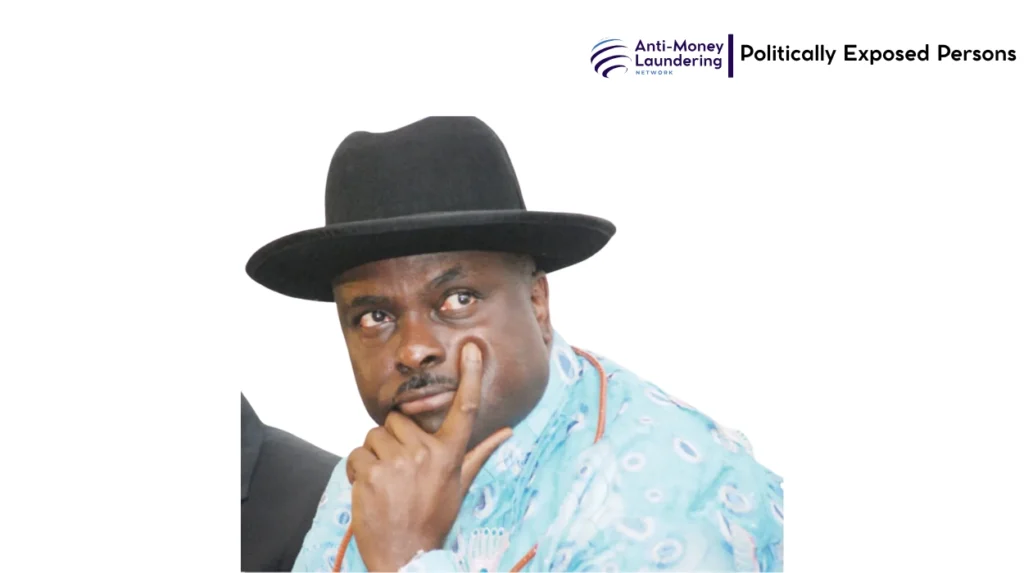
James Ibori stands as one of Nigeria’s most polarizing political figures, a man whose tenure as Delta State governor from 1999 to 2007 encapsulated both ambitious development and profound controversy. Emerging from humble beginnings in the oil-rich Niger Delta, he rose to become a key PDP politician and Niger Delta leader, championing infrastructure projects while facing intense scrutiny over corruption allegations.
His James Ibori biography reveals a narrative of power, wealth accumulation, and legal reckoning, particularly through the James Ibori corruption case that led to a James Ibori UK prison sentence. This profile delves into his life, achievements, scandals, and lasting influence, offering a comprehensive view of a figure who shaped Delta State’s modern trajectory amid global accountability debates.
Born into the ethnic tapestry of the Niger Delta, James Ibori navigated Nigeria’s turbulent transition to democracy, securing victory in the James Ibori 1999 election. As James Ibori Delta State governor, he oversaw significant transformations, earning praise as a James Ibori modern Delta builder, yet his legacy remains tainted by the James Ibori money laundering convictions and James Ibori EFCC charges.
From his James Ibori Urhobo ethnicity roots to his James Ibori political comeback efforts, Ibori’s story reflects broader themes of elite influence, resource governance, and impunity in Nigeria’s political system. This article expands on his early life, personal dynamics, career highs, opulent lifestyle, and the critical lens of financial transparency, providing an evergreen examination of his impact.
Early Life and Background
James Onanefe Ibori entered the world on August 4, 1959, in the small community of Otefe near Oghara in Ethiope West Local Government Area, Delta State—his James Ibori place of birth and James Ibori Oghara hometown that instilled a deep connection to Urhobo traditions.
As a member of the James Ibori Urhobo ethnicity, one of the Niger Delta’s major groups, Ibori grew up amid the region’s ethnic rivalries and oil-driven economic shifts. His father, Chief Ukavbe Ibori, and mother, Mrs. Comfort Oji Ibori, provided a foundation in a modest household, where community values and resilience were paramount. This James Ibori Nationality as Nigerian, with James Ibori citizenship firmly rooted in Delta, shaped his worldview as a Niger Delta oil governor advocate.
Details on James Ibori education are limited and often contested; no formal university degree has been publicly verified, though he claimed studies abroad.
In the 1980s, Ibori relocated to the United Kingdom, taking low-profile jobs such as a petrol station cashier and shop assistant in London. These years exposed him to Western systems but also led to early legal troubles, including the James Ibori false passport scandal. In 1992, he was convicted of theft after using fake documents to secure a mortgage, a case later overturned on appeal. Such incidents foreshadowed the complexities of his James Ibori biography, blending ambition with controversy.
Returning to Nigeria in the mid-1990s amid military rule, Ibori aligned with the regime of General Sani Abacha, serving as a James Ibori Sani Abacha consultant on public affairs. This role catapulted him into politics via the Grassroots Democratic Movement (GDM), which merged into the Peoples Democratic Party (PDP) ahead of civilian rule.
His strategic positioning paid off in the James Ibori 1999 election, where he clinched Delta’s governorship against stiff competition. James Ibori religion, presumed Christian given Urhobo demographics, influenced his community engagements, though he rarely publicized personal faith. These formative years crafted a resilient operator in Nigeria’s patronage-driven politics, setting the stage for his James Ibori position as a transformative yet divisive leader.
Ibori’s early exposure to oil politics honed his skills as an Ibori federalism advocate, pushing for greater resource control in the federation. The Niger Delta’s paradoxes—vast petroleum wealth juxtaposed with underdevelopment—fueled his rhetoric, positioning him as a voice for marginalized oil-producing communities. By blending local grievances with national ambition, Ibori transitioned from outsider to insider, embodying the PDP’s dominance in Delta politics.
Personal Life
James Ibori’s personal sphere, encompassing James Ibori spouse, James Ibori children, and James Ibori family, has drawn scrutiny intertwined with his public scandals.
He married Theresa Ibori, a key figure in his inner circle, who later faced conviction in money laundering proceedings, ordered to repay millions in ill-gotten gains. Their union produced several James Ibori children, though exact details remain private; public records highlight at least four offspring involved in family enterprises. Sister Christie Onuegbu also entered the spotlight, convicted alongside Ibori for laundering schemes.
The James Ibori family extended beyond blood relatives to a network of associates, including lawyer Bhadresh Gohil and mistress Udoamaka Onuoha, who managed assets like properties and vehicles.
This web facilitated the flow of funds, complicating family dynamics under legal pressure. James Ibori net worth and James Onanefe Ibori net worth estimates pre-conviction ranged wildly from $100 million to over $250 million, derived from alleged state diversions rather than transparent sources. Post-incarceration, such figures are speculative, with much wealth confiscated via James Ibori asset recovery UK efforts.
Ibori’s James Ibori current status reflects a low-profile retirement in Nigeria following his release from UK custody around 2021, focusing on mentorship and chieftaincy roles. James Ibori country ties remain Nigeria, where family networks sustain his influence. This personal fortress, built on loyalty and discretion, mirrors the elite shielding common in Nigerian politics, where private lives intersect with public power.
Career and Achievements
Ibori’s political ascent culminated in his James Ibori Delta State governor role from May 29, 1999, to May 29, 2007, marked by the James Ibori 2007 handover to protégé Emmanuel Uduaghan. Winning re-election in 2003 amid PDP dominance, he navigated militancy and oil theft as a James Ibori PDP politician. James Ibori infrastructure projects became hallmarks: constructing the Delta State University campus, bridges like the Enerhen Junction Flyover, and hospitals that improved rural access.
As James Ibori modern Delta builder, he championed education via scholarships and school renovations, boosting literacy in an oil-dependent state. Roads linking Warri to Asaba enhanced commerce, while water schemes addressed chronic shortages.
Ibori earned James Ibori chieftaincy titles such as Ebieberuo of Kushieke and Ogidigbo of Warri, affirming his stature as James Ibori Niger Delta leader. His Ibori federalism advocate stance pushed for 13% oil derivation funds, influencing national policy debates.
Post-tenure, James Ibori political comeback whispers surfaced, including 2011 presidential bids quashed by scandals. His James Ibori PDP influence 2025 endures through Delta godfathering, backing candidates and mediating disputes. These feats, credited by supporters for stabilizing the restive Delta, underscore a legacy of tangible progress amid Nigeria’s federal challenges.
Lifestyle, Wealth, and Assets
Ibori’s lifestyle exuded extravagance, fueled by unverified James Onanefe Ibori net worth. He owned a £2.2 million Hampstead mansion, Bentleys, a Maybach 62, and a $20 million Gulfstream jet—assets central to James Ibori money laundering probes. No confirmed palace or yacht surfaced, but UK penthouses and Swiss accounts via Schroders highlighted his global footprint. Funds coursed through HSBC, Barclays, and Citibank, buying luxury amid Delta’s poverty.
James Ibori family members managed shells for V-Mobile shares ($37 million fraud) and state loans. Ibori stolen assets Nigeria recovery efforts repatriated millions, yet disputes arose over non-Delta spending. This opulence contrasted his petrol station past, symbolizing the Delta State governor corruption narrative where oil billions vanished into private empires.
Influence, Legacy, and Global Recognition
Ibori’s influence permeates Delta PDP circles, with James Ibori PDP influence 2025 evident in electoral sway. As Niger Delta oil governor alumnus, his advocacy curbed militancy temporarily, earning local reverence. Globally, the Ibori UK conviction 2012 spotlighted Nigerian graft, prompting UK-Nigeria pacts. James Ibori chieftaincy titles cement cultural legacy, while critics decry impunity.
His story inspires anti-corruption discourse, with Former Delta governor jail time a rare elite accountability win. Supporters hail James Ibori infrastructure projects; detractors, the James Ibori 13 year jail term’s revelations. This duality defines his evergreen impact.
Financial Transparency and Global Accountability
As a PEP, James Ibori exemplifies transparency deficits. The James Ibori corruption case exposed Delta State governor corruption via inflated contracts and kickbacks. James Ibori EFCC charges (170 counts) ended in Ibori EFCC acquittal 2009 amid bribe allegations to EFCC’s Nuhu Ribadu. UK intervention yielded James Ibori UK prison sentence after Dubai extradition.
Prosecutors detailed £46 million admitted theft, with £250 million suspected. James Ibori asset recovery UK confiscated £101.5 million by 2021. No known leaks like Panama Papers, but court docs reveal offshore webs. Nigeria’s system—judicial fixes, elite shields—enabled impunity, contrasting UK’s AML rigor. No sanctions despite evidence underscores gaps.
James Ibori’s arc—from James Ibori Oghara hometown to James Ibori Delta State governor, James Ibori 13 year jail term, and subtle resurgence—mirrors Nigeria’s power paradoxes. James Ibori infrastructure projects endure, yet James Ibori money laundering scars linger. His James Ibori current status as PDP influencer highlights unresolved accountability, a cautionary tale for resource federations.