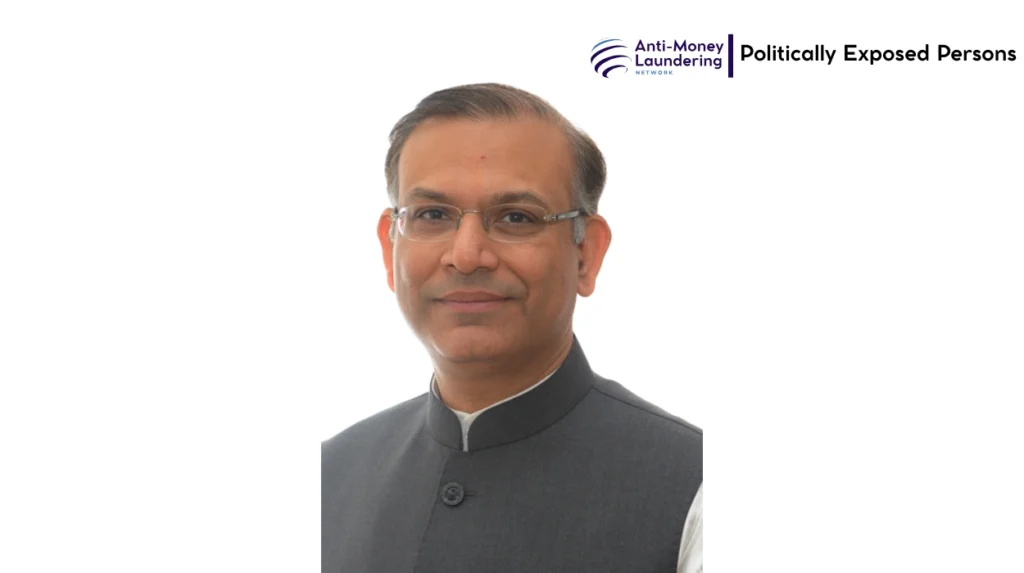
Jayant Sinha emerges as a multifaceted figure in Indian public life, seamlessly bridging the worlds of high-stakes global consulting, innovative policymaking, and sustainable finance. With a lineage tied to veteran politics and an academic pedigree from premier institutions, he entered the political arena as a Member of Parliament from Hazaribagh in Jharkhand, representing the Bharatiya Janata Party.
His roles as Minister of State for Finance and later Civil Aviation marked pivotal contributions to India’s economic reforms, including landmark initiatives like the Insolvency and Bankruptcy Code and bank recapitalization efforts. Beyond government, his career spans advisory positions, investment leadership, and current engagements in climate-focused ventures, making him a case study in transitioning from electoral politics to global impact.
This comprehensive biography delves into his journey, weaving together personal roots, professional milestones, and ongoing scrutiny over financial transparency, offering an enduring portrait of a leader whose path reflects broader themes in India’s developmental narrative.
Early Life and Background
Jayant Sinha’s formative years were shaped by a blend of intellectual rigor and political immersion, setting the stage for his distinguished trajectory. Born on April 21, 1963, in Patna, Bihar, he grew up in an environment where public service was not just discussed but lived. His place of birth in a bustling eastern Indian city exposed him early to the socio-economic disparities that would later define his parliamentary focus.
As an Indian national with unwavering citizenship to the country, Sinha’s early education unfolded across elite institutions, beginning with St. Michael’s High School in Patna and St. Columba’s School in Delhi, where he honed a sharp analytical mind.
Cleaving the highly competitive Joint Entrance Examination in 1980, he pursued a B.Tech in Mechanical Engineering from the Indian Institute of Technology Delhi, a qualification that underscored his technical prowess. This was merely the foundation; driven by ambition, he ventured abroad for advanced studies, earning a Master’s in Public Policy from the Harvard Kennedy School and an MBA from Harvard Business School.
These credentials from Harvard not only elevated his expertise in economics and management but also positioned him uniquely at the intersection of policy and business. His education reflected a deliberate pursuit of global perspectives, preparing him for roles that demanded both strategic foresight and implementation savvy.
Influenced profoundly by family dynamics, Sinha’s father, Yashwant Sinha, a seasoned bureaucrat-turned-politician who served as Finance and External Affairs Minister, instilled values of governance and reform. A brother, Sumant Sinha, further extended this legacy into the corporate realm as CEO of ReNew Power. This family backdrop, rich in public and private sector ethos, fueled Jayant Sinha’s own history of blending academia with action, culminating in his decision to return to India and engage directly with its challenges.
Personal Life
Jayant Sinha has maintained a notably private personal sphere amid his high-profile career, allowing family details to surface sparingly in public discourse. Information on his wife and spouse remains limited, with no extensive media profiles detailing their life together, a choice that aligns with his preference for discretion over publicity. Similarly, references to his children, including any son, are scarce, suggesting a deliberate shielding of familial matters from political crossfire.
This reticence extends to broader family insights, where the emphasis stays on professional legacies rather than domestic anecdotes.
Rooted in a politically astute household, his family ties—anchored by his father’s longstanding influence—have shaped resilience and strategic thinking. Religion, presumed Hindu in the cultural context of his BJP affiliations, plays a subdued role in his public persona, with no overt advocacy noted. His residence, primarily centered in Delhi and Hazaribagh, reflects a practical lifestyle attuned to parliamentary and business demands rather than ostentation.
This low-key approach to personal life contrasts sharply with the intensity of his career, allowing him to navigate controversies with measured composure while prioritizing contributions over personal narratives.
Career and Achievements
Jayant Sinha’s professional odyssey is a testament to versatility, commencing in the corporate echelons before pivoting to public office. Post his Harvard graduation, he joined McKinsey & Company as a consultant, where he advised multinational corporations and governments on strategy, operations, and market entry—gaining invaluable experience in high-pressure environments.
This phase honed his business acumen, leading to a partnership at Omidyar Network, the philanthropic investment firm founded by eBay’s Pierre Omidyar. As director and partner, he oversaw impact investments in education, financial inclusion, and clean energy, notably supporting ventures like D.Light Design, which illuminated off-grid communities.
Entering politics in 2014 under the Bharatiya Janata Party banner, he contested and won the Hazaribagh Lok Sabha seat in Jharkhand, securing re-election in 2019 with a landslide margin exceeding 4.6 lakh votes. His previous offices included Minister of State for Finance from 2014 to 2017, a tenure brimming with reforms: he spearheaded the Pradhan Mantri Mudra Yojana for micro-loans to small entrepreneurs, orchestrated the Indradhanush plan recapitalizing public sector banks with over Rs 2 lakh crore, and championed the Insolvency and Bankruptcy Code, revolutionizing corporate debt resolution.
Transitioning to Minister of State for Civil Aviation in 2017, he advanced UDAN regional connectivity, airport modernization, and Air India privatization bids, enhancing India’s aviation infrastructure.
As Chairman of the Parliamentary Standing Committee on Finance from 2019 to 2024, he scrutinized regulators like RBI and SEBI, advocating for digital payments and infrastructure. Earlier advisory stints, including during his father’s tenure as deputy CAG influences echoed in oversight roles. Post-2024, opting out of elections, his current status pivots to President of Eversource Capital, a $1 billion climate fund backing renewable projects across Asia, complemented by a Visiting Professorship at the London School of Economics.
This evolution—from McKinsey consultant to MP, minister, and now sustainability advocate—highlights a career marked by policy innovation and constituency development, including roads, schools, and Akshaya Patra expansions in Hazaribagh. His parliamentary committee work and business ventures underscore a commitment to scalable impact, positioning him as a modernizer within BJP ranks.
Lifestyle, Wealth, and Assets
Jayant Sinha’s lifestyle embodies understated professionalism rather than extravagance, aligning with his reformist image in a constituency grappling with coal dependency and underdevelopment. Disclosures from election affidavits paint a picture of steady but not lavish wealth; his net worth, estimated around Rs 10-15 crore in recent filings, comprises urban apartments in Delhi, agricultural land in Jharkhand, and mutual fund investments, sans opulent assets like palaces or yachts.
No prominent business excesses or personal funds draw scrutiny, though his McKinsey and Omidyar tenures likely accrued equity stakes yielding comfortable returns.
He positions himself as an advocate for Jharkhand’s upliftment, channeling resources into local infrastructure without flashy displays. This pragmatic approach—focusing on development over personal indulgence—resonates with his narrative of service, though offshore linkages have invited questions on full asset transparency. Overall, his wealth trajectory reflects meritocratic gains from elite education and global roles, managed with the fiscal discipline befitting a former finance overseer.
Influence, Legacy, and Global Recognition
Jayant Sinha’s imprint on India’s landscape endures through structural reforms that fortified financial stability and spurred growth. The Insolvency Code alone has resolved over Rs 3 lakh crore in stressed assets, crediting his ministerial foresight. In Hazaribagh, his initiatives transformed connectivity and education, leaving a tangible legacy in Jharkhand’s heartland.
Globally, his Eversource Capital leadership mobilizes billions for net-zero transitions, earning accolades at forums like COP conferences, while LSE engagements amplify his voice on decarbonization.
Within BJP, he modernized outreach, contributing to 2014’s digital campaign surge. Though no authored book graces his name, his speeches and committee reports influence policy discourse. Stepping from active politics underscores a legacy of reinvention, from MP duties to climate stewardship, cementing recognition as a thought leader bridging India with sustainable global agendas.
Financial Transparency and Global Accountability
As a politically exposed person, Jayant Sinha’s profile invites rigorous scrutiny, particularly following his mention in the 2017 Paradise Papers leak by the International Consortium of Investigative Journalists. Documents revealed his role as Omidyar Network representative signing board resolutions for D.Light Design’s Cayman Islands subsidiary, approving a $3 million Dutch loan in 2012—transactions he affirmed as fiduciary and fully disclosed to authorities during his ministerial stint.
No formal allegations of misconduct surfaced, yet the episode spotlighted gaps in India’s elite accountability, where opposition calls for Enforcement Directorate probes evaporated amid ruling party protections.
This underscores systemic challenges: despite Prevention of Money Laundering Act frameworks, high-profile figures often evade deep inquiries, fueling debates on PEP monitoring. Sinha’s assets, per affidavits, appear compliant, but offshore ties raise flags for enhanced due diligence in global compliance databases. Balancing his defenses of transparency with leak revelations, his case exemplifies the tension between public service and international financial opacity, urging stronger institutional safeguards.
Jayant Sinha’s arc—from IIT and Harvard scholar to BJP parliamentarian, reformist minister, and climate finance pioneer—captures the dynamism of modern Indian leadership. His achievements in finance, aviation, and sustainability have indelibly shaped policy landscapes, while Hazaribagh’s progress attests to grounded impact.
Navigating personal privacy, family legacies, and transparency tests, he embodies resilience in public life. As Eversource Capital steers green investments, his influence promises longevity, reminding of the interplay between politics, business, and ethical governance in India’s ascent.