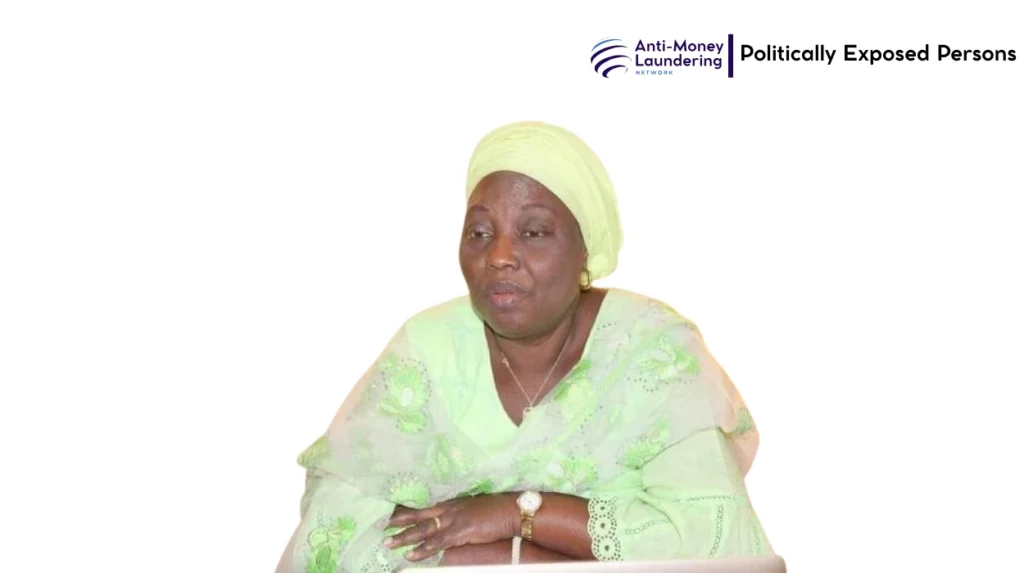
Mamadie Touré stands as a pivotal yet enigmatic figure in the annals of Guinean politics, best known as the fourth and most influential wife of the late dictator Lansana Conté, who ruled Guinea with an iron fist from 1984 until his death in 2008. Her proximity to the corridors of power positioned her not merely as a consort but as a de facto first lady, wielding substantial sway over key decisions, particularly in the allocation of the country’s vast natural resources.
This mamadie touré biography reveals a narrative steeped in intrigue, where personal relationships intersected with monumental corruption scandals, most notably surrounding the Simandou iron ore deposits—one of the world’s richest untapped mineral reserves. As a politically exposed person (PEP), mamadie touré guinea ties underscore the systemic vulnerabilities in resource-dependent African states, where elite networks often eclipse accountability and transparency.
Her story, drawn from investigative reports, court documents, and leaked financial records, offers a lens into how unchecked power can facilitate the siphoning of national wealth into private coffers.
Born into a nation forged in post-colonial turmoil, Touré’s ascent mirrored Guinea’s volatile trajectory under successive authoritarian regimes. While much of her early mamadie touré history remains shrouded—reflecting the opacity that defined her era—emerging details from global probes paint a portrait of opportunism amid dictatorship. This introduction sets the stage for a deeper exploration of her life, influence, and the enduring questions of financial misconduct that continue to shadow her name.
Early Life and Background
Sparse public records obscure the precise contours of mamadie touré date of birth, mamadie touré age, and mamadie touré place of birth, though credible estimates place her origins in the 1960s within Guinea, affirming her mamadie touré nationality and mamadie touré citizenship as quintessentially Guinean. Guinea, a coastal West African nation rich in bauxite, gold, and iron ore but plagued by poverty, provided the backdrop for her formative years.
The country had endured the iron-fisted rule of Ahmed Sékou Touré—unrelated to Mamadie—from independence in 1958 until his death in 1984, a period marked by Marxist policies, purges, and economic isolation that stifled individual prospects.
Little is documented regarding mamadie touré education or mamadie touré qualification, suggesting her path relied less on academic laurels and more on social and marital networks prevalent in Guinea’s political elite. In a society where patronage trumped merit, such gaps in formal credentials were unremarkable for those ascending through relational capital.
Her early mamadie touré history likely unfolded in Conakry, the bustling capital, amid the transition from Sékou Touré’s socialism to Lansana Conté’s military junta following a 1984 coup. This era of instability, characterized by human rights abuses and economic stagnation, honed survival instincts that would later prove instrumental. Without verified anecdotes from contemporaries, her youth evokes the archetype of a resilient figure navigating Guinea’s precarious socio-political landscape, positioning her for an unlikely entry into the presidential inner circle.
Personal Life
Mamadie touré family dynamics revolved around her union with mamadie touré husband, General Lansana Conté, Guinea’s president-for-life whose rule blended military authoritarianism with resource exploitation. Married around 1984, she became his mamadie touré spouse, supplanting earlier wives in influence despite Guinea’s polygamous traditions among elites.
Conté, who seized power in a bloodless coup, fathered multiple children across unions, and mamadie touré children reportedly include at least one son, though their identities and current whereabouts remain closely guarded, emblematic of the privacy afforded to regime insiders.
No confirmed details emerge on mamadie touré religion, but prevailing Islamic practices in Sunni-majority Guinea suggest adherence, interwoven with traditional animist elements common in rural areas. Their household, centered in Conakry’s opulent presidential palace, symbolized the chasm between elite privilege and public penury. Following Conté’s death on December 22, 2008—officially from a heart attack amid rumors of acute myeloid leukemia—Touré’s mamadie touré current status transitioned to marginalization under junta leader
Moussa Dadis Camara, who briefly detained family members. Relocated overseas, her mamadie touré address evades confirmation, with whispers of U.S. residences tied to legal entanglements. This personal saga illustrates how spousal roles in dictatorships extend beyond domesticity, morphing into extensions of state power.
Career and Achievements
Mamadie touré careers and mamadie touré jobs evaded conventional structures, her mamadie touré position defined by informal advisory clout rather than elected or appointed office. Absent a formal mamadie touré office, she functioned as a power broker within the presidential apparatus, particularly in opaque mining negotiations where Guinea’s mineral wealth became a bargaining chip.
The pinnacle—and infamy—of her trajectory involved the 2008 granting of exploration rights at Simandou to Beny Steinmetz Group Resources (BSGR), a deal later scrutinized for irregularities.
Proponents might frame her interventions as stabilizing influences in a patronage-driven system, yet achievements pale against controversies. No public infrastructure projects or policy reforms bear her imprimatur; instead, her legacy hinges on facilitating foreign investments that enriched intermediaries while shortchanging Guinea.
This shadow mamadie touré office role exemplifies how African first ladies often transcend ceremonial bounds, leveraging spousal access to broker deals in extractive industries. Post-2008, her influence waned amid Guinea’s democratic experiments, though echoes persist in ongoing resource litigations.
Lifestyle, Wealth, and Assets
Estimates of mamadie touré net worth and mamadie touré worth swirl in speculation, pegged at $10–50 million based on documented bribe flows rather than transparent ledgers. Absent yachts or gilded palaces in public inventories—unlike some African elites—her assets manifested discreetly: U.S. real estate in Florida (e.g., Jacksonville properties) and offshore banking, per FBI affidavits.
These holdings, acquired amid Guinea’s 99% poverty rate, underscore lifestyle disparities fueled by state capture.
Daily life in the palace era likely blended luxury imports with security paranoia, insulated from uprisings like the 2007 general strike. Post-regime, her circumstances appear modest by comparison, sustained by hidden remittances rather than ostentatious displays. Such understated opulence aligns with strategies to evade scrutiny in jurisdictions probing PEPs, highlighting how wealth preservation trumps visibility in post-dictatorship exile.
Influence, Legacy, and Global Recognition
Mamadie Touré’s influence radiated through Guinea’s mining ministry, where her endorsements tipped scales for BSGR amid competitors like Rio Tinto. This clout, exercised via proxies like Frédéric Cilins, propelled her into global spotlights during Swiss trials (2021 convictions) and U.S. investigations, earning notoriety over acclaim. Her mamadie touré legacy bifurcates: domestically, a symbol of Conté-era graft that stalled development; internationally, a case study in illicit finance.
Global recognition arrived via leaks—Panama Papers exposing shells—and reports from Global Witness, cementing her in anti-corruption lore. Yet, Guinea’s polity, prone to elite pacts, shields fuller reckoning, perpetuating impunity cycles. Her narrative influences PEP databases worldwide, urging vigilant financial oversight.
Financial Transparency and Global Accountability
As a quintessential PEP, Mamadie Touré embodies transparency deficits, with ICIJ leaks unveiling British Virgin Islands entities like Matinda Partners—poised under her control—to launder $8.5 million in bribes. Guinea’s feeble AML framework, corrupted institutions, and absent whistleblower protections enabled this, drawing FBI orchestration of a 2013 sting where she cooperated, taping Cilins’s $11 million hush offer.
Swiss Genevan courts validated the corruption pact (2016–2022 rulings), yet personal impunity endures—no sanctions, no extradition—exposing Global Watchdog gaps. Arbitration (ICSID) revoked BSGR rights, recouping Guinea fractions of billions lost. This saga demands fortified KYC regimes, offshore crackdowns, and African governance reforms to dismantle such networks.
Mamadie Touré’s odyssey—from unheralded Guinean to impeached power conduit—encapsulates dictatorship’s venal undercurrents, where familial bonds monetized sovereignty. Her indelible imprint on Simandou endures as a clarion for resource equity, compelling international bodies to fortify PEP scrutiny. In Guinea’s fitful democracy, her unresolved saga cautions against complacency, affirming that true legacy resides in accountability’s pursuit, not evasion.