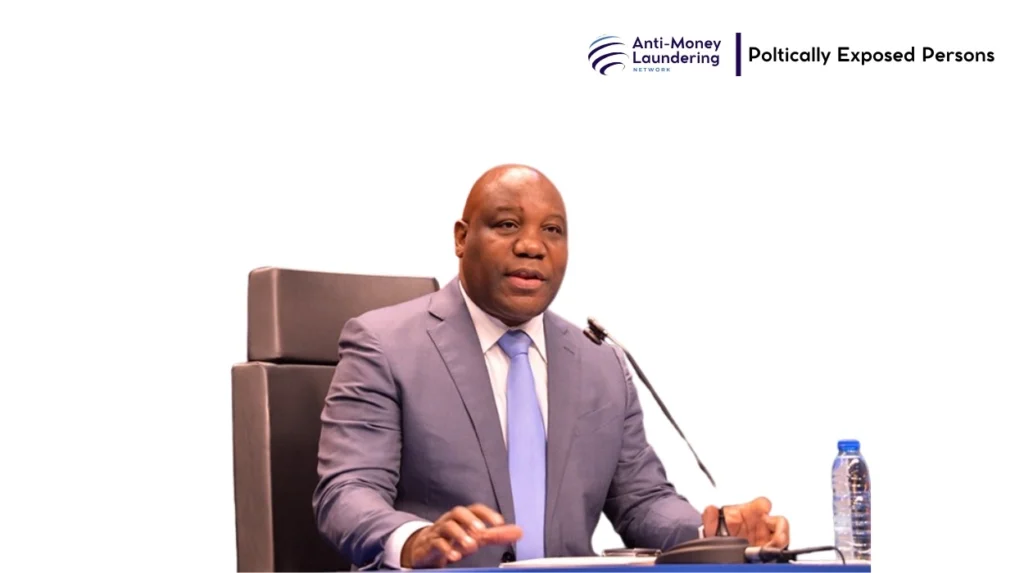
Manuel António Rabelais, widely known as Manuel Rabelais, is an influential Angolan figure known for his roles in politics, journalism, and communications. His name resonates strongly in Angola’s recent political sphere, especially due to his tenure as a former Minister of Communications and notable legal controversies that highlight the complexities of governance and accountability in Angola.
Early Life and Background
Although exact details about Manuel Rabelais date of birth are sparse, he was born in Angola, likely in the late 1960s or early 1970s, given his political trajectory. He holds Angolan citizenship and is a graduate of Agostinho Neto University where he studied law. His multifaceted background as a journalist, theologian, and marketer shaped his subsequent political involvement. The amalgamation of media expertise and legal education positioned him uniquely for roles in Angola’s government communications and public relations sectors.
Personal Life
Information about Manuel Rabelais family, including his spouse and children, remains limited in public records. Some Angolan sources mention his family’s relative low-profile status. While his personal life seldom makes headlines, the intrigue around figures like Manuel Rabelais often leads to speculation regarding the private lives of those entwined in political controversy, including connections to influential figures such as Antonia Manuel Rabelais.
Career and Achievements
Manuel Rabelais position as the Minister of Communications from 2005 until 2010 under Angola’s government reflects his prominence within the political establishment during longtime President José Eduardo dos Santos’s rule. He also served as the official spokesperson for the Angolan government, a role demanding significant oversight of state media and public communication strategies.
However, Manuel Rabelais’s career also illustrates the darker intersections of politics with corruption and financial misconduct. His role within state media and government communication links him to controversial episodes. Notably, in recent years, he was involved in a high-profile court case where he was convicted of embezzling around €98 million through a marketing company under his control. This conviction leading to a 14-year prison sentence represents one of the most significant anti-corruption actions in recent Angolan history, marking a turning point in addressing elite impunity.
Lifestyle, Wealth, and Assets
Details of Manuel Rabelais net worth or lavish possessions such as palaces or yachts have not been officially disclosed, yet his conviction for large-scale embezzlement suggests control over significant financial resources. Angolan elites, including figures like him, often benefit from opaque financial structures facilitating wealth accumulation beyond public scrutiny.
Influence, Legacy, and Global Recognition
While Manuel Rabelais does not enjoy broad international recognition outside of corruption-related headlines, within Angola, his profile is emblematic of the country’s post-colonial political dynamics. His name is often linked in discourse alongside other prominent figures in Angola’s elite who wielded significant influence during the dos Santos era. His downfall and prosecution under President João Lourenço’s administration symbolize Angola’s gradual but contested move toward transparency and reform.
Interestingly, his surname invites linguistic curiosity given the historical resonance of François Rabelais, a famous French Renaissance writer known for his satirical works, medical discourse, and sharp wit. Keywords like François Rabelais famous works, François Rabelais pronunciation, Rabelais medicine, and François Rabelais quotes highlight the cultural significance of the name. Although unrelated directly, the similarity between Manuel António Rabelais and François Rabelais frequently leads to confusion or interest in literary contexts such as Rabelais and His World. The meaning of the surname Rabelais itself connects to broader European cultural history, making Manuel Rabelais biografia a subject of interest beyond political circles.
Financial Transparency and Global Accountability
As a Politically Exposed Person (PEP), Manuel Rabelais’s profile illustrates critical challenges in governance: the misuse of public office for private gain and the difficulty of enforcing accountability in systems shielded by entrenched political interests. His case reveals the intricate dance between Angola’s political system and financial networks that facilitate money laundering and asset concealment, thus posing high risks from an AML (Anti-Money Laundering) perspective.
The convictions and anti-corruption efforts spearheaded by the post-Dos Santos government show progress but underscore the endemic nature of corruption within the Angolan country. The opaque nature of wealth management and elite protection within Angola’s political elite often involves sophisticated structures, including offshore companies and state-linked entities. This has historically hampered genuine global accountability efforts.
Manuel Rabelais, despite sharing a surname with the famed French author François Rabelais, is best known for his controversial political career and subsequent imprisonment for corruption in Angola. His legacy is a cautionary tale of how political power can be exploited, yet also a marker of Angola’s ongoing struggle with transparency and governance.
His biography reflects a complex narrative involving education, media influence, political power, and financial misconduct. Understanding Manuel Rabelais requires examining both his individual actions and the broader systems that enable or resist elite misconduct in Angola.