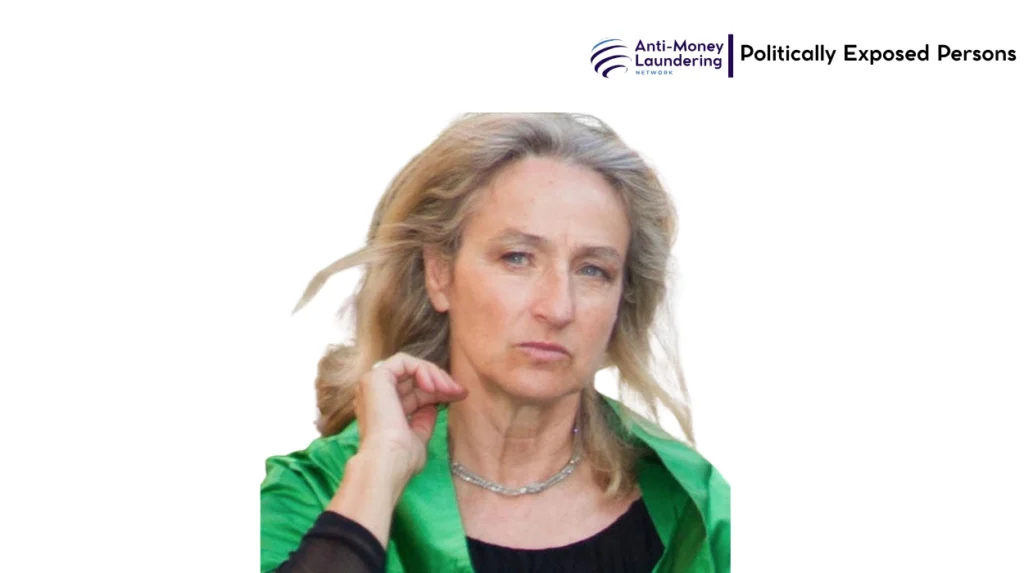
Micaela Domecq is a Spanish aristocrat whose name blends legacy, influence, and controversy in the modern European landscape. Known widely through her marriage to Miguel Arias Cañete, the former Spanish Minister of Agriculture and later European Union Commissioner for Climate Action and Energy, Domecq has lived much of her life at the intersection of private wealth and public power.
Despite a life characterized by discretion, her family name gained international attention following the 2016 Panama Papers revelations, which exposed offshore holdings allegedly connected to Spain’s political and social elites. The revelations placed her under scrutiny as a politically exposed person (PEP), igniting debates over financial transparency, privilege, and accountability within Spain’s upper echelons.
Early Life and Background
Micaela Domecq was born into one of southern Spain’s most prominent families, the Domecq lineage of Jerez de la Frontera. Her family, known historically for its instrumental role in the sherry wine industry, is among the old aristocratic houses that helped shape Andalusian commerce and agriculture.
Although her exact date of birth is not publicly disclosed, she is believed to have been born in the 1960s in Andalusia—a region synonymous with equestrian tradition, vineyards, and Catholic heritage. Micaela Domecq nationality is Spanish, and her family heritage traces back centuries through both Spanish and French nobility, giving her a distinguished lineage tied to land ownership, viticulture, and social prestige.
Raised in a strict Catholic environment consistent with upper-class customs of Franco-era Spain, Micaela Domecq religion is presumed to be Roman Catholic. Faith, family honor, and a strong sense of duty were cornerstones of her upbringing, forming the foundation for her later life in public view.
Although there are no publicly available details about Micaela Domecq education or her specific school and university background, she is believed to have attended elite private institutions, possibly in Madrid or Seville, where most aristocratic families traditionally sent their children. Unconfirmed sources mention her having completed her higher education in Spain, reflecting a well-rounded yet understated academic foundation.
Her early years coincided with an era of modernization in Spain when traditional aristocratic families were adapting to new political and economic realities after the transition from dictatorship to democracy. That evolution mirrored her family’s own journey—balancing heritage with economic diversification across agriculture, equestrian pursuits, and business investments.
Family and Personal Life
The Domecq family represents entrenched wealth, power, and influence in Spanish society. They remain famous for their involvement in the Domecq sherry business and various agricultural developments across Andalusia. The family’s estates have long symbolized Spanish nobility, blending business with cultural identity.
Micaela Domecq family has traditionally upheld the values of discretion and propriety, largely avoiding the overt celebrity-like behavior common among other European elites. In 1982, Micaela married Miguel Arias Cañete, a rising conservative politician from the Partido Popular (People’s Party). This marriage linked her venerable family heritage with Spain’s modern political establishment, creating one of the most influential alliances in post-Franco Spain.
Her husband’s career would span several decades, holding key roles such as Spanish Minister of Agriculture, Food and Environment, and subsequently European Commissioner for Climate Action and Energy. Given his prominence, Micaela Domecq spouse inevitably shared the public spotlight—though she consciously maintained an image of restraint and privacy.
Information about Micaela Domecq children remains limited due to the family’s guarded approach to personal affairs. They have maintained residences in Jerez, Madrid, and Brussels, reflecting their cross-continental lifestyle tied to both national and European politics. Those who know the family describe a close, loyal household grounded in Catholic faith and social conservatism.
Micaela Domecq husband has described his wife as a stabilizing influence during his demanding career, embodying grace under constant public attention. However, her proximity to power also subjected her to the same scrutiny that often follows political families in modern democracies.
Career and Personal Endeavors
Unlike her husband, Micaela Domecq has not held public office. However, she has long been associated with estate management, patronage of arts and culture, and agricultural leadership in her family’s holdings. Her background positions her as a figure rooted in Andalusian land traditions rather than corporate or political bureaucracy.
Micaela Domecq careers have largely revolved around managing private family assets and fulfilling representational duties associated with Spain’s landed aristocracy. Her life’s rhythm has reportedly centered on the family estates, cultural preservation, and philanthropy rather than direct business operations.
Although rumors occasionally link her to a Micaela Domecq clothing brand or luxury fashion ventures, these claims lack credible confirmation. Instead, the Domecq family name itself—connected to premium sherry, equestrian breeding, and heritage conservation—serves as their enduring brand.
There is no record of an official Micaela Domecq office in public or private administration, nor any indication of corporate directorships disclosed in Spain’s registry databases. Nonetheless, her name remains intertwined with the prestige and legacy of the Domecq institutions, which hold cultural and financial significance in southern Spain.
The Panama Papers and Financial Controversy
Micaela Domecq became a global name in April 2016 when she appeared in the Panama Papers—a massive international leak that exposed offshore financial structures worldwide. The revelations identified her as a beneficial owner of Rinconada Investments Group S.A., a Panamanian entity allegedly established through Mossack Fonseca, the now-defunct law firm notorious for facilitating offshore incorporations.
Reports by the International Consortium of Investigative Journalists (ICIJ) and Spain’s national daily El País indicated that the Spanish Tax Agency launched an inquiry into nationals named in the leak, including Domecq. Investigators assessed whether the entities held undeclared assets or were used to obscure ownership, raising concerns of potential tax evasion or money laundering.
Her legal representatives denied wrongdoing, asserting that all income and assets were duly declared to Spanish tax authorities. No formal charges were ever filed against her. Yet, the case became emblematic of Spain’s difficulties in regulating the private financial conduct of individuals linked to political power.
The situation highlighted broader questions of transparency—particularly regarding politically exposed persons (PEPs). The classification recognizes not only public officials but also their family members, given the risk of indirect financial abuse of public office. As the spouse of an EU Commissioner, Micaela Domecq was automatically subject to this enhanced due diligence category.
The incident also spotlighted Spain’s entrenched culture of elite protection. Critics argued that despite credible leads in international press investigations, high-profile figures like Domecq often benefited from lenient enforcement and opaque financial frameworks. This perception hurt the country’s image in European debates surrounding tax fairness and transparency.
Lifestyle, Wealth, and Assets
Estimating Micaela Domecq net worth is difficult due to Spain’s privacy laws and the guarded nature of her family’s holdings. The Domecq wealth spans generations and industries, including agricultural estates, vineyards, and equestrian enterprises. Historically, the family’s business activities centered on sherry exports—particularly through the Osborne-Domecq merger and related ventures.
Her properties reportedly include family estates near Jerez de la Frontera and a residence in Brussels used during her husband’s tenure at the European Commission. In terms of lifestyle, sources close to the family describe an emphasis on tradition, understated luxury, and continuity rather than ostentation. The family is known for maintaining their Andalusian finca and participating in cultural events such as the horse fairs of Jerez.
Her husband’s EU role and her aristocratic background also afforded international social exposure, though always within elite diplomatic circles rather than public celebrity events.
While public debates focused on offshore assets, financial specialists note that aristocratic wealth like that of the Domecqs often exists in the form of land, trusts, and historic equities, making valuation complex. Nonetheless, the combination of inheritance and proximity to political influence positions Micaela Domecq among Spain’s upper high-net-worth segment.
Influence and Reputation
Micaela Domecq occupies a unique space in Spanish society—at once traditional and controversial. For decades, she epitomized the understated dignity of the post-Franco upper class: refined, devout, and politically connected, yet mostly absent from open political discourse.
Her quiet influence lies in maintaining Spain’s continuity of aristocratic cultural capital at a time when modern politics and social change have challenged old hierarchies. Through her marriage to Miguel Arias Cañete, she gained indirect influence at both national and European levels, particularly in agricultural and environmental sectors—industries that overlap with her family’s heritage.
However, following the Panama Papers publicity, her reputation faced challenges typical of elite families under media exposure. While she did not hold public office, her case became symbolic of how wealth, politics, and privilege intersect in contemporary Europe. The absence of punitive measures against her reinforced narratives suggesting that Spain’s elite often operate beyond the reach of ordinary financial scrutiny.
Financial Transparency and Global Accountability
The story of Micaela Domecq stands as a significant case study in the politics of financial transparency. As regulatory frameworks across Europe tightened anti-money laundering (AML) systems, revelations concerning offshore wealth among high-ranking political families raised concerns about fairness and accountability.
Under the European Union’s AML directives, spouses and immediate family members of senior officials fall under the “politically exposed” category. Hence, even though Domecq never held office herself, she was considered a PEP due to her husband’s senior EU role. That classification subjects individuals to intensified monitoring from banks and financial institutions—but enforcement remains uneven.
Spanish anti-corruption advocates have long criticized the country’s institutional reluctance to confront financial misconduct within governing elites. The public uproar following the Panama Papers eventually motivated Madrid to collaborate more actively with European regulators on beneficial ownership registries, yet practical loopholes persist.
In this context, Micaela Domecq represents more than a personal or familial story. She embodies the systemic overlap between private aristocratic privilege and the opacity of global finance. Her case underscores the challenge of reconciling heritage-driven wealth structures with modern expectations of disclosure and public trust.
Legacy and Cultural Presence
Despite controversies, Micaela Domecq continues to hold a place of respect within Andalusian circles and Spanish high society. Her legacy cannot be reduced solely to financial scrutiny; rather, it integrates cultural preservation, family continuity, and representation of Spain’s post-monarchical nobility.
The Domecq family’s contributions to agriculture, equestrian traditions, and regional development have left an enduring mark. The family’s estates contribute to local employment and heritage tourism, reinforcing their economic and symbolic influence in southern Spain.
Micaela Domecq current status remains that of a private citizen, semi-retired from active public appearances but still regarded as part of Spain’s moral and social elite. Her discretion has helped her maintain respectability even amid scrutiny, illustrating the resilience of old-world nobility in the face of modern investigative exposure.
Her marriage to Miguel Arias Cañete appears to remain strong, reflecting mutual loyalty and traditional partnership values. Together, they symbolize the fusion of political authority and aristocratic lineage—a union deeply rooted in Spain’s historical identity.
Micaela Domecq Solís-Beaumont epitomizes the complex interplay of heritage, discretion, and public scrutiny. From her Andalusian roots and marriage to one of Spain’s most influential politicians to her inadvertent involvement in international financial controversy, her story offers insight into the mechanisms that shape power in democratic yet class-conscious societies.
For supporters, she represents old Spain’s dignity—an individual devoted to family, faith, and cultural preservation. For critics, she embodies the challenges of transparency in a system that too often shields its privileged classes from accountability.