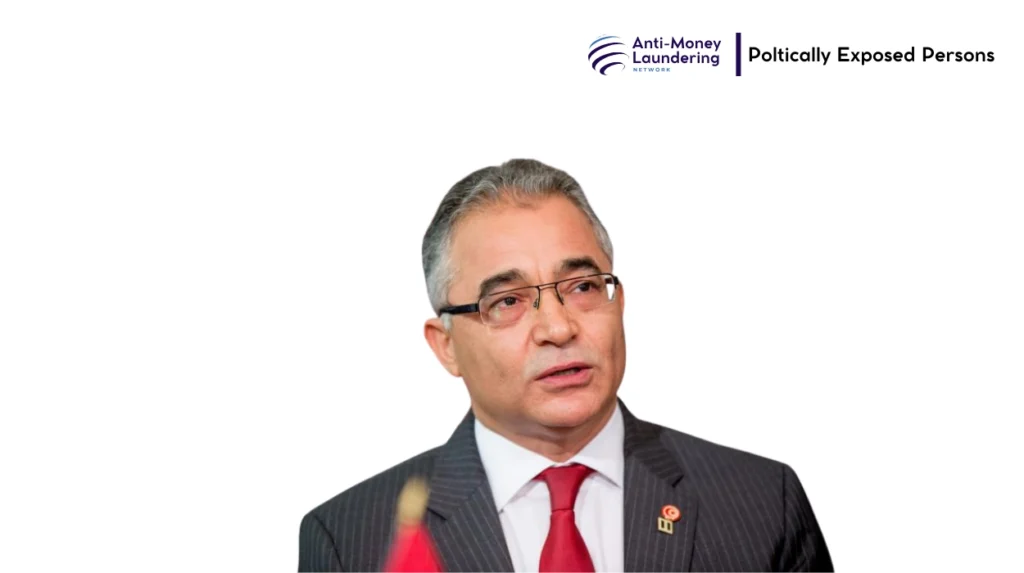
Mohsen Marzouk is a prominent Tunisian political figure known for his influential roles in shaping Tunisia’s post-revolution political landscape. As a former advisor to President Béji Caïd Essebsi and founding member of major political parties, Mohsen Marzouk’s career reflects the complexities of Tunisia’s democratic transition and political development. His involvement in key political reforms and campaigns, along with participation in international democratic organizations, makes him a notable subject in Tunisian and regional politics. This article critically explores his life, career, and the nuanced challenges of political accountability in Tunisia, integrating contextual insights around political parties, personal background, and controversies such as offshore connections.
Early Life and Background
Born in July 1965 in Sfax, Tunisia, Mohsen Marzouk originated from a modest working-class family. His early life was marked by political activism; at just fourteen, he faced expulsion from school due to his opposition activities against the ruling regime. Despite setbacks, he persevered to complete his education. He pursued higher studies in political sociology and International Relations at the International Studies Association in Tunis, grounding him academically in issues relating to governance and democracy.
During university years, Dr. Mohsen Marzouk became a leading student activist. His defiance against authoritarianism led to his arrest and imprisonment under Tunisia’s secret police in the late 1980s, an experience that shaped his political resolve. Post release, he engaged actively in human rights and democratic advocacy, notably helping reorganize the General Union of Tunisian Students (UGET) and participating in underground leftist movements.
Personal Life
Details about Mohsen Marzouk’s personal life are relatively scarce in public sources, reflecting a preference for privacy. He is known to have a family, including a spouse and at least one son, though specifics such as the name or further biographical data are limited. There is no public information regarding his Mohsen Marzouk height, or specifics about his home beyond basic mentions of residence in Tunisia during his political engagement. His religion aligns with the predominantly Muslim background typical in Tunisia, but without extensive public discussion.
Career and Achievements
Mohsen Marzouk’s job trajectory is distinguished by significant political and civic engagement spanning several decades. After his early activism, he worked from 1989 as a coordinator for the Arab Institute for Human Rights and later served as Secretary-General of the Arab Democracy Foundation from 2008, gaining a reputation within regional civil society circles.
He is notably one of the founders of the Tunisian political party Nidaa Tounes, established post-2011 revolution as a secularist counterweight in Tunisian politics. Within Nidaa Tounes, Mohsen Marzouk held executive positions and led President Béji Caïd Essebsi’s successful 2014 campaign as his campaign manager. His role was pivotal in proclaiming a new era for Tunisia’s democracy during this transitional phase.
In January 2016, following internal party conflicts, he left Nidaa Tounes and later founded the Machrouu Tounes party, continuing to exert influence in Tunisia’s evolving multiparty system. His political efforts extend to international democracy organizations, reflecting a career blending domestic politics with global democratic advocacy.
Lifestyle, Wealth, or Assets
There is no publicly detailed evidence regarding extravagant lifestyle markers such as Mohsen Marzouk company ownership, luxury homes, yachts, or palaces. However, his name appears in connection with an offshore entity, Eagle One, established reportedly to manage family heritage and investments. This arrangement surfaced in leaks akin to the Panama Papers, allegedly for managing personal funds and education endowments for his children. Marzouk maintains the company was inactive and separated from state funds or political activities. Nonetheless, such offshore connections raise questions about transparency among political elites in Tunisia.
Influence, Legacy, and Global Recognition
Mohsen Marzouk education and career combine to position him as an intellectual and practical force within Tunisia’s contemporary political narrative. His legacy includes contributing to Tunisia’s rare success in parliamentary elections for secular parties post-Arab Spring and efforts to crystallize democratic governance despite persistent institutional weaknesses. Globally, he is recognized for participation in democratic forums and human rights advocacy bodies. His influence is seen as part of Tunisia’s ongoing struggle to balance freedoms, security, and governance reforms.
Financial Transparency and Global Accountability (Critical)
As a Politically Exposed Person (PEP), Mohsen Marzouk position and actions warrant scrutiny amid Tunisia’s well-documented challenges with corruption, financial misconduct, and elite impunity. While lacking direct verifiable allegations of money laundering or misuse of public office, his offshore company affiliation and opaque political financing remain critical red flags in regional contexts. Tunisia’s political parties, including Tunisian Nationalist Party offshoots, operate within systems vulnerable to weak enforcement, complicating accountability for elite figures. Enhanced transparency mechanisms and international cooperation are essential to address these concerns and support better governance in Tunisia.
Mohsen Marzouk embodies the complexities of Tunisia’s political transformation. From a youthful activist facing repression to a key architect of political parties and presidential campaigns, his career reflects Tunisia’s hopes and continued struggles for democratic stability. While his legacy includes significant contributions to political reform and democratic advocacy, questions about financial transparency and the political system’s vulnerabilities highlight ongoing challenges. As Tunisia progresses, the story of Dr. Mohsen Marzouk offers critical lessons on the intersections of power, accountability, and reform in transitional democracies.