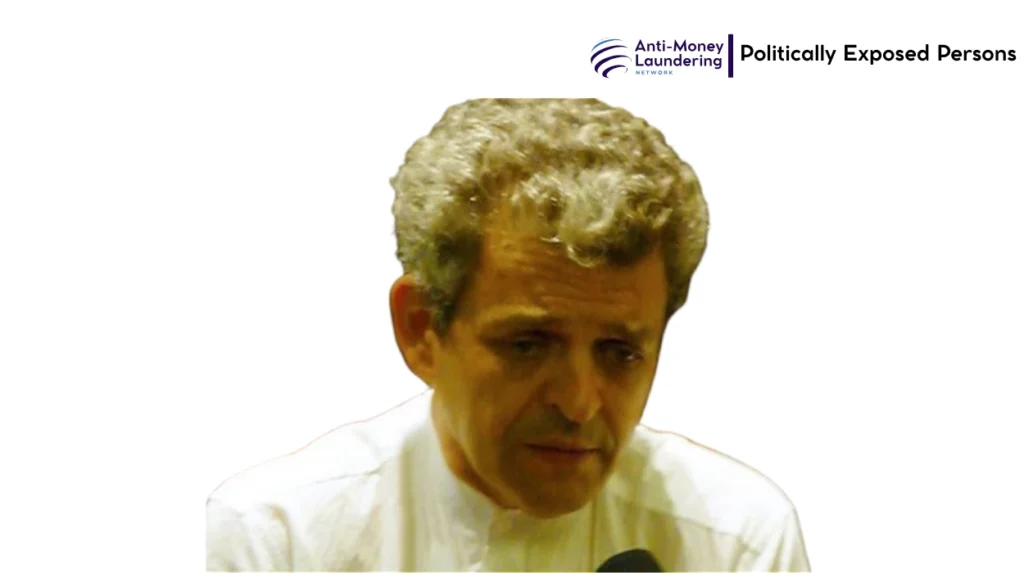
Patrick Henri Devillers emerged from relative obscurity as a French architect whose professional path intersected dramatically with China’s political elite, particularly through his long-standing association with Gu Kailai, wife of the disgraced Politburo member Bo Xilai. His name became synonymous with the 2012 Bo Xilai scandal, one of the most seismic corruption cases in modern Chinese history, where allegations of bribery, murder, and offshore asset concealment thrust him into global headlines.
Far from a conventional political figure, Devillers functioned as a discreet foreign facilitator, leveraging his expertise in architecture and real estate to bridge European opportunities with Chinese power networks. This profile draws on investigative leaks, court testimonies, and journalistic accounts to outline his trajectory, emphasizing the opacity that allowed such cross-border dealings to flourish unchecked for years.
Financial Transparency and Global Accountability
The saga of Patrick Henri Devillers underscores profound gaps in international financial oversight, particularly when foreign professionals enable politically exposed persons (PEPs) in jurisdictions like China, where elite impunity often prevails. As a Patrick Henri Devillers French businessman China operative, he incorporated and managed offshore entities that obscured the flow of bribes from Chinese entrepreneur Xu Ming to the Bo family, including a $3.2 million villa in Nice, France.
Panama Papers revelations exposed how he held shares in Russell Properties S.A. (BVI) “on behalf of” Gu Kailai, a structure that allowed her to distance herself from assets amid the Neil Heywood murder investigation. This arrangement exemplifies how lax beneficial ownership rules in offshore havens like the British Virgin Islands enable politically connected wealth to evade scrutiny, with Devillers serving as the nominal owner post-2011 to shield his partners.
China’s political system exacerbated these vulnerabilities, prioritizing party loyalty over transparency and rarely pursuing foreign enablers aggressively once their utility waned. Devillers faced no charges despite testifying to disputes over villa funds—disputes rooted in undeclared bribes—highlighting Beijing’s selective enforcement that protects networks rather than dismantles them.
Globally, his case advocates for stricter due diligence on PEPs’ associates, as frameworks like the FATF recommendations often falter when dealing with non-domestic proxies. The absence of sanctions or asset freezes, even after ICIJ leaks, reveals how fragmented AML regimes allow figures like Devillers to relocate to Cambodia without repercussions, perpetuating risks for future scandals. No verified updates since 2016 suggest ongoing opacity, demanding enhanced cross-border data sharing to prevent recurrence.
Early Life and Background
Details on Patrick Henri Devillers place of birth and Patrick Henri Devillers date of birth remain elusive, with reports circa 2012 estimating his age in the early 50s, placing a likely birth around the late 1950s or early 1960s in France. Patrick Henri Devillers nationality and Patrick Henri Devillers citizenship are unequivocally French, aligning with his architectural training and early career in Europe before pivoting to Asia.
Public records offer scant insight into Patrick Henri Devillers education, though his professional output implies formal studies in architecture, possibly from a French institution, equipping him for high-profile urban projects. No confirmed mentions exist of Patrick Henri Devillers religion, though anecdotal references to a Patrick Henri Devillers Taoism influence surface in profiles, portraying a philosophical bent absorbed during his Chinese immersion rather than a devout practice.
Devillers’ entry into China traces to the 1990s economic boom, when coastal cities sought Western expertise for modernization. In Dalian, under Mayor Bo Xilai, he positioned himself as a Patrick Henri Devillers Dalian architect, contributing to Patrick Henri Devillers Dalian city planning initiatives that transformed the port into a gleaming showcase.
These early ties, blending professional skill with elite access, foreshadowed deeper entanglements. His trajectory reflects a classic expatriate archetype: talented outsider capitalizing on China’s opening, only to become ensnared in its opaque power dynamics. This phase established his credibility, paving the way for expanded ventures that blurred lines between legitimate design work and financial facilitation.
Personal Life
Information on Patrick Henri Devillers family, Patrick Henri Devillers spouse, and Patrick Henri Devillers children is sparse and unverified beyond scandal-era reporting. Accounts describe a former marriage to a Chinese woman from Dalian’s influential circles, facilitating his social integration and business entree during the 1990s. The union reportedly produced at least one son, though names, current statuses, or locations remain private, shielded from the 2012 media storm.
Divorce followed, leaving Devillers to navigate subsequent scandals solo, with no public trace of a current Patrick Henri Devillers spouse. This reticence underscores his preference for discretion, contrasting sharply with the Bo family’s high visibility.
Family dynamics, where documented, intertwined with professional ones; his ex-wife’s local prominence likely aided initial Dalian contracts. Absent concrete data on Patrick Henri Devillers children—now presumably adults—no involvement in controversies emerges, suggesting successful compartmentalization.
Overall, Devillers’ personal sphere remains a black box, emblematic of how scandal protagonists often curate minimal personal footprints to evade holistic scrutiny. Speculation on inheritance or family-held assets lacks substantiation, but the pattern fits broader narratives of expatriates building hybrid lives in China.
Career and Achievements
Devillers’ professional arc centers on architecture and real estate, evolving from hands-on design to sophisticated asset management. As a Patrick Henri Devillers Dalian architect, he shaped Bo Xilai Dalian projects, including waterfront developments that symbolized the city’s ascent.
These achievements garnered elite favor, transitioning him into Patrick Henri Devillers Gu Kailai business collaborations, notably a Bournemouth firm where both shared addresses for UK operations. His Patrick Henri Devillers Luxembourg real estate venture with his father mirrored Gu Kailai’s Beijing law firm address, hinting at coordinated European footholds.
No formal Patrick Henri Devillers position in government existed; instead, he thrived as a Gu Kailai architect associate, channeling expertise into Patrick Henri Devillers European investments. Ventures like Supreme Victory Enterprises and Wealth Ming International—BVI entities tied to the Bo network—highlight his pivot to offshore structuring.
While not a prolific builder post-Dalian, his facilitation of cross-border deals marked quiet efficacy. Achievements lie in navigating elite ecosystems, though tainted by scandal, they underscore adaptive entrepreneurship in emerging markets. Critically, this career path exposed systemic risks where architects double as financial intermediaries.
Lifestyle, Wealth, and Assets
Estimates of Patrick Henri Devillers net worth evade precision, with no public filings or leaks quantifying his holdings. Involvement in the Patrick Henri Devillers Bo family villa—a $3.2M Nice property funded by Xu Ming bribes—suggests exposure to substantial flows, but personal enrichment remains unproven.
Offshore leaks imply management fees or equity, yet his lifestyle contradicts opulence: no palaces, yachts, or jets surface in reports. Instead, a modest Patrick Henri Devillers Phnom Penh residence post-2012 evokes retreat over extravagance.
Devillers’ Patrick Henri Devillers country ties spanned France, China, UK, Luxembourg, and Cambodia, with assets likely diversified via shells. The Bournemouth firm and Beijing law firm link facilitated discreet wealth parking, but transparency voids preclude firm valuations. His profile evades the flashy trappings of scandal peers, prioritizing mobility—Cambodia’s lax oversight suited post-scandal relocation. This understated approach may preserve wealth amid scrutiny, fitting a calculated low-profile ethos.
Role in the Bo Xilai Scandal
The Patrick Henri Devillers Bo Xilai scandal defined his public identity, erupting in 2012 amid Neil Heywood’s poisoning by Gu Kailai. As Patrick Henri Devillers Gu Kailai partner, he managed villa payments disguised as “consulting,” testifying to unpaid commissions in Bo’s trial. The Patrick Henri Devillers Neil Heywood case amplified scrutiny, with Heywood’s death unraveling bribe trails through Devillers’ structures. Bo Xilai wife French partner dynamics revealed how Gu outsourced asset concealment to him.
Patrick Henri Devillers Cambodia detention in May 2012, at China’s behest, fueled Devillers Bo scandal Cambodia headlines; Phnom Penh expelled him briefly before his Patrick Henri Devillers voluntary China trip for questioning. As Patrick Henri Devillers China witness, he detailed 2000-incorporated Russell Properties without charges, emerging unscathed.
Patrick Henri Devillers 2012 scandal role cast him as pivotal yet peripheral—facilitator, not principal. French architect China corruption narratives solidified, with China political scandal Frenchman trope enduring. Neil Heywood murder connections via villa funding underscored the stakes.
Offshore Structures and Global Networks
Patrick Henri Devillers offshore leaks dominate his financial footprint, with Panama Papers detailing BVI firms holding Bo-linked assets. Gu Kailai UK company overlaps and Patrick Henri Devillers Beijing law firm link enabled layered anonymity. Post-Heywood, his sole ownership shift in Russell Properties signaled risk mitigation. Patrick Devillers offshore China exemplifies elite laundering tactics, evading China’s capital controls.
These networks—spanning Patrick Henri Devillers Luxembourg real estate to Bournemouth—highlight vulnerabilities in pre-2016 global regs. No enforcement followed, critiquing AML inertia. Devillers Gu Kailai ventures persist as case studies for compliance training.
Influence, Legacy, and Recognition
Devillers wields no overt political influence, yet his legacy endures in anti-corruption discourse as a archetype of foreign enablers. Patrick Henri Devillers architect biography now symbolizes offshore risks tied to PEPs. Global recognition stems from leaks, not accolades, informing policy on proxies. His story critiques China’s shielding of elites, urging reforms.
Patrick Henri Devillers current status reflects seclusion in Cambodia, post-scandal. No new ventures reported, maintaining Patrick Henri Devillers Phnom Penh residence amid quiet. Active yet dormant publicly.
Patrick Henri Devillers embodies the shadowy intermediaries in global finance-politics nexus. From Dalian designs to offshore veils, his arc reveals transparency deficits. Enduring lessons demand vigilance.