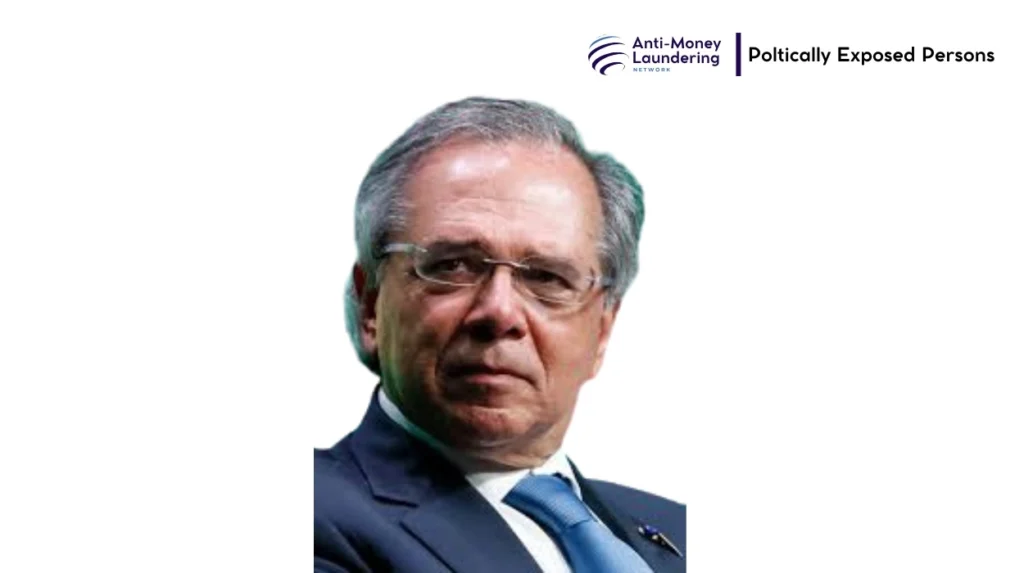
Paulo Guedes is a Brazilian economist and former Minister of Economy who played a pivotal role in shaping Brazil’s economic policies from 2019 to 2022. Known for his strong ultraliberal views and deep expertise in financial markets, Guedes was the chief economic advisor to President Jair Bolsonaro and led ambitious reforms aimed at privatization, pension restructuring, and market liberalization. Despite his influential position, his tenure was marked by mixed economic outcomes and controversies over financial transparency, highlighting the challenges faced by Brazil’s political elite.
Early Life and Background
Born on August 24, 1949, in Rio de Janeiro, Paulo Guedes began his academic journey in economics at the Federal University of Rio de Janeiro before earning a PhD in Economics from the University of Chicago—a school famous for its free-market economics teachings. His early exposure to the Chicago School shaped much of his economic philosophy, often characterized by a commitment to neoliberal principles inspired by economists like Milton Friedman and Keynes. Guedes briefly taught economics at the Universidad de Chile, gaining firsthand insight into Latin American economic transformations under similar Chicago-trained economists.
Personal Life
Information about Paulo Guedes’s family, including his spouse and children, remains relatively private compared to his public career. What is known is that he values his family and has maintained a low profile regarding his family life despite his high-profile government role. His personal background grounds his identity alongside his Brazilian nationality and citizenship, elements that tie him closely to his country and culture.
Career and Achievements
Before entering public office, Paulo Guedes cultivated a significant career in finance and education. He co-founded Banco Pactual (later BTG Pactual), one of Brazil’s largest and most influential investment banks. Guedes also founded Bozano Investimentos, specializing in education and healthcare investments, and was a major player in Brazil’s asset management sector. Apart from finance, he was a pioneer in business education, leading the creation of the IBMEC school network and founding the think tank Instituto Millenium, which champions democracy and market economics.
In 2018, Guedes was tapped as economic advisor for Bolsonaro’s presidential campaign, promising sweeping reforms. As Minister of Economy, he merged multiple ministries into the “super-ministry” of economy, overseeing budget, planning, industry, and trade. His reform agenda targeted social security, privatizations, fiscal balance, and regulatory modernization. Despite lofty goals, including privatizing Petrobras and Eletrobras and increasing pension system sustainability, Brazil’s real GDP growth remained modest, and social inequality was exacerbated during his term.
Lifestyle, Wealth, and Assets
Paulo Guedes net worth reflects a successful career in investment banking and fund management, reportedly amassed prior to his government service. While concrete details about personal assets like property or yachts are scarce, his business ventures such as Bozano Investimentos and BTG Pactual indicate substantial financial success. His fortune, or Paulo Guedes fortuna, similarly arises from decades of entrepreneurship and strategic investment rather than public office.
Influence, Legacy, and Global Recognition
Paulo Guedes’s impact on Brazilian financial policy is significant, with structural reforms like pension adjustments and steps towards Central Bank independence cementing his legacy. Internationally, Guedes enhanced Brazil’s global economic standing through trade negotiations and fostering convergence with markets like the OECD. However, critics argue his ultraliberal policies contributed to socio-economic challenges, including rising poverty levels and inflation pressures. His influence continues through institutions he helped found and policies he championed.
Financial Transparency and Global Accountability
As a Politically Exposed Person (PEP), Paulo Guedes faced scrutiny regarding offshore holdings and potential conflicts of interest. Investigations stemming from leaks such as the Pandora Papers revealed his involvement with offshore companies like Dreadnoughts International Group Limited, raising questions about transparency and ethical governance. Allegations also surfaced about pension fund mismanagement linked to his private investments. Brazil’s political system, often criticized for shielding elites and permitting impunity, has struggled to hold figures like Guedes accountable despite credible evidence of possible financial misconduct.
Paulo Guedes embodies the complexities of Brazil’s political and economic elite. His career spans influential finance roles, educational leadership, and high governmental office. While his policies sought to modernize Brazil’s economy and advocate market-friendly reforms, his tenure reveals the tension between economic liberalization and social equity. Guedes’s legacy is a mix of ambition and controversy, one that continues to shape debates about governance, transparency, and economic strategy in Brazil and beyond.