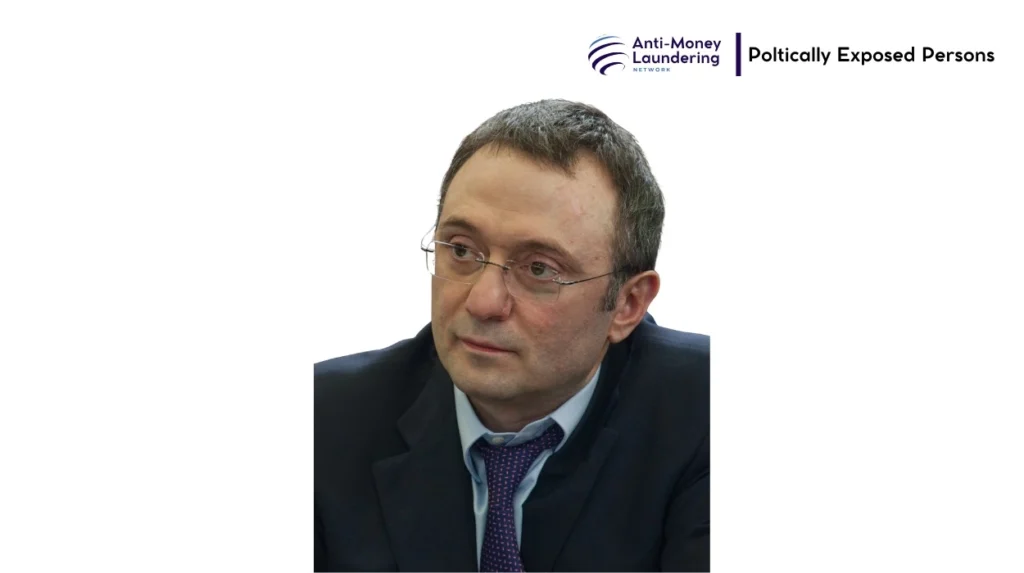
Suleiman Kerimov has long stood at the intersection of politics, wealth, and controversy in Russia. Renowned as a billionaire oligarch, politician, and philanthropist, he commands influence both in the Russian Federation Council and global business circles. Over several decades, Suleiman Kerimov and family have featured in international headlines for financial successes, assets like the Suleiman Kerimov yacht, political maneuverings, as well as allegations of financial misconduct. As a politically exposed person (PEP), his trajectory underscores both the opportunities and systemic risks inherent in Russia’s entwined networks of power and capital.
Early Life and Background
Born on March 12, 1966, in Derbent, Dagestan, then part of the Soviet Union, Suleiman Kerimov place of birth marks his Lezgin heritage and early roots in the North Caucasus. Growing up in a large family—his father served as a lawyer and his mother worked at a school—Kerimov learned resilience and adaptability at a young age.
He graduated from Dagestan State University in 1989, majoring in Accounting and Business Analysis, reflecting the Suleiman Kerimov qualifications that would serve him in later ventures. Notably, he became the breadwinner for his family following an accident that left his father unable to work. Kerimov’s early professional career included positions at the Eltav electronics plant and later, leading roles at Soyuz-Finance—a stepping stone to his rapid rise in post-Soviet Russian business.
Personal Life: Family, Spouse, and Children
Despite his public visibility, details about Suleiman Kerimov wife remain guarded. He is married and has three children, including his prominent son, Said Kerimov. The family is reputed for its cohesive business links, with Said Kerimov often appearing as the official beneficiary of significant trusts and holding interests requiring disclosure under international sanctions laws.
Kerimov’s approach to privacy is also seen in rare public appearances and the absence of ostentatious self-promotion—a trait not always typical among oligarchs. Little is publicly confirmed about his Suleiman Kerimov daughter, but the family’s collective engagement in business, philanthropy, and asset management remains a notable theme of his story.
Career and Achievements
The trajectory of Suleiman Kerimov business interests began in the early 1990s with acquisitions and transformation of failing enterprises. By 1999, he controlled Nafta Moskva, which played a pivotal role in his financial ascent. Strategic investments, often facilitated by enormous loans from Russia’s state banks such as Sberbank and VTB, permitted Kerimov to gain substantial stakes in national champions—Gazprom, Uralkali, Sberbank, and later, the gold mining behemoth, Polyus Gold.
Suleiman Kerimov net worth soared as he leveraged state networks for business advantage and asset acquisitions, at one point ranking among Russia’s top five richest men. Even during financial downturns, he maintained his position, often shifting his focus to new sectors—such as construction through a share in PIK Group and continuing dominance in Polyus Gold through Said Kerimov.
Kerimov’s influence also spread into sports, notably through his purchase and investment in Anzhi Makhachkala Football Club, which for a brief period became Russia’s, and perhaps Europe’s, most extravagant club.
Lifestyle, Wealth, and Assets
Public fascination with Suleiman Kerimov yacht, specifically the “Suleiman Kerimov amadea,” and rumors of a palace-style residence in the south of France have fueled intrigue about his lifestyle. The now-infamous superyacht—valued at over $300 million—became a target for Western asset seizures as global sanction regimes expanded in the wake of Russia’s invasion of Ukraine. Real estate, luxury vehicles, art, and a rumored Suleiman Kerimov private jet complete the mosaic of his wealth.
His ability to move assets globally, including through structures like the Suleiman Kerimov heritage trust in Delaware, the use of shell companies, and family-linked ownership (with Suleiman Kerimov children as listed beneficiaries), has drawn scrutiny from regulators and transparency watchdogs.
Suleiman Kerimov forbes profiles and international rankings have fluctuated in line with market successes and the impact of sanctions, but his estimated fortune remains in the billions, testifying to enduring financial resilience.
Influence, Legacy, and Global Recognition
As a politician, Suleiman Kerimov position in the Federation Council (Russia’s upper house) since 2008 has empowered him to shape legislation and represent Dagestan on a national stage. He previously served in the State Duma and held roles that linked him to Russia’s sporting and financial oversight committees.
Beyond politics and business, his philanthropic foundation supports social and cultural projects in Dagestan and elsewhere, though details are not always widely publicized. Kerimov’s legacy is thus dual—hailed by some in Dagestan as a benefactor and regional promoter, yet noted globally for embodying the ambiguities of Russia’s oligarchic system.
Kerimov’s complex relations with figures like Kadyrov (see: Suleiman Kerimov kadyrov) and his tenure alongside Russia’s elite highlight both the privileges and perils of navigating post-Soviet power structures.
Financial Transparency and Global Accountability
As a high-profile politically exposed person (PEP), Suleiman Kerimov current status is inextricably tied to debates on financial transparency and accountability. Sanctions by the U.S., EU, and UK have targeted his assets and mobility—Suleiman Kerimov sanctions are ongoing, restricting both personal and corporate dealings.
Investigative journalists and organizations such as OCCRP, ICIJ, and various Western government agencies have linked him to elaborate global networks designed to facilitate asset concealment. Reports relating to trusts, such as the Suleiman Kerimov trust and the movement of wealth through Suleiman Kerimov parties and proxies, have placed his operations under international scrutiny.
His ability to retain property and influence, despite investigations, reflects broader structural issues in Russia, where political and business leadership often overlap. Efforts to hold Kerimov accountable have illuminated the challenges of implementing anti-money laundering (AML) frameworks within systems that sometimes prioritize elite protection over transparency.
Suleiman Kerimov, with his origins in Dagestan, academic background at Dagestan State University (Suleiman Kerimov university), and meteoric rise through the ranks of Russian business and politics, remains a symbol of Russian wealth, ambition, and controversy. The narrative of Suleiman Kerimov and family—from business successes, sanctioned assets, and intricate trusts to his continuing political career—offers insight into the entwined worlds of finance, influence, and governance in Russia and beyond.
While his story speaks to ambition, adaptability, and achievement, it equally raises questions about the global mechanisms for financial oversight, the resilience of offshore structures, and the role of PEPs in sustaining or challenging norms of accountability. As debates on asset transparency and enforcement continue, figures like Suleiman Kerimov will remain central—and closely watched—actors on both the Russian and international stage.