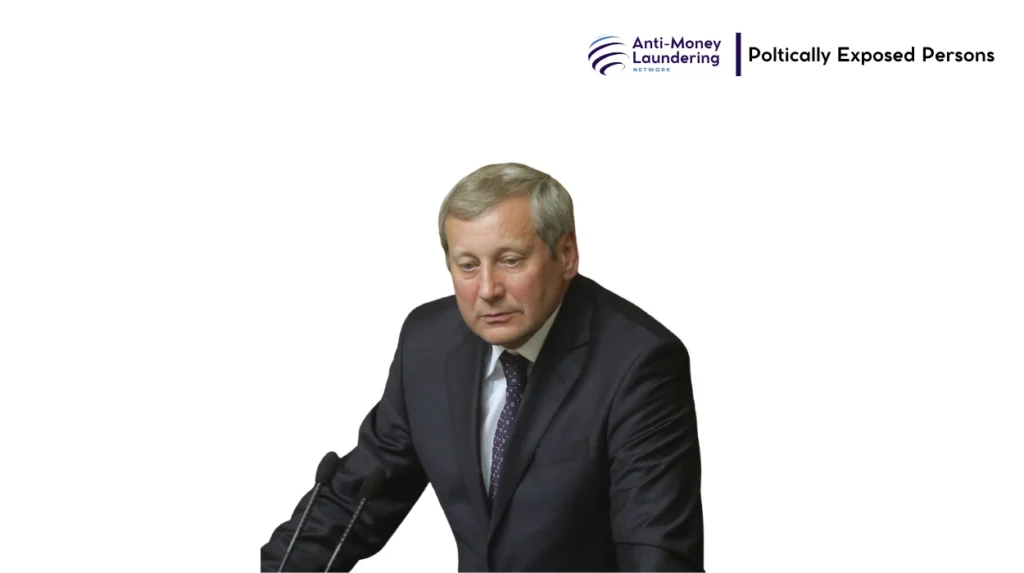
Valeriy Voshchevsky stands out as a prominent figure in Ukrainian business and politics, having held significant government and financial leadership roles during a period marked by both reform and controversy. Renowned for his brief yet impactful ministerial tenure as well as his corporate achievements, his career arc provides a window into Ukraine’s broader struggles with governance, transparency, and oligarchic networks. This comprehensive profile explores his life, political path, family background, and the critical global conversation surrounding his offshore affiliations and status as a politically exposed person (PEP).
Early Life and Background
Valeriy Voshchevsky was born on February 11, 1956, in Ukraine—a detail that establishes both his origins and the context of his early formation. His childhood and formative years coincided with the latter half of the Soviet era, likely influencing his values and career approach. He holds Ukrainian nationality and citizenship. The specific place of birth is not consistently detailed in the public domain but is broadly referenced as Ukraine. Regarding his education, Valeriy Voshchevsky attended Kyiv National Economic University, an academic institution notable for producing several Ukrainian political and business leaders. This academic background provided the technical foundation for his later work as both an engineer and government official. While information about his early family context is limited, records do not indicate any direct familial ties to other major political or business dynasties.
Personal Life: Family, Spouse, and Children
Information on Valeriy Voshchevsky family remains relatively private. Public records and reporting do not definitively identify a Valeriy Voshchevsky spouse or confirm Valeriy Voshchevsky children. This opacity is not uncommon among Ukrainian officials, especially those who have navigated turbulent political and business environments, sometimes as a measure to protect loved ones from scrutiny or external risks. While there is mention of the surname “Voshchevska” in public records—including individuals active in advocacy and media—there is no public proof directly linking these people as children or immediate family to Valeriy Voshchevsky. As such, the available information underlines his commitment to personal privacy but also creates speculation and curiosity regarding his family circumstances.
Career and Achievements
Valeriy Voshchevsky built his early career as an engineer and rapidly transitioned into business and public administration. He held various positions within the State Tax Administration of Ukraine and became chairman of the board at Ukrgasbank, underscoring his role in Ukraine’s financial system. Politically, he advanced from the Minskyi District Council and Kyiv City Council to the Verkhovna Rada (parliament). His most notable position was as Vice Prime Minister of Ukraine from December 2014 to September 2015, during which he oversaw the pivotal areas of national ecology, infrastructure, and construction.
His term coincided with a tumultuous period in Ukraine, marked by the aftermath of the Euromaidan movement, annexation of Crimea, and continuous reform efforts. Valeriy Voshchevsky received several state honors for his contributions, including the Order of Merit (first class) and the Order of Prince Yaroslav the Wise (V degree), as well as the title of Honored Economist of Ukraine. Throughout his trajectory, there is no indication in the public domain that he had religious affiliations significant to his public persona (Valeriy Voshchevsky religion remains unconfirmed in available records).
Lifestyle, Wealth, and Assets
Reliable assessments of Valeriy Voshchevsky net worth are challenging to verify due to limited transparent asset disclosures and the complexities of wealth reporting common among Ukrainian elites. His career in both high-ranking government office and the banking sector suggests considerable wealth, though there is no public confirmation of personal ownership of palatial residences, luxury yachts, or internationally known mansions. However, his presence in global offshore leaks and records—particularly regarding control over Maltese company Marfa Holding Ltd—raises ongoing concerns about undeclared overseas assets and asset-shielding mechanisms. The lack of official disclosure surrounding his offshores points to the broader systemic issue of asset opacity in Ukrainian political circles.
Influence, Legacy, and Global Recognition
Despite a relatively brief tenure at the height of Ukrainian government, Valeriy Voshchevsky is recognized for his engagements in both state policy and private finance. His influence during post-Euromaidan reforms situates him among the significant actors in Ukraine’s recent history. Yet, unlike more internationally renowned contemporaries such as Who is Valeriy Khoroshkovskyi—another prominent Ukrainian official and business figure—Valeriy Voshchevsky is more directly associated with financial management and the technical administration of infrastructure rather than geopolitical or security affairs. His induction into various orders and awards signals domestic recognition, while the international focus originates mainly from his appearance in major document leaks.
Financial Transparency and Global Accountability
As a politically exposed person (PEP), Valeriy Voshchevsky exemplifies the accountability challenges faced by Ukraine. While his professional trajectory includes notable achievements, leaks such as the Paradise and Pandora Papers link him directly to offshore structures established prior to and during his time in public office. According to the Organized Crime and Corruption Reporting Project, he was a director and shareholder of Marfa Holding Ltd, a Maltese entity founded in December 2013 and dissolved in January 2016—the period overlapping with his vice prime ministerial role. He failed to declare this entity in his mandatory asset declarations, constituting a breach of anti-corruption legislation.
No evidence of criminal prosecution is public, and attempts by OCCRP and ICIJ to solicit comment were unreturned. This lack of formal enforcement highlights recurring issues in the Ukrainian system, where elite actors rarely face significant investigation or sanction absent exceptional public pressure. The implied, though not judicially proven, intent behind undisclosed offshore relationships is asset shielding or tax minimization, reflective of the culture of impunity still affecting segments of Ukraine’s political elite.
In summary, Valeriy Voshchevsky is a figure whose career illustrates both the promise and limitations of contemporary Ukrainian institutional development. His engineering and economics background, public sector leadership, and honors demonstrate competence and state contribution. However, the opaque management of his personal wealth, failure to declare international assets, and unresolved questions regarding family ties restrict a full positive assessment. Currently, he does not occupy a public post (Valeriy Voshchevsky current status: retired or inactive). As debates continue worldwide about political accountability and wealth transparency, the experience of Valeriy Voshchevsky—paralleled by other Ukrainian figures such as valeriy voitishchuk and debated alongside questions like Who is Valeriy Khoroshkovskyi—remains a case study for students of governance, public integrity, and global AML norms.
Valeriy Voshchevsky place of birth, Valeriy Voshchevsky date of birth, Valeriy Voshchevsky citizenship, Valeriy Voshchevsky position, and Valeriy Voshchevsky education all thread into this multifaceted biography, forming a critical reference point for understanding the connections between state office, personal wealth, and public scrutiny in 21st-century Ukraine.