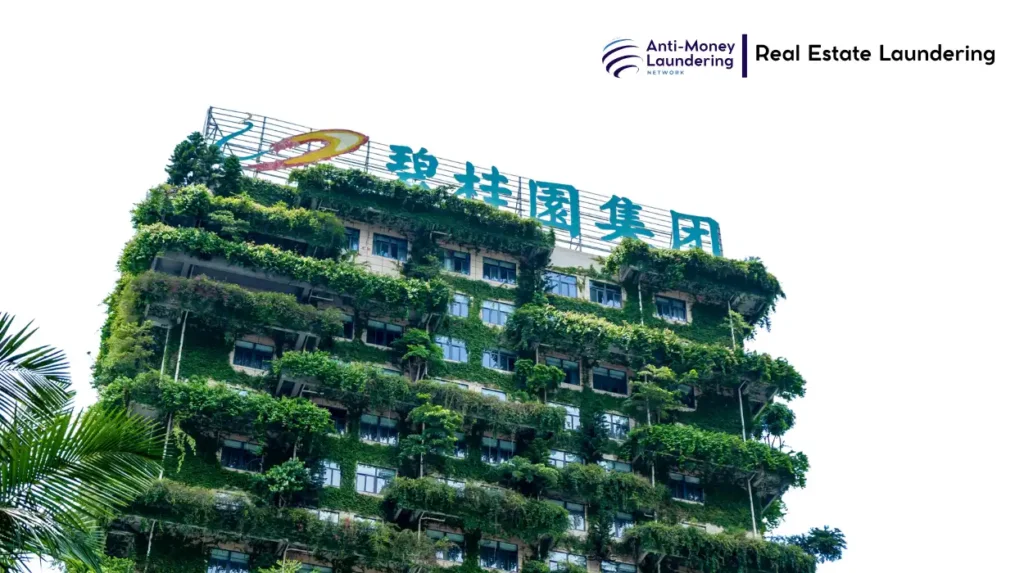
Country Garden Holdings has long been a cornerstone of China’s real estate boom, transforming rural landscapes into modern urban enclaves while grappling with the sector’s inherent volatility. As a major force in residential development, the company exemplifies both innovation and the risks embedded in high-stakes property ventures, particularly amid evolving regulatory and economic pressures.
Project Introduction (Formation & Background)
Country Garden Holdings emerged in 1992 against the backdrop of China’s nascent real estate market, sparked by land-use reforms that allowed private developers to enter the housing fray. Founded in the industrial hub of Shunde, Foshan, the company began as Shunde Country Gardens Real Estate Development Co., Ltd., focusing on upscale villa communities that catered to affluent buyers from nearby Hong Kong.
This timing was prescient: post-1988 rural land reforms opened opportunities for entrepreneurs like Yang Guoqiang, who had transitioned from farming and low-level construction gigs to spotting demand for quality suburban living.
The Country Garden Holdings founder Yang Guoqiang drew from personal experience—having built his first steel structures in the 1980s—to craft a vision of “garden-style” residences blending residential comfort with resort-like amenities. Early projects emphasized manicured landscapes, clubhouses, and 24-hour security, setting a premium benchmark when most housing was utilitarian state-built apartments.
By 1995, the firm had sold out its flagship Shunde project, generating initial capital for expansion. The Country Garden Holdings Foshan headquarters, still operational today, symbolizes this grounded start, housing administrative functions and serving as a model for integrated townships.
Over decades, the Country Garden Holdings company overview reveals a trajectory from local player to national behemoth. A 2007 listing on the Hong Kong Stock Exchange (HKEX: 2007) provided global capital access, fueling aggressive growth. Revenue history paints a picture of meteoric rise: starting with modest villa sales, it scaled to CNY 43.1 billion by 2010, surging past CNY 300 billion in the mid-2010s through high-volume pre-sales.
Peak years saw contracted sales exceeding CNY 550 billion annually, driven by a vast property portfolio that diversified into apartments, townhouses, commercial spaces, and even cultural tourism sites. This expansion mirrored China’s urbanization wave, where over 500 million rural migrants sought modern homes, positioning Country Garden as a volume leader in mid-to-upper-tier markets.
Management and Project Head
Leadership at Country Garden Holdings blends family legacy with professional oversight, anchored by the Yang family. Yang Guoqiang, after steering the company through its formative years, relinquished day-to-day control in 2005 but retained influence as honorary chairman. His daughter, Yang Huiyan, assumed the helm, inheriting not just equity but a stake that propelled her Country Garden Holdings Yang Huiyan wealth to billionaire status—once topping Forbes lists at over $20 billion.
Her tenure emphasized operational efficiency, exemplified by the Country Garden Holdings 456 model: acquiring land in four months, launching pre-sales in five, and recovering costs in six, achieving a blistering project cycle under 15 months.
The board comprises seasoned executives and non-executives, including representatives from major shareholders like Ping An Insurance, which invested significantly in 2015. Key figures include CFOs adept at navigating debt markets and project heads overseeing vertical integration— from in-house robotics for prefab construction to property management via subsidiary Country Garden Services.
Management’s track record shines in early hits like Guangzhou Country Garden (1999), which defied the Asian Financial Crisis by selling thousands of units rapidly, and Beijiao Country Garden, pioneering the “one-stop” township concept.
Financial links extend to global institutions: offshore bonds underwritten by HSBC and Standard Chartered funded expansion, though strains emerged with the Country Garden Holdings auditor change PwC amid 2023 audit delays.
The Country Garden Holdings ESG report 2023 underscores commitments to green building and community welfare, delivering over 600,000 homes while integrating solar tech and waste management. Reputationally, executives are viewed as pragmatic survivors, though whispers of political navigation in Guangdong circles add layers to their influence.
Country Garden Holdings Projects China
The breadth of Country Garden Holdings projects China underscores a strategy prioritizing scale and accessibility. With a focus on Country Garden Holdings third-tier cities focus, the firm targeted underserved markets like those in Henan and Sichuan, where land costs were lower and demand from upwardly mobile families high.
Signature developments include Phoenix Town (2001), a sprawling 10-square-kilometer complex blending residences, schools, and retail; and Silver Beach in Beihai, which shattered sales records with CNY 45 billion in bookings over a weekend in 2013.
The property portfolio now exceeds 3,000 projects, encompassing luxury villas, mid-range apartments, and mixed-use hubs. Innovations like the Country Garden Holdings 456 model enabled rapid rollout, with pre-fabricated components slashing build times. In first- and second-tier cities like Guangzhou and Beijing, flagship estates feature elite amenities—private clubs, international schools—commanding premiums. This diversification buffered early volatility, evolving from pure residential to integrated ecosystems supporting millions.
Country Garden Holdings international projects extended this playbook abroad. The crown jewel, Country Garden Holdings Forest City Malaysia, a $100 billion mega-development on 30 square kilometers in Johor, launched in 2014 with fanfare from Malaysian PM Najib Razak.
Envisioned as a self-sustaining city for 700,000 residents, it includes man-made islands, luxury condos, and commercial zones, though sales slowed amid China capital controls. Other ventures like Danga Bay and projects in Australia highlight global ambitions, contributing billions to foreign GDPs while repatriating profits.
Controversies & Scandals
No stranger to scrutiny, Country Garden Holdings navigated China’s property cycles with relative resilience until the 2020s downturn. The Country Garden Holdings debt crisis 2025 intensified after delivery slumps forecasted deeper losses, capping a saga that saw the Country Garden Holdings financial default on $11 billion offshore bonds in October 2023.
This triggered cross-defaults and a Hong Kong winding-up petition from creditor Kingboard Holdings, delayed repeatedly into 2026.
Allegations swirl around Country Garden flipping schemes allegations in luxury segments, where rapid resales of villas reportedly yielded kickbacks, echoing sector-wide concerns over Country Garden villa resale kickbacks. Country Garden corruption cases executives surfaced peripherally—such as probes into local sales teams for bribery—but no high-level indictments.
Reports hint at hidden money flows, with Country Garden Holdings suspicious real estate deal patterns in pre-sales drawing side-eyes, though unproven. Country Garden sanctions links Middle East remain speculative, tied to broader developer exposure rather than direct ties.
Money Laundering Activities
Real estate’s opacity positions it as a Country Garden Holdings high-risk sector globally, with FATF flagging tactics like overvaluation and nominee purchases. For Country Garden, the 456 model’s velocity raises questions about Country Garden Holdings layering (money laundering stage), where quick flips could obscure origins.
Country Garden Holdings money laundering risks amplify via opaque Country Garden Holdings beneficial ownership transparency, especially in third-tier projects where registries lag.
Practices like Country Garden Holdings real estate transaction via layered SPVs mirror typologies: suspected fake buyers inflating values, under-invoicing construction, and shell intermediaries. Country Garden AML compliance China reflects national gaps—weak client verification and source-of-funds scrutiny—enabling potential Country Garden Holdings source of funds from high-risk origins.
A Country Garden high-risk funds probe might scrutinize luxury acquisitions for Country Garden Holdings property acquisition anomalies, demanding robust Country Garden Holdings risk assessment from Country Garden Holdings real estate professionals. Country Garden Holdings AML compliance frameworks exist on paper, per ESG disclosures, but enforcement falters amid political priorities.
International Links & Benefited Countries
Cross-border threads weave through Country Garden’s fabric. Cayman-incorporated since IPO, it leverages Country Garden Holdings offshore restructuring for $17.7 billion in debt workouts as of 2026. Malaysia reaped massively from Forest City, injecting Chinese capital into Iskandar while creating jobs; sales topped RM20 billion pre-slowdown.
Hong Kong served as a financing conduit, with HKEX enabling bond issuances that funded global pushes into the UK and Australia. BVI entities layered ownership, benefiting tax havens indirectly. While Country Garden sanctions links Middle East lack evidence, luxury sales potentially funneled petrodollars, aiding economies like the UAE through resale chains. These ties repatriated yields, sustaining China operations amid domestic deleveraging.
Regulatory Actions & Legal Proceedings
Scrutiny spans jurisdictions without FATF grey-listing China directly. Hong Kong courts managed the 2024 petition, granting adjournments for talks; U.S. Chapter 15 in 2025 recognized Cayman proceedings, shielding assets. PRC’s “three red lines” policy (2020) curbed leverage, mandating completions—no AML-specific fines hit Country Garden, unlike peers.
Country Garden Holdings auditor change PwC stemmed from scope disputes, not misconduct. Ongoing creditor pacts, backed by banks, aim for consensual restructurings, with no FIA/NAB extraterritorial reach. FATF urges bolstered Country Garden Holdings client verification in real estate.
Public Impact & Market Reaction
The fallout rippled widely: Country Garden Holdings stock price HKEX cratered 90% from 2021 highs, eroding billions in market cap and dragging indices. Homebuyers, holding unfinished units, protested nationwide, denting trust. Property prices dipped 20-30% in third-tier cities, idling construction and spiking unemployment.
Yet, 2023 delivery leadership (71 million sqm) mitigated some damage, stabilizing supply. Investor flight hit bonds hardest, but retail bonds saw haircuts negotiated. Economic effects included slowed urbanization, though diversification cushioned blows.
Early 2026 sees Country Garden operational yet restructured: $17.7 billion debt deals finalized, focusing asset disposals and core markets. Country Garden Holdings revenue history contracted to under CNY 200 billion projected for 2025, with narrowing losses.
Experts foresee cautious recovery if stimulus revives demand—scale and land banks (over 20 million sqm salable) provide buffers. Risks persist: prolonged downturns or AML tightening could force liquidations. Optimists highlight tech pivots; skeptics warn of overcapacity. As an evergreen case, it illustrates real estate’s dual-edged sword—growth engine and vulnerability hub.