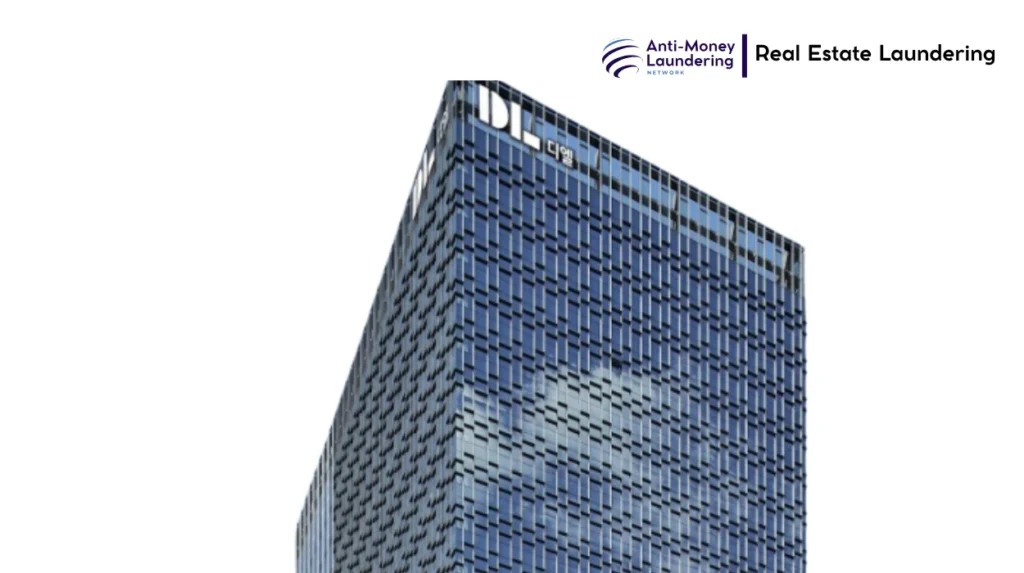
DL E&C, formerly known as Daelim Industrial, is one of South Korea’s largest and most established engineering, procurement, and construction (EPC) companies. The firm traces its origins to 1949, when it was founded as Korea’s first dedicated construction company, initially focusing on domestic infrastructure and industrial plant projects. Over the decades, it evolved into a diversified conglomerate with major activities in civil engineering, building construction, plant engineering, and residential development under its DL E&C residential brand, notably the e-Pyeonhansesang apartment series.
The company’s initial vision centred on supporting Korea’s post-war reconstruction and industrialisation, later expanding to large-scale petrochemical plants, power facilities, and overseas EPC contracts. By the 2000s, DL E&C had repositioned itself as a global developer, balancing domestic real estate and infrastructure with significant international projects, especially in the Middle East and Southeast Asia.
DL E&C headquarters is located in Seoul, South Korea, with its main office at Doneuimun D Tower, Tongil-ro 134, Jongno-gu, Seoul. DL E&C location data shows additional regional offices and project bases across South Korea and abroad, supporting its global presence in engineering and construction. DL E&C contact information for investors and business partners is publicly available through its investor relations (IR) channel, including email and phone contacts for financial queries.
Management and Project Head
DL E&C operates under the broader DL Group umbrella, with a board of directors and executive team responsible for strategic decisions across its business segments: civil engineering, building construction, plant EPC, and residential development. Key decision-makers include the chairman, CEO, and division heads overseeing major projects such as the Busan New Port hinterland development and large-scale petrochemical complexes.
Senior executives have historically come from engineering and finance backgrounds, with several holding long tenures within DL Group or its affiliates. Their reputations are tied to DL E&C’s ability to secure massive EPC contracts in the Middle East, deliver complex infrastructure domestically, and maintain its residential brand strength in Korea’s competitive housing market.
DL E&C corporate governance structures include board committees on audit, risk, and ESG, aligned with Korean stock exchange requirements and international best practices. The company joined the United Nations Global Compact (UNGC) in 2023, committing to principles on human rights, labour, environment, and anti-corruption.
DL E&C Company Overview, History, and Business Segments
From its founding in 1949, DL E&C grew alongside South Korea’s rapid industrialisation, participating in early national infrastructure projects and later expanding into heavy industry and overseas EPC. The company rebranded from Daelim Industrial to DL E&C as part of a broader DL Group restructuring, reflecting its shift toward integrated engineering and development.
DL E&C’s operations span four core areas: civil engineering and infrastructure including ports, highways, tunnels, and urban redevelopment; building construction covering commercial towers, public facilities, and industrial buildings; plant EPC involving petrochemical plants, refineries, power generation, and chemical facilities, particularly in the Middle East; and residential development with large apartment complexes under the e-Pyeonhansesang brand, primarily in the Seoul metropolitan area and other major cities. These DL E&C services leverage its engineering capabilities and construction capabilities to deliver turnkey solutions for public and private clients.
Notable DL E&C major projects include the Busan New Port hinterland development, a KRW 575.4 billion civil works contract (DL E&C stake: KRW 241.7 billion), the largest single construction project at Busan New Port since 2006, targeting completion by 2034. The company also executes petrochemical and refinery projects in Saudi Arabia, UAE, and other Gulf states, forming a significant portion of its Middle East projects portfolio, alongside large-scale residential redevelopments such as Sangdaewon-2 in Seongnam, involving over KRW 1.2 trillion in project value. DL E&C’s global presence extends across Asia, the Middle East, and select markets in Europe and the Americas, though its core revenue remains heavily weighted toward South Korea and the Gulf.
DL E&C Financial Performance, Revenue, and Investor Information
DL E&C’s financial performance in recent years reflects both opportunities and pressures. In 2023, the company reported consolidated revenue of approximately KRW 8.3 trillion, with operating profit around KRW 271 billion. By 2024, revenue reached KRW 7.99 trillion, with operating profit of KRW 331 billion and an operating margin of 4.1%. For 2025, analysts project revenue of around KRW 7.4 trillion and operating profit of KRW 387 billion, with margins improving to 5.2% as cost structures stabilise. Fourth-quarter 2025 results showed consolidated revenue of KRW 1.7 trillion, down 31% year-on-year, but net profit surged 97% due to tax refunds and equity-method gains. These figures are important for DL E&C investor information, as they signal resilience in the housing division but ongoing challenges in plant and overseas segments.
DL E&C is listed on the Korea Exchange (KRX: 375500), with a shareholder base that includes DL Group affiliates, institutional investors, and retail shareholders. DL E&C ownership structure features DL Co. and related entities as key shareholders, though detailed beneficial ownership beyond major corporate holders is not always transparent in public filings. For DL E&C investor information, the company publishes quarterly earnings reports, data sheets, and sustainability updates via its IR portal, with contacts for analysts and shareholders.
DL E&C Technology, Innovation, and Construction Capabilities
DL E&C has invested in construction technology to improve efficiency and safety, particularly in large civil works and high-rise residential projects. Recent innovations include advanced tunnelling methods, such as the vertical tunnel excavation at Yokmang Mountain for the Busan New Port hinterland project, completed in seven months using modern rock-breaking techniques. The company’s DL E&C innovation strategy focuses on digital project management and BIM (Building Information Modeling), eco-friendly construction methods aligned with its sustainability initiatives, and automation and prefabrication to reduce on-site labour risks.
In the plant sector, DL E&C’s engineering capabilities cover design, procurement, and construction of petrochemical complexes, refineries, and power facilities. Its plant projects in the Middle East include long-term EPC contracts for Saudi and UAE clients, contributing significantly to DL E&C revenue and international projects exposure.
DL E&C Sustainability Initiatives, ESG, and Safety Record
DL E&C formalised its sustainability initiatives through its ESG Management Strategy, structured around three pillars: sustainable green construction (E), social responsibility (S), and responsible business (G). The company set 2030 targets across nine focus areas, including carbon reduction, resource efficiency, community engagement, and governance enhancements. In 2023, DL E&C joined the UN Global Compact, committing to anti-corruption, human rights, labour standards, and environmental protection. Its ESG initiatives are reflected in annual sustainability reports, which disclose performance on emissions, safety, and governance metrics.
Despite these commitments, DL E&C has faced scrutiny over its safety record. In late 2025, a worker was killed at the Jinhae New Port breakwater construction site, triggering a Ministry of Employment and Labor investigation into potential violations of the Serious Accidents Punishment Act. In 2023, multiple fatalities at DL E&C–supervised sites led to public apologies from DL Group and DL E&C executives and heightened regulatory attention. These DL E&C workplace incidents underscore ongoing challenges in enforcing safety standards across complex, multi-contractor sites, even as the company emphasises its ESG initiatives and HSE (Health, Safety, Environment) systems.
Controversies & Scandals: Legal Cases, Regulatory Investigations, and Governance Concerns
DL E&C has been involved in several high-profile legal cases and regulatory investigations. Prosecutors investigated allegations that DL E&C overstated construction costs by tens of billions of won in 2019 and transferred excess funds to subcontractors. In May 2026, prosecutors cleared a former executive, citing insufficient evidence, while DL E&C attributed the payments to legitimate cost adjustments. Saudi authorities issued an KRW 853.3 billion (≈USD 556 million) tax notice related to engineering and procurement services performed in Korea for Saudi clients between 2006 and 2019. DL E&C disputes the assessment, arguing it is unlikely to result in actual payment. DL E&C has also engaged in litigation over its role as constructor in major redevelopment projects, such as Sangdaewon-2, where courts temporarily restored its builder status amid disputes with resident groups and competing firms. These DL E&C regulatory investigations and legal cases highlight governance and compliance risks, though none have resulted in convictions or major penalties directly tied to corruption or money laundering as of 2026.
Concerns around beneficial ownership transparency and real estate transactions are relevant in South Korea’s market, including projects involving major builders like DL E&C, which has been criticised for limited transparency and complex ownership chains involving special purpose companies (SPCs). While there is no public evidence of a DL E&C suspicious real estate deal or confirmed money laundering via its properties, the sector is considered high-risk for layering and concealment of funds through overvaluation, nominee owners, and offshore structures. In this context, DL E&C real estate transaction practices, property acquisition methods, and source of funds verification for large buyers are relevant for AML compliance and risk assessment, particularly for real estate professionals and financial institutions monitoring the high-risk sector of luxury housing and large-scale developments. No specific DL E&C client verification failures or layering (money laundering stage) schemes have been publicly documented, but the broader environment suggests the need for enhanced due diligence on high-value purchases linked to DL E&C projects.
Busan New Port, Port Infrastructure, and Strategic Importance
The Busan New Port hinterland development is one of DL E&C’s flagship port infrastructure projects. Selected in September 2021, DL E&C’s civil engineering division is executing the North Container Terminal Phase 2 hinterland shaping, with a total construction cost of KRW 575.4 billion and a DL E&C stake of KRW 241.7 billion. The project involves excavating rock from Yokmang Mountain and using it for land reclamation at Busan New Port and Jinhae New Port, with completion targeted for 2034. It is the largest single construction contract at Busan New Port since the port opened in 2006, underlining DL E&C’s expertise in large-scale civil works and its strategic role in national logistics infrastructure.
The Busan New Port expansion is critical for South Korea’s trade competitiveness, particularly as global shipping routes shift and container volumes grow. DL E&C’s involvement enhances its construction capabilities profile and strengthens ties with state-linked entities like the Busan Port Authority (BPA). However, the project’s complexity and scale also raise risk assessment considerations around cost overruns, safety, and environmental impact, which are closely watched by regulators and investors.
Middle East Projects, International Expansion, and Benefited Countries
DL E&C’s Middle East projects form a cornerstone of its international projects strategy. Since the 1990s, the company has secured more orders in Iran and the Gulf than any other Korean builder, working on refineries, petrochemical plants, and infrastructure for Saudi, UAE, and other regional clients. These contracts have provided significant revenue streams and foreign exchange earnings for South Korea, while also benefiting host countries through technology transfer, job creation, and enhanced energy infrastructure. Countries that directly or indirectly benefited include Saudi Arabia, UAE, Kuwait, and Iran, where DL E&C’s plant projects and engineering capabilities have supported national development plans.
DL E&C’s international projects involve complex cross-border financing, procurement, and subcontracting arrangements. While no public reports indicate illicit offshore accounts or suspicious investments directly tied to DL E&C, the structure of large EPC contracts—often involving multiple jurisdictions and intermediaries—creates potential vectors for layering (money laundering stage) if not properly monitored. For AML compliance, institutions dealing with DL E&C-related transactions are expected to conduct robust client verification, source of funds checks, and risk assessment, especially for high-value contracts and joint ventures with state-owned entities.
Regulatory Actions, Legal Proceedings, and AML Context
To date, there have been no public actions by South Korea’s Financial Intelligence Unit (KoFIU), Financial Supervisory Service (FSS), or international bodies like FATF specifically targeting DL E&C for money laundering or terrorist financing. The company’s known regulatory investigations relate to cost accounting, tax disputes, and safety violations rather than financial crimes. In the Busan LCT scandal (2015–2017), prosecutors indicted 24 people over bribery and favours tied to a waterfront tower project, but DL E&C was not named as a subject of that probe. This underscores that, while South Korea’s real estate and construction sectors are considered high-risk for corruption and laundering, DL E&C has not been centrally implicated in such cases in public records.
South Korea has been flagged in international assessments as having weaknesses in real estate AML, including gaps in beneficial ownership transparency and oversight of cash-intensive transactions. Within this high-risk sector, DL E&C’s large-scale residential and commercial projects could theoretically be used for overvaluation, layering, or suspicious real estate deals, though no specific instances have been publicly confirmed. For real estate professionals, banks, and regulators, DL E&C-related transactions warrant standard AML compliance measures: enhanced due diligence on high-value purchases, scrutiny of source of funds, and monitoring for unusual transaction patterns.
Public Impact, Market Reaction, and Economic Effects
DL E&C’s financial results, safety record, and legal disputes influence investor sentiment and public trust. The 2025–2026 earnings volatility, combined with high-profile accidents and tax disputes, has contributed to cautious DL E&C investor information interpretations, though the company remains a key player in Korea’s construction and housing markets. For homebuyers, DL E&C’s residential brand and e-Pyeonhansesang series carry strong market recognition, often commanding premium prices in sought-after locations. However, controversies over safety, labour practices, and governance can affect perceived value and long-term demand.
At a macro level, DL E&C’s role in strategic infrastructure like Busan New Port and major petrochemical projects supports national economic growth and employment. Yet, recurring safety incidents and governance questions highlight systemic issues in Korea’s construction industry, affecting market trust levels and prompting calls for stronger oversight and AML compliance in real estate and infrastructure finance.
As of 2026, DL E&C remains operational and financially stable, with a strong order book in both domestic and international markets. The company is actively pursuing cost optimisation, portfolio rebalancing, and ESG-aligned growth, while managing legacy risks from past projects and regulatory disputes.
DL E&C’s growth strategy emphasises expanding high-margin residential and urban redevelopment projects in Korea, deepening its Middle East projects pipeline and diversifying into new markets, advancing construction technology and digitalisation to improve productivity and safety, and strengthening corporate governance and ESG initiatives to meet investor and regulatory expectations. Analysts project modest revenue stabilisation around KRW 7.2–7.4 trillion annually through 2027, with improving operating margins as cost pressures ease. The future outlook is cautiously positive, contingent on execution risk management, safety performance, and navigation of geopolitical and tax-related uncertainties. Expert analysis suggests that DL E&C’s long-term success will depend on its ability to balance ambitious global presence with robust risk assessment, AML compliance, and transparent beneficial ownership transparency practices, especially as scrutiny of real estate and infrastructure finance intensifies worldwide.