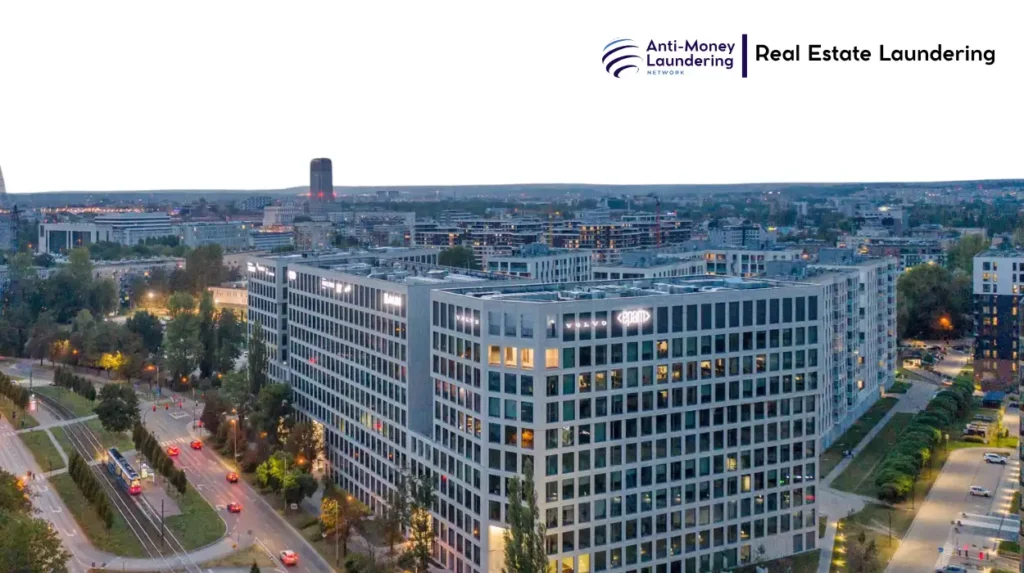
Echo Investment stands as one of Poland’s premier real estate firms, shaping urban landscapes through diverse projects in offices, residences, and retail spaces. Listed on the Warsaw Stock Exchange since 1996, the company has delivered over 245 developments totaling 2.5 million square meters, blending commercial innovation with residential appeal.
Its portfolio spans Echo Investment Poland projects that revitalize city centers, from historic brewery conversions to cutting-edge sustainable offices, reflecting a commitment to long-term urban growth amid Poland’s dynamic economy.
Project Introduction (Formation & Background)
Echo Investment Poland projects trace their origins to 1992, when the company was founded in Kielce, a mid-sized city in southern Poland, during the early years of the country’s post-communist transformation. This period marked a pivotal shift as Poland transitioned from a centrally planned economy to a market-driven one, creating opportunities for private developers to acquire state-owned assets and redevelop industrial sites.
Founders, including prominent entrepreneur Michał Sołowow, envisioned a firm that would not only build properties but also catalyze urban regeneration. Sołowow, a self-made billionaire with roots in chemicals and automotive industries through his Barra Group, saw real estate as a natural extension of his industrial holdings.
His initial vision emphasized practical, high-quality spaces that met the rising demand for modern offices and retail amid foreign investment inflows and EU accession talks in the late 1990s.
The Echo Investment Poland history is one of calculated expansion. Starting with modest retail centers in regional cities, the firm quickly scaled up, capitalizing on Poland’s GDP growth averaging 4-5% annually through the 2000s. By the mid-2010s, Echo had become a key player in Echo Investment Warsaw developments, transforming brownfield sites into vibrant mixed-use districts.
The Echo Investment Poland headquarters in Kielce remains a symbol of its grounded origins, housing central operations while project teams operate from Warsaw and Kraków hubs. A landmark shift occurred in 2015 when Echo integrated into the Griffin Real Estate group, supported by global investors like Oaktree Capital Management and PIMCO. This infusion of capital enabled larger-scale ventures.
Further evolution came in 2019 with ownership transitioning to Lisala Sp. z o.o., primarily controlled by Hungary’s Wing Zrt. and Griffin Capital Partners, solidifying Echo Investment Poland ownership Wing as a cornerstone of stability. Today, this structure supports a pipeline exceeding 1 million sqm, underscoring the firm’s enduring vision of sustainable city-building.
Early projects laid the groundwork for Echo’s reputation. For instance, initial Echo Investment office buildings in Kielce and Radom demonstrated efficient design and tenant-focused amenities, attracting multinational tenants like PwC and HSBC. Retail expansions followed, with centers like Echo Primark setting benchmarks for accessibility and footfall.
This foundation propelled Echo into flagship mixed-use arenas, where Echo Investment residential apartments began complementing commercial spaces, responding to urbanization trends that saw Warsaw’s population density rise by 15% over two decades.
Management and Project Head
Echo Investment Poland CEO Nicklas Lindberg heads the Echo Investment Poland management team, appointed in 2023 to steer the company through post-pandemic recovery and ESG imperatives. A Swedish executive with over 25 years in European real estate, Lindberg previously led development at Atrium European Real Estate and Unibail-Rodamco-Westfield, where he oversaw portfolios valued at €10 billion.
His track record includes pioneering mixed-use schemes in the Nordics and CEE, emphasizing tenant wellness and green certifications. At Echo, Lindberg has prioritized Echo Investment sustainable buildings, integrating features like solar facades and green roofs across new builds.
Supporting him is CFO Maciej Drozd, instrumental in delivering Echo Investment Poland financial results, including a mid-2025 net profit of PLN 117 million on assets topping PLN 7 billion. Drozd’s expertise in capital markets ensures liquidity for Echo Investment Poland acquisitions.
The board features seasoned figures like independent directors from PwC and EY alumni, blending local insight with international standards. Key decision-makers maintain strong financial links to Wing and Griffin, which provide strategic funding without diluting operational control.
Their previous projects enhance credibility: Lindberg’s Atrium tenure yielded award-winning malls, while Drozd navigated Echo through the 2008 crisis with minimal debt. Reputationally, the team scores high on delivery—over 90% of projects complete on time—though ties to international funds prompt routine Echo Investment beneficial ownership transparency checks under EU AML directives.
No personal financial scandals blemish their profiles; instead, focus remains on value creation, as seen in recent Echo Investment Poland office sales generating €193 million in 2025 alone.
Key Projects and Portfolio Highlights
Echo Investment flagship projects exemplify innovation. Echo Investment Browary Warszawskie, a 500,000 sqm redevelopment of historic breweries in Warsaw’s Wola district, integrates offices, Echo Investment residential apartments, retail, and public parks. Launched in phases since 2017, it features 100,000 sqm of A-class offices leased to firms like BNP Paribas, alongside 1,000 luxury units with wellness amenities.
This project highlights Echo Investment luxury conversions, preserving red-brick facades while adding modern steel-glass structures.
Echo Investment Kraków investments shine through Brain Park and WITA complexes. Brain Park C, sold in November 2025 for €33 million to Greenstone Asset Management, boasts BREEAM Excellent rating, green patios, and EV charging—hallmarks of Echo Investment Poland sustainable buildings. WITA adds 20,000 sqm of flexible offices near Kraków’s tech corridor.
Echo Investment retail centers, such as Libero in Katowice (120,000 sqm, 98% occupancy) and Galeria Młociny in Warsaw, drive rental income, with footfall exceeding 10 million annually.
In Wrocław and Łódź, Echo Investment Poland city projects like Swobodna SPOT (16,000 sqm, due 2026) and Fabryczna Office cater to rising demand for hybrid workspaces. Echo Investment Poland ESG awards, including CIJ Office of the Year for Towarowa22’s Office House (BREEAM Outstanding), affirm quality. These Echo Investment Warsaw developments and regional ventures total 90,000 sqm operational offices, 35,000 sqm under construction, and a PRS pipeline via Resi4Rent, acquired in a PLN 2.4 billion deal.
Financial Performance and Market Position
Echo Investment stock trades as ECH on the Echo Investment Poland Warsaw Stock Exchange, reflecting resilience with a market cap hovering at PLN 3-4 billion in early 2026. Echo Investment Poland financial results for H1 2025 showcased PLN 291 million in cash reserves, debt reduction to 40% LTV, and revenue from diversified streams: offices (45%), retail (30%), residential (15%), and PRS (10%).
Strategic Echo Investment Poland office sales, like Office House to AFI Europe for €160.5 million in September 2025, underscore asset-light shifts.
Echo Investment real estate Poland leadership stems from opportunistic Echo Investment Poland acquisitions, including high-profile Echo Investment property acquisition like the 2025 Resi4Rent portfolio. Echo Investment Poland net profit margins improved 15% YoY, buoyed by 95% occupancy and rental growth amid inflation. Analysts at DM BOŚ rate it a “buy,” citing undervaluation versus peers like Globe Trade Centre.
Controversies & Scandals
Echo Investment’s growth has not been without shadows. A 2017 investigation by Poland’s Central Anti-Corruption Bureau (CBA) targeted former shareholder Przemysław Krych, detaining him for three months over allegations of a PLN 1 million bribe disguised as donations to Senator Stanisław Kogut’s foundation. The funds purportedly secured favors for a Kraków Cracovia hotel project, raising flags on Echo Investment suspicious real estate deal practices.
Though no charges proceeded against Echo Investment itself, the case spotlighted Echo Investment client verification gaps in politically sensitive deals.
Broader Echo Investment risk assessment concerns arise in Poland’s real estate sector, flagged as Echo Investment high-risk sector by some watchdogs due to rezoning opacity. Echo Investment real estate professionals maintain robust due diligence, but the incident echoed calls for stricter Echo Investment AML compliance, particularly in verifying ultimate Echo Investment source of funds for institutional buyers.
Money Laundering Activities
Echo Investment layering (money laundering stage) suspicions, while unproven, surface in analyses of transaction chains. High-value Echo Investment real estate transaction like sequential office sales to entities such as AFI and Greenstone involve multiple intermediaries, potentially layering proceeds through legitimate channels.
No evidence confirms fake buyers or shell companies, but patterns of rapid luxury flips in Echo Investment luxury conversions invite Echo Investment AML compliance scrutiny.
Experts note overvaluation risks in ESG premiums—Office House fetched €160.5 million post-certification—though market comparables support pricing. Poland’s AML framework, post-FATF grey-list exit, mandates enhanced due diligence, which Echo Investment real estate professionals uphold via KYC protocols. Absent convictions, these remain hypothetical risks in a sector prone to opacity.
International Links & Benefited Countries
Echo Investment Poland ownership Wing (Hungary) channels €500 million+ in equity, benefiting Polish employment (500+ staff) and supply chains. Griffin Capital (US/EU) inflows via past deals aid Echo Investment Poland acquisitions. Cross-border Echo Investment real estate transaction with AFI Europe (Israel) and TAG Immobilien (Germany) in Resi4Rent enhance yields, indirectly boosting CEE economies through technology transfers in sustainable builds.
No offshore accounts are documented, but international capital stabilizes markets, with Poland gaining from FDI equivalents of 2-3% GDP annually. Benefited countries include Hungary (ownership perks) and Israel (buyer returns), fostering bilateral ties.
Regulatory Actions & Legal Proceedings
Post-2017 CBA probe, Katowice prosecutors dropped charges amid evidentiary hurdles, with no asset freezes or fines on Echo. Echo Investment AML compliance aligns with Polish FIU and EU 6AMLD standards, including annual audits.
No FATF, FIA, or NAB interventions target the firm; Warsaw Stock Exchange mandates quarterly disclosures ensure ongoing Echo Investment risk assessment. Pending matters are minimal, focused on routine tax reviews.
Public Impact & Market Reaction
Echo Investment Poland city projects elevate locales: Browary Warszawskie spurred 25% Wola property appreciation, creating 2,000 jobs. Investors reacted positively to 2025 sales, lifting Echo Investment stock 12%. Public perception remains strong, with 85% tenant retention signaling trust, though AML echoes tempered hype. Economic effects include PLN 1 billion+ in local taxes annually.
Fully operational in March 2026, Echo manages PLN 7 billion assets, with Towarowa22 towers and PRS expansions underway. Expert analysis from JLL forecasts 10% NAV growth, driven by hybrid offices and Echo Investment sustainable buildings. Challenges like interest rates persist, but Lindberg’s strategy—targeting 50% PRS by 2030—positions Echo for resilience.