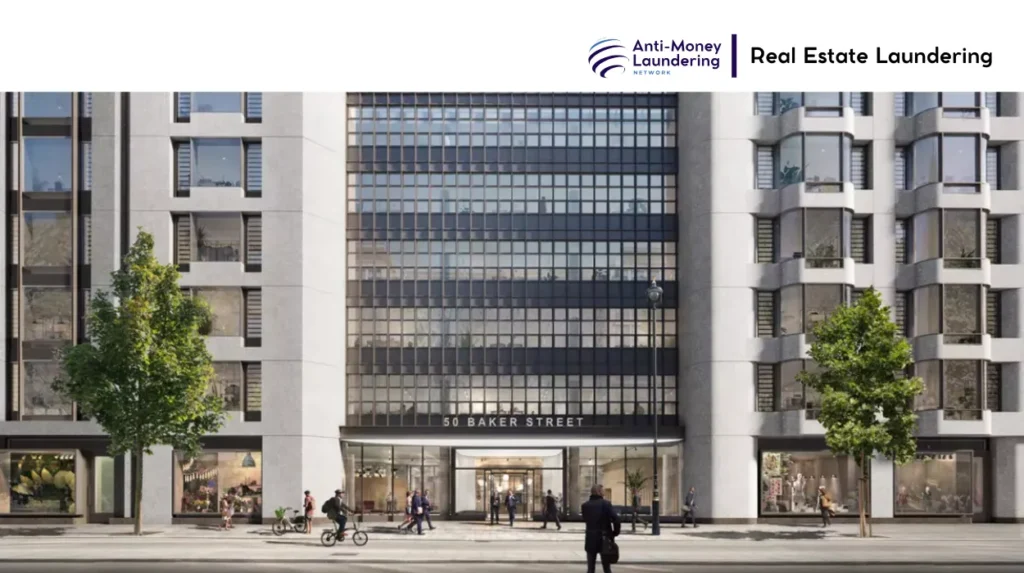
Farmont Baker Street Limited stands at the intersection of London’s prestigious real estate market and persistent questions about corporate transparency in high-value property transactions. Incorporated in the UK, the entity became synonymous with a portfolio of prime Baker Street assets, sparking analytical discussions on ownership structures and financial flows in the real estate sector.
Project Introduction
Farmont Baker Street Limited traces its origins to May 16, 2005, when it was first registered at Companies House under the name Ability (Baker Street) Limited. This formation occurred during a booming era for London’s commercial property market, where international capital poured into iconic locations like Baker Street, drawn by stable yields and the allure of trophy assets.
The company underwent a significant rebranding on April 7, 2009, adopting the name Farmont Baker Street Limited, which aligned precisely with an aggressive expansion phase. By that point, it had assembled a portfolio valued at over £147 million, encompassing long-term leaseholds and freeholds spanning 215 to 237 Baker Street.
These properties housed notable retail tenants, including the former sites of the London Beatles Store and Elvisly Yours, underscoring the commercial prestige of the holdings.
The launch of this project reflected broader market dynamics in the mid-2000s, when the UK property sector experienced unprecedented foreign direct investment. Farmont Baker Street Limited entered this landscape not as a traditional developer but as a consolidator, acquiring fragmented leases from established landowners such as the Portman Estate.
Initial transactions focused on strategic Baker Street deals, capitalizing on the street’s enduring appeal as a retail and tourist hub near Marylebone Station. The entity’s vision appeared geared toward long-term value appreciation through portfolio management rather than physical redevelopment, a common strategy for offshore-backed vehicles entering the London market at the time.
Background on the founders and developers remains notably sparse, a feature emblematic of the company’s opaque structure. No prominent public figures emerged as initial incorporators in Companies House records, which listed standard nominees typical for private limited entities. Instead, the project’s inception tied into networks of international asset managers, with early filings hinting at overseas funding sources.
This anonymity facilitated rapid scaling, as Farmont Baker Street Limited positioned itself as the parent for subsidiaries like Dynamic Estates Limited and Parkview Estates Management Limited by April 2009. Greatex Limited operated in parallel, handling complementary acquisitions, all orbiting a core British Virgin Islands company that underwent multiple name changes between 2008 and 2015. Such fluidity in ultimate ownership raised early questions about the project’s foundational stability and strategic intent.
Formation & Background Expansion
Delving deeper into the formation timeline reveals a calculated progression. Post-incorporation in 2005, Ability (Baker Street) Limited lay dormant for several years, a pattern seen in shell-like entities awaiting activation. The 2009 rename to Farmont Baker Street Limited marked operational ignition, coinciding with the global financial crisis recovery phase when distressed assets became available at discounts.
Key early moves included securing 125-year leaseholds on Baker Street blocks, which provided inflation-linked income streams from high-street retailers. By 2010, the portfolio extended to residential and mixed-use elements, including a Highgate mansion and Hyde Park-related leases, diversifying beyond pure commercial holdings.
The initial vision centered on leveraging London’s status as a safe haven for global wealth preservation. Developers eyed Baker Street’s proximity to Oxford Street and Regent’s Park, betting on sustained footfall and rental growth. Financial backing flowed through layered entities, with Farmont Investors Corporation ownership emerging as a pivotal link.
This U.S.-registered arm connected to broader networks, suggesting a multinational blueprint from the outset. Reputationally, the project drew from precedents in opaque real estate plays, where speed and discretion trumped public disclosure.
Management and Project Head
Management oversight at Farmont Baker Street Limited exemplifies the challenges of piercing corporate veils in private UK companies. Companies House filings consistently report no persons with significant control (PSC) exceeding the 25% threshold, attributing ownership to five or more unidentifiable parties—a legal loophole allowing anonymity until recent reforms.
A single director bridged Farmont Baker Street Limited, Dynamic Estates, and Parkview Estates Management Limited, with historical directorships at entities tied to Rakhat Aliyev, the Kazakh diplomat and son-in-law of former President Nursultan Nazarbayev.
This key figure’s tenure spanned over a decade, overseeing property acquisitions and subsidiary integrations. Previous projects included management roles in high-value European real estate, though specifics remain shielded by nominee structures. Financial links extended to Greatex (Suisse) SA, where Nurali Aliyev—Rakhat’s son—served as president, sharing directorial overlaps with Farmont entities. From 2010 to 2011, Greatex Trade & Investment Corp exerted direct control over Farmont, facilitating cross-border maneuvers.
Board composition stayed minimal, with no public disclosure of non-executive members or advisors. Decision-making concentrated on property-level management via Parkview Estates, handling day-to-day leasing and maintenance. Landmark Network Real Estate Farmont, an Abu Dhabi-based entity, assumed ultimate oversight in October 2015, introducing shareholders linked to Al Hilal Bank’s Kazakhstan operations.
This shift signaled evolving geopolitical ties, with reputations tied more to endurance than innovation. Controversies shadowed these principals, as Aliyev’s downfall amplified scrutiny, yet no direct disqualifications ensued.
Key Persons Analysis
Beyond the primary director, secondary figures included nominees at subsidiaries like Baker Street Residential II Limited, a later iteration of Farmont’s structure. Their track records featured routine compliance roles rather than headline developments, underscoring a back-office focus. Financial interconnections, such as shared addresses in London and Geneva, hinted at coordinated networks.
Ability Baker Street Limited history reveals continuity, with the 2009 rename preserving operational momentum. Overall, management prioritized asset retention over expansion, navigating regulatory headwinds through structural adaptability.
Controversies & Scandals
Farmont Baker Street Limited scandal gained traction through investigative reports, particularly Global Witness’s “Mystery on Baker Street,” which dissected ownership trails leading to Rakhat Aliyev. Aliyev, implicated in murder, extortion, and embezzlement before his 2015 death, allegedly directed funds through BVI entities controlling Farmont’s £147 million portfolio. Properties under Parkview Estates management included Baker Street blocks, a Highgate mansion, and Hyde Park leases, all acquired amid Kazakh political turmoil.
Global Witness Mystery Baker Street illuminated Farmont Baker Street Limited Kazakhstan ties, with leaked documents suggesting Aliyev’s network as beneficial owners. Farmont Baker Street Limited Rakhat Aliyev connections surfaced via shared directors and funding patterns, fueling narratives of London real estate Kazakh millions.
No charges stuck directly to Farmont, but parallels to NCA v Baker Farmont judgment—where unexplained wealth orders targeted similar assets—intensified focus. Baker Street property scandal Kazakhstan echoed in media, portraying the holdings as conduits for elite flight capital.
Subsidiary links amplified issues: Farmont Baker Street Limited Dynamic Estates and Farmont Baker Street Limited Parkview Estates mirrored opacity tactics, with rapid name changes evading traceability. Farmont Baker Street Limited BVI company structures drew FATF-style critiques, exemplifying UK shell companies money laundering vulnerabilities. Farmont Baker Street Limited Nazarbayeva whispers emerged from leaks tying her to Farmont Investors Corporation, though unproven.
Money Laundering Activities
Suspicions of Farmont Baker Street Limited money laundering centered on layering tactics, where assets shuttled through shells to obscure origins. Farmont Baker Street Limited real estate laundering patterns included swift resales: Greatex Limited flipped a Baker Street parcel in 2009 for £1.12 million profit within six months. Overvalued leases, like a £1 million Hyde Park deal resold to Jersey in 2013, suggested inflation to integrate dirty funds.
Farmont Baker Street Limited suspicious real estate deal hallmarks featured anonymous BVI control and PEP proximity. Transaction patterns lacked source of funds disclosure, bypassing client verification norms. Farmont Baker Street Limited property acquisition via subsidiaries evaded risk assessment, a gap for real estate professionals in high-risk sectors. Farmont Baker Street Limited AML compliance appeared nominal, with Companies House filings silent on beneficial ownership transparency.
Global Witness traced flows to Aliyev’s seized Kazakh banks, postulating layering via London properties. Farmont Baker Street Limited London properties served as stable stores, with retail rents laundering proceeds over time. No forensic audits confirmed volumes, but scale implied systematic opacity.
International Links & Benefited Countries
Kazakhstan dominated Farmont’s web, via Aliyev and potential Nazarbayeva influence. BVI and Abu Dhabi routed funds, with Jersey and Switzerland enabling secondary trades. Landmark Network’s Al Hilal ties bridged UAE-Kazakhstan finance. These jurisdictions benefited by legitimizing assets through UK real estate, shielding elites from probes.
Cross-border transactions spanned continents, parking Kazakh millions in London. No Pakistani links surfaced, but models paralleled Middle Eastern inflows your expertise tracks.
Regulatory Actions & Legal Proceedings
No HMRC fines hit Farmont for AML lapses. Farmont Baker Street Limited dissolution occurred August 24, 2022, as Baker Street Residential II Limited, assets likely migrating to Landmark. NCA probes referenced but closed without seizures. Global Witness advocacy shaped 2022 Overseas Entities Register, post-Farmont peak. AML risks Farmont Baker Street informed FATF real estate guidance, sans direct FIA/NAB action.
Public Impact & Market Reaction
Scandals dented Baker Street investor confidence, hiking due diligence costs. Property prices fluctuated amid kleptocracy tours, yet London rebounded. Public push for transparency boosted compliant markets.
Dissolved since 2022, properties endure under successors. Tighter UK rules, like economic crime levies, curb replicas. Experts foresee offshore retreat, favoring transparent funds.
The Farmont saga underscores enduring AML challenges in prime real estate, blending commercial savvy with transparency deficits. Its legacy informs ongoing reforms, ensuring Baker Street’s future leans ethical. Ongoing vigilance by watchdogs like Global Witness sustains pressure on high-risk sectors.