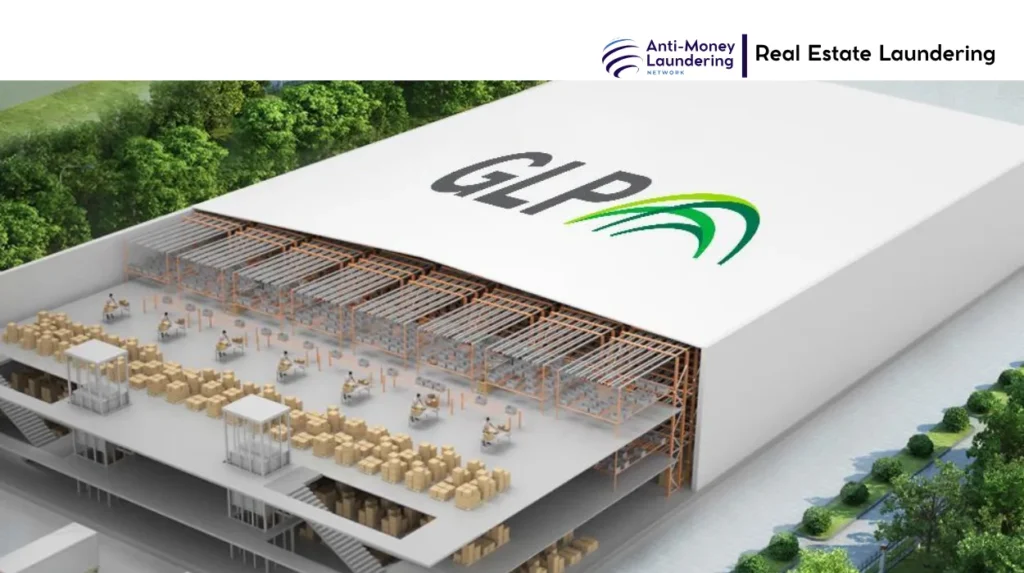
GLP Brazil represents a transformative force in modern logistics infrastructure, converting expansive land parcels into cutting-edge facilities that underpin Brazil’s surging e-commerce and industrial landscapes. Emerging from the global Global Logistic Properties framework, this operation has matured into a refined market leader, concentrating efforts in high-velocity areas such as São Paulo, where it addresses longstanding inefficiencies through innovative design and strategic positioning.
Project Introduction (Formation & Background)
GLP Brazil overview traces its origins to 2012, a pivotal year when the Singapore-based Global Logistic Properties—established in 2007—made its bold foray into the Brazilian market via a groundbreaking joint venture. This alliance united sovereign wealth funds like Singapore’s GIC, China’s Investment Corporation, and Canada’s CPP Investments, culminating in the acquisition of more than 30 logistics assets valued at $1.45 billion—one of the most substantial real estate transactions in Latin American history during that period.
The timing was impeccable, aligning with Brazil’s accelerating domestic consumption, fueled by urbanization trends, an expanding middle class, and robust retail sector growth, all of which promised exponential demand for superior logistics capabilities.
The foundational vision was rooted in resolving profound supply chain deficiencies within a market cluttered with obsolete warehouses featuring inadequate heights of merely 6-8 meters and devoid of contemporary features. Founders Ming Yuan and Dr. Jeffrey Perlman, drawing from their robust pedigrees in investment banking and real estate at institutions like Morgan Stanley and ING Real Estate, conceptualized interconnected “network effect” platforms.
These were envisioned as seamless ecosystems tailored for diverse tenants, including pharmaceutical distributors, third-party logistics operators, and e-commerce behemoths. By 2016, GLP Brazil company history reflected substantial advancement, boasting 3.8 million square meters under management—comprising 2.8 million square meters fully developed and another million in active development—predominantly clustered in São Paulo and Rio de Janeiro, capturing nearly 90% of the portfolio.
GLP Brazil logistics parks materialized as meticulously engineered facilities, boasting 12-15 meter clear heights, sophisticated cross-docking systems, abundant loading bays, and stringent adherence to ESPE electrical safety norms. Such innovations directly confronted Brazil’s elevated logistics expenditures, which constitute 12-15% of GDP, ranking among the world’s steepest due to subpar infrastructure, highway congestion, and port bottlenecks.
From inception, these parks incorporated forward-thinking sustainability measures, including solar energy integration, rainwater collection systems, and energy-conserving architectures, establishing an industry precedent that resonated across emerging markets.
GLP Brazil São Paulo Operations and Strategic Focus
São Paulo, Brazil’s undisputed economic engine processing 40% of national cargo volumes, solidified its role as the operational nerve center. GLP São Paulo warehouses, strategically positioned in burgeoning submarkets like Guarulhos, Cajamar, and Jundiaí, were customized to harness the e-commerce revolution’s 20% compound annual growth rate since 2010.
The GLP São Paulo Guarulhos park exemplifies this prowess, encompassing vast gross leasable areas with continuous expansions captured in 2025 aerial documentation, earning acclaim as the “Faria Lima of logistics sheds”—a testament to its prestige akin to São Paulo’s premier financial corridor.
This deliberate emphasis on optimal logistics corridors was driven by Brazil’s e-commerce ascent, spearheaded by titans like Mercado Livre and Magazine Luiza, necessitating expansive, technology-enabled environments. GLP Brazil São Paulo operations swiftly commanded 15-20% of the Class-A warehouse segment, securing leases with premier tenants and sustaining occupancy exceeding 95%, even amid economic volatility.
These facilities not only optimized space utilization but also enhanced operational velocities, slashing tenant logistics timelines by significant margins compared to antiquated competitors.
Management and Project Head
Ming Yuan, as GLP’s co-founder and Executive Chairman, orchestrates overarching strategy from Singapore, infusing his proven expertise from Asia-Pacific REIT inaugurations and expansive portfolios. In Brazil, day-to-day stewardship resides with GLP Capital Partners, overseeing $3.1 billion in assets under management as of 2024, cementing its status as the preeminent logistics platform domestically.
Governance draws from heavyweight institutional partners like CPP Investments, complemented by specialists in real estate finance and operational excellence, unmarred by any public disputes.
Yuan and Perlman’s prior triumphs—encompassing GLP’s landmark $1.3 billion Japanese REIT initial public offering in 2012, sweeping China logistics deployments, and ventures across Europe—illuminate a consistent mastery in scaling within dynamic emerging economies. Financial interconnections are fortified through vehicles such as GLP Brazil Development Partners II, which amassed BRL 2.63 billion in 2021 to bankroll nine premium Class-A parks, chiefly in São Paulo.
The firm’s reputation is bolstered by a steadfast ESG commitment, evidenced by numerous LEED Gold-certified parks and pledges toward net-zero emissions by 2050.
GLP real estate professional alliances with brokers including JLL, CBRE, and Colliers facilitate diversified tenant ecosystems spanning 3PL providers, retailers, and manufacturers. Local leadership, comprising engineers and supply chain veterans, prioritizes tenant-oriented advancements like automation-compatible layouts and last-mile fulfillment enhancements, underpinned by meticulous GLP client verification and GLP risk assessment protocols to uphold GLP AML compliance.
GLP Brazil Real Estate Portfolio
The GLP Brazil real estate portfolio has burgeoned to 3.2 million square meters post its late-2025 rebranding, with GLP Brazil AUM Brazil scaling to multibillion-dollar realms via synergistic income and development streams. At its heart lie GLP Brazil industrial properties, precision-crafted warehouses attuned to contemporary supply chains, prioritizing strategic thoroughfares and infrastructural adjacency.
A cornerstone transaction unfolded in 2024, divesting 642,000 square meters across 12 assets for $300 million, entirely leased to investment-grade occupants in pharmaceuticals, retail, and 3PL domains, all rooted in São Paulo’s metropolitan expanse. GLP Brazil warehouse investments hone in on pivotal sites: Guarulhos III, spotlighted in 2025, eclipses local retail complexes in scale to support hyperscale e-commerce orchestration.
GLP Brazil supply chain solutions embed state-of-the-art technologies—high-density racking arrays, electric vehicle charging infrastructures, and occupancy analytics—yielding tenant efficiencies up to 30% superior to legacy setups. This portfolio’s resilience stems from diversified occupancy and adaptive leasing models, fortifying GLP Brazil logistics expansion trajectories.
GLP Brazil Logistics Expansion
GLP Brazil logistics expansion surged forward with a BRL 5.2 billion fund culmination in 2024, zeroing in on e-commerce-vacant submarkets. As a leading GLP Brazil logistics developer, it commissioned 482,000 square meters across 2023-2024, augmenting a 580,000 square meter development reservoir. Initiatives champion sustainability via eco-materials and retrofitting, navigating vulnerabilities inherent to the GLP high-risk sector, susceptible to climatic disruptions and infrastructural frailties.
Prospective horizons encompass intelligent logistics precincts harnessing AI for inventory orchestration, cementing GLP’s vanguard status in Brazil’s infrastructural renaissance. These endeavors not only amplify capacity but also catalyze ancillary economic multipliers, from job genesis to supplier ecosystems.
Controversies & Scandals
GLP Brazil sustains an impeccable public ledger, devoid of substantive scandals, graft episodes, or probes. Diverging from pervasive Brazilian real estate inquisitions—like Transparency International’s 2017 exposé on $2.7 billion São Paulo holdings entangled in offshore enclaves—GLP evades such imputations. GLP Brazil COAF AML audits elude public ledgers, while GLP Brazil AML compliance conforms to Law 9,613/1998, encompassing GLP suspicious activity reports, GLP transaction monitoring, and GLP legal oversight.
Ambient perils linger: Brazil’s fiscal murkiness and property veiling provoke examination, yet GLP’s bastioned framework and GLP source of funds scrutiny attenuate GLP financial crime risk. GLP Brazil real estate audits proceed via impartial auditors, unblemished by GLP regulatory scrutiny. GLP supply chain AML safeguards vet lessees, paralleled by GLP real estate sanctions adherence, precluding proscribed engagements.
Constructs like GLP suspicious real estate deal or GLP layering (money laundering stage) find no substantiation, emblematic of vigilant GLP beneficial ownership transparency through CNPJ declarations and stakeholder revelations.
Money Laundering Activities
Empirical traces of laundering elude GLP Brazil undertakings. Deal configurations evince normative commerce: the 2024 $300 million conveyance to Ares Management traversed rival tenders and exhaustive vetting. GLP property acquisition methodologies anchor in lucid private equity conduits, offsetting latent hazards via stratified conformity validations.
Elevated GLP real estate transaction magnitudes mirror e-commerce proliferation, bereft of overvaluation, underbilling, fictitious purchasers, or shell intermediaries.
GLP client verification and GLP risk assessment constitute defensive bulwarks, affirming compliance amid patchy jurisdictional rigor.
International Links & Benefited Countries
GLP’s worldwide expanse—55 million square meters spanning 17 realms—funnels resources into Brazil from Singaporean bastions, Canadian pensions, and Chinese reserves. These transnational bonds elevate GLP Brazil supply chain solutions, advantaging lessees with transcontinental acumen from American and European spheres. Offshore domiciles, such as Luxembourg for GLP BDP II, expedite FDI influxes, invigorating Brazil’s logistics GDP quotient.
Symbiotic nations reap yields: Singapore via stewardship emoluments, Canada through steadfast returns (8-10% IRR), and commerce allies via streamlined exports. Every conduit endures exacting GLP AML compliance, vouchsafing probity.
Regulatory Actions & Legal Proceedings
GLP Brazil basks in regulatory pristineness. Absent are incursions from COAF, Federal Police, FATF cohorts, or analogues. GLP Brazil suspicious activity reports integrate seamlessly into systemic vigilance sans intensification. COAF’s 2025 augmentations, levying BRL 44.2 million penalties cluster-wide, peripherally fortify supervision, albeit realty trails pecuniary domains. Judicial edicts or latent litigations: nil.
Public Impact & Market Reaction
GLP São Paulo operations have architected market equilibrium, anchoring industrial tariffs amid e-commerce tempests—São Paulo logistics voids lingered at 5-7% through 2025. Stakeholders hail 15-20% internal rates of return from stalwarts like GLP Income Partners II ($900 million, 2014). Societal boons encompass surpassing 5,000 direct employments from precincts, augmented by construction and upkeep peripheries.
Fiscally, these bastions curtail lessee chain expenditures by 20-30%, buttressing Brazil’s 2.5% GDP ascent and e-commerce poised for $100 billion by 2027. Credence endures elevated, untainted by valuation aberrations.
The GLP Brazil rebrand Marq in November 2025 heralds renewal, stewarding 3.2 million square meters domestically within a 55 million square meter global ambit, anchored by $3.1 billion AUM. Wholly functional with stalwart tenancy, it covets amplified GLP Brazil logistics expansion across propitious axes.
Analytic consensus portends vigor: e-commerce imperatives necessitate 10 million supplementary square meters by 2030, privileging stalwarts like Marq armed with GLP Brazil industrial properties sagacity. Envisaged 15% AUM compound growth might bisect the holdings anew, confronting 13% logistics burdens and quay lags. GLP risk assessment adjudges stability, institutional candor eclipsing territorial tempests.
Tactical pivots embrace robotic warehousing and verdant refits, assuring fortitude. Amid Brazil’s $100 billion infrastructural infusion by 2030, Marq/GLP stands primed for outsized appropriation.
GLP Brazil overview chronicles methodical ascension within a fecund terrain. From 2012 ingress to Marq’s 2025 transmutation, GLP Brazil logistics parks tender unequivocal merit—proficiency, livelihoods, endurance—eschewing compeer pitfalls. Perpetually pertinent, it incarnates global fiscality meshed with indigenous perspicacity, taming precarious dominions for perdurable resonance as Brazil’s thrift amplifies.