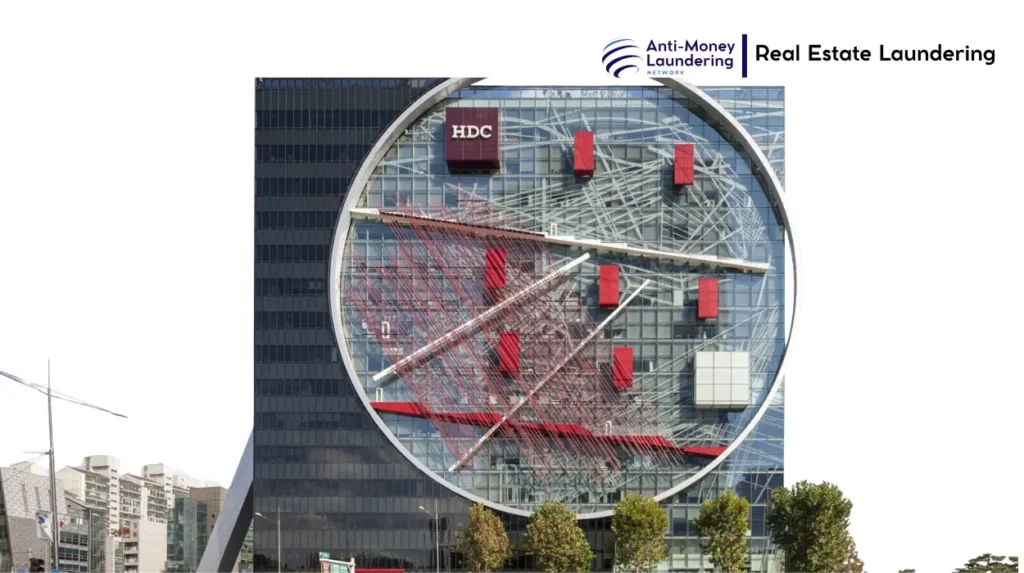
HDC Hyundai Development Company stands as one of South Korea’s most influential real estate and construction firms, with a legacy stretching back to 1976. Originally part of the Hyundai Group, it has evolved into an independent powerhouse under the HDC Group umbrella, delivering landmark residential, commercial, and infrastructure projects across the nation.
Project Introduction (Formation & Background)
HDC Hyundai Development Company was formally established in its current corporate structure in 2018, following a strategic spin-off from HDC Group’s holding company, HDC Holdings. However, its operational roots trace back to 1976, when Korea City Development was founded as a housing specialist within Hyundai Engineering & Construction. In 1986, Korea City Development merged with Halla Construction, which was founded in 1977, to form Hyundai Development Company. This entity later became the core of the HDC Group after separating from Hyundai Group in 1999. The company’s evolution reflects South Korea’s rapid urbanization and the chaebol system’s adaptability. Its launch as a standalone developer in 2018 was part of a broader corporate restructuring to enhance focus on real estate, construction, and hospitality sectors.
The company’s origins lie in the vision of the Chung family, particularly Chung In-yung, founder of Halla Construction, and Chung Ju-yung, founder of Hyundai Group. Their initial goal was to address South Korea’s post-war housing shortage through large-scale apartment complexes. Over time, the vision expanded to include mixed-use urban development, infrastructure, and smart-city technologies. This strategic shift allowed HDC to transition from a purely residential builder to a comprehensive urban developer capable of handling complex, multi-sector projects.
As of 2026, the company is led by CEO Chung Kyung-ku, who oversees integrated real estate, infrastructure construction, and civil engineering projects. The chairman of HDC Group is Chung Mong-gyu, a high-profile business leader with significant influence in South Korea’s corporate landscape. The board includes seasoned executives with expertise in finance, engineering, and urban planning, ensuring strategic alignment with national development goals. This leadership structure supports HDC’s ability to execute large-scale projects while maintaining financial discipline and operational efficiency.
Chung Mong-gyu serves as chairman of HDC Group and has been instrumental in strategic decisions, including the Asiana Airlines acquisition bid. Chung Kyung-ku, as CEO of IPARK Hyundai Development Company, is responsible for day-to-day operations and project execution. The board of directors includes representatives from HDC HYUNDAI EP and other affiliates, focusing on governance and ESG compliance. These individuals collectively shape the company’s direction, balancing growth ambitions with risk management and regulatory adherence.
HDC has delivered approximately 500,000 households since the 1970s, earning a reputation as a top supplier of private rental housing. Notable projects include Yongsan I-Park, Haeundae I-Park, and Suwon I-Park City. Financially, the company reported cumulative revenue of 1.6 trillion won in the first half of 2026, with an annual guidance of 4.2336 trillion won. It has also secured large-scale financing, such as a 4 trillion won project financing arrangement for the Jamsil mixed-use development. These achievements underscore HDC’s capacity to manage complex, high-value developments while maintaining strong financial performance.
Controversies & Scandals
In 2022, the Gwangju Hwajeong I-Park collapse resulted in fatalities and triggered public criticism and government scrutiny. Although no misconduct allegations were filed against HDC or Chairman Chung, the incident highlighted safety and oversight challenges. In 2019, HDC was fined 635 million won for violating subcontract law by delaying payments to 158 subcontractors. More recently, in 2026, Chairman Chung faced charges for false disclosures in 2021–2023 filings, underreporting the number of subsidiaries. These incidents reflect governance weaknesses that could potentially facilitate opaque financial practices.
No public evidence directly links HDC to hidden or black money. However, South Korea’s real estate sector is known for opacity, with luxury properties susceptible to overvaluation and shell-company ownership. The lack of full beneficial ownership transparency in project-level special-purpose vehicles creates an environment where illicit funds could theoretically be concealed. While no specific case has been proven against HDC, the systemic risks in the sector warrant ongoing vigilance from regulators and investors.
Money Laundering Activities
While no direct evidence ties HDC to laundering, systemic risks in South Korea’s real estate market include overvaluation, where luxury units may be inflated to justify large capital flows. Layering through special-purpose vehicles and affiliate structures can obscure ownership, making it difficult to trace the ultimate beneficiaries of transactions. Nominee owners and domestic shells may mask foreign beneficiaries, further complicating due diligence efforts. These tactics, though not uniquely associated with HDC, are common vulnerabilities in high-value real estate markets.
HDC’s real estate transaction patterns involve large-scale project financing, such as the 4 trillion won arrangement for Jamsil, and growing foreign investor participation. Foreign ownership rose from 10.5 percent in October 2024 to 13.94 percent by June 2025, reflecting increased international confidence. No suspicious real estate deal has been publicly documented involving HDC, but the sector’s high-risk nature warrants scrutiny. The use of complex financing structures and cross-border investments creates opportunities for layering, a key stage in money laundering, if not properly monitored.
International Links & Benefited Countries
Foreign investors have benefited from HDC’s growth, with increased equity holdings indicating strong international confidence. Portfolio managers and institutional investors from the United States, Europe, and other regions have expanded their stakes in HDC’s stock. While no specific country has been identified as a direct beneficiary of illicit activities, the global nature of real estate investment means that offshore structures could theoretically be used to channel funds through multiple jurisdictions.
HDC’s property acquisition strategies include cross-border financing and partnerships, such as the collaboration with Hana Bank for overseas expansion. The company has also explored smart-city technologies through international agreements, including a 2020 partnership with Palantir Technologies for data-driven urban management. While no direct offshore account links have been publicly disclosed, the use of project-level financing and international joint ventures creates potential pathways for cross-border capital flows that require robust anti-money laundering compliance.
Regulatory Actions & Legal Proceedings
The Fair Trade Commission fined HDC 635 million won in 2019 for subcontract law violations. In 2026, the FTC charged Chairman Chung with false disclosures for underreporting subsidiaries in regulatory filings. Police investigations followed the 2022 Gwangju collapse, focusing on safety compliance rather than financial misconduct. South Korea’s membership in the Financial Action Task Force mandates baseline anti-money laundering standards, though enforcement gaps persist in non-financial sectors like real estate.
No major court rulings on anti-money laundering or corruption have been issued against HDC. The FTC cases from 2019 and 2026 remain ongoing or recently concluded, with no indications of criminal charges related to financial crimes. The absence of high-profile convictions does not eliminate risk, as regulatory actions often precede more severe legal consequences if new evidence emerges.
Public Impact & Market Reaction
Rising foreign ownership indicates growing investor confidence in HDC’s financial health and project pipeline. However, governance issues such as the FTC charges and the 2022 collapse have periodically eroded public trust. The company’s rebrand to IPARK Hyundai Development in 2026 aims to restore confidence by emphasizing premium branding and integrated urban development. For the general public, HDC’s projects influence local housing markets, with premium pricing in tech hubs like Pangyo affecting affordability and urban planning dynamics.
HDC’s developments, such as the Taepyeong 3 redevelopment in Seongnam, influence local property markets by introducing high-end residential units near tech corridors. These projects can drive up surrounding land values, benefiting existing property owners but potentially displacing lower-income residents. Market trust levels fluctuate with each regulatory action or safety incident, though HDC’s strong financial performance and project delivery track record have generally maintained investor interest. Economically, HDC’s activities contribute to urban regeneration and job creation, but also highlight the need for balanced development policies to prevent speculation and inequality.
HDC, now operating as IPARK Hyundai Development Company, remains fully operational with major projects underway. The Jamsil mixed-use development targets completion by 2032, while the Taepyeong 3 redevelopment in Seongnam is in progress following its 2026 award. The company continues to secure financing and expand its portfolio, demonstrating resilience despite past controversies. No bankruptcy or operational shutdown has occurred, and HDC maintains its position as a leading developer in South Korea.
Analysts from firms like Samsung Securities view IPARK Hyundai Development as undervalued, with a target price of 28,000 won per share. Future growth is expected to hinge on urban regeneration initiatives, smart-city technologies, and ESG-driven projects. The company’s focus on premium residential and commercial spaces under the IPARK brand positions it well for continued demand in high-growth areas like Seoul and Gyeonggi Province. However, experts caution that governance improvements and enhanced transparency will be critical to mitigating regulatory risks and maintaining investor confidence in an increasingly scrutinized real estate market.
AML Compliance and Risk Assessment
HDC’s anti-money laundering compliance frameworks are not publicly detailed, but South Korea’s FATF membership mandates baseline standards. Governance gaps, such as the false disclosure charges, highlight weaknesses that could be exploited if not addressed. As a real estate professional operating in a high-risk sector, HDC must implement robust client verification and risk assessment protocols. Enhanced beneficial ownership transparency is critical to mitigating laundering risks, particularly given the sector’s susceptibility to overvaluation and shell-company usage. The source of funds for specific projects remains undisclosed, though large loans collateralized by real estate suggest reliance on traditional financing channels. Strengthening these controls will be essential for HDC to maintain its reputation and comply with evolving international standards.