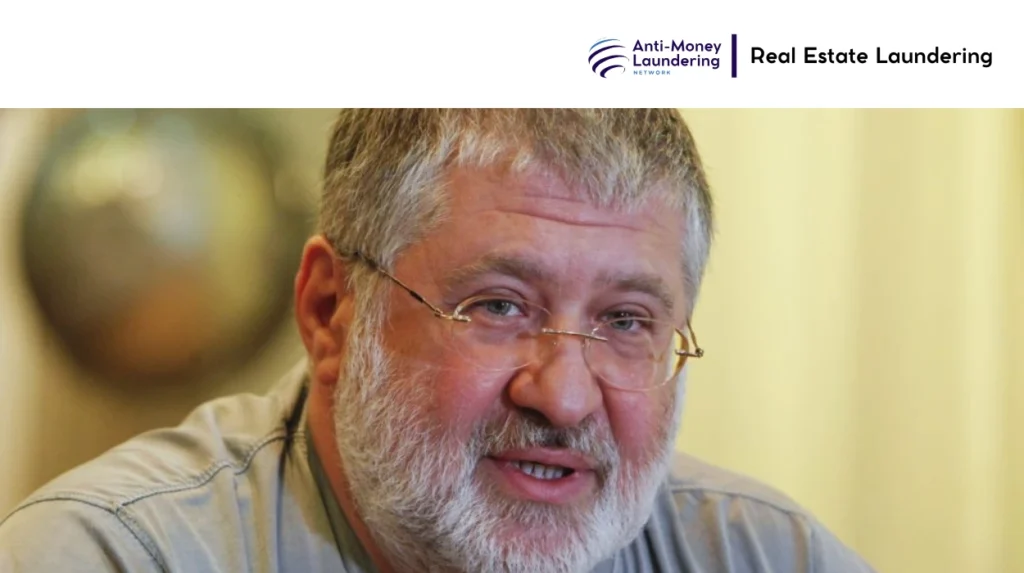
Ihor Kolomoisky real estate Ukraine investments form a sprawling network that blends ambitious domestic developments with controversial international acquisitions. This portfolio, deeply intertwined with his Privat Group conglomerate, has long symbolized both economic power and regulatory scrutiny in global finance.
Formation and Background
The foundations of what can be termed the Ihor Kolomoisky Real Estate project took shape in the turbulent post-Soviet era of the late 1990s and early 2000s. Ihor Kolomoisky, a savvy Ukrainian entrepreneur born in 1963 in Dnipropetrovsk (now Dnipro), co-founded PrivatBank in 1992 alongside Gennadiy Bogolyubov and others, transforming it into Ukraine’s largest lender by assets.
By the early 2000s, as PrivatBank amassed deposits and issued loans, Kolomoisky began channeling resources into property acquisition, marking the launch of systematic real estate transaction strategies. His initial vision was pragmatic: diversify beyond volatile banking into tangible assets like commercial buildings and cultural landmarks, safeguarding wealth amid Ukraine’s hyperinflation and political upheavals.
This expansion accelerated around 2005-2008, coinciding with the global financial boom. In Ukraine, focus centered on revitalizing industrial Dnipro, his hometown stronghold. Internationally, opportunities arose from the 2008 crisis, when distressed US properties became bargains. Kolomoisky’s approach emphasized high-yield commercial real estate fraud risks notwithstanding, with investments framed as stabilizing local economies.
The project’s ethos—aggressive growth through leveraged financing—mirrored his broader oligarchic style, prioritizing scale over sustainability. By 2016, estimates pegged his real estate holdings at over $1 billion, though exact figures remain elusive due to opaque structures.
Management and Project Head
At the helm stood Ihor Kolomoisky himself, whose iron-fisted oversight defined the project’s trajectory. As Privat Group’s de facto leader, he appointed trusted proxies to execute deals, ensuring alignment with his vision. Key figures included Mordechai Korf and Uriel Laber, Israeli-American associates managing US operations, and Chaim Schochet, who oversaw Cleveland-based Optima Management.
These executives, often with prior ties to Kolomoisky’s ferrous metals trading ventures, brought expertise in cross-border finance but faced criticism for lax oversight.
Their track records were mixed: Korf’s involvement in steel imports bolstered reputations as dealmakers, yet financial links to PrivatBank loans—totaling billions—raised source of funds queries. Board-like structures were informal, relying on shell companies for decision-making anonymity.
Kolomoisky’s charisma and political clout, including stints as Dnipropetrovsk governor (2014-2015), amplified influence, but also sowed seeds for Ihor Kolomoisky oligarch holdings controversies. Real estate professionals in his orbit navigated high-risk sector dynamics, often prioritizing speed over rigorous client verification.
Key Properties and Holdings
Kolomoisky’s empire boasted marquee assets blending prestige and pragmatism. Domestically, Ihor Kolomoisky properties Dnipro epitomized his legacy, none more so than the Ihor Kolomoisky Menorah Centre. Opened in 2012, this $100 million, 10-story behemoth in central Dnipro houses a synagogue, kosher hotel, offices, and museum—Ukraine’s largest Jewish community complex. Funded partly via PrivatBank, it showcased Dnipro Menorah Centre ownership as a philanthropy-real estate hybrid, drawing 500,000 visitors annually pre-war.
Further afield, the Ihor Kolomoisky Svydovets resort project in Ukraine’s Carpathians aimed for a $500 million ski haven by 2020, promising 10,000 jobs amid Svydovets ski resort controversy Kolomoisky debates over ecological damage to pristine wetlands. Though stalled by permits and protests, it underscored ambitions in hospitality.
Across the Atlantic, Ihor Kolomoisky US real estate dominated with 20+ acquisitions from 2008-2016. Ihor Kolomoisky Dallas properties included a 400,000 sq ft office complex off Loop 12, snapped up for $40 million in 2010 via Cyprus firms—later tied to Kolomoisky $6 million laundering Dallas probes.
In Cleveland, Ihor Kolomoisky Cleveland investments peaked with the 57-story Key Tower lease and Westin Hotel purchase, making Optima Cleveland’s top landlord by 2015. The Ihor Kolomoisky Harvard Illinois factory, a former Motorola site bought for $25 million in 2010, symbolized industrial bets, though it shuttered amid disputes.
Other gems: Miami luxury condos from Ihor Kolomoisky Miami properties raid targets, Kentucky steel mills, and Ohio warehouses under Kolomoisky Privat Group properties. These spanned Ihor Kolomoisky billion-dollar empire realty, often acquired via layered entities obscuring beneficial ownership transparency.
Controversies and Scandals
No facet of Kolomoisky’s portfolio escaped Ihor Kolomoisky Ukraine oligarch scandals. Ukrainian oligarch real estate scandals erupted post-2014, when Crimea annexation prompted asset repatriation demands. Yet, bigger storms brewed around PrivatBank: nationalized December 2016 after $5.5 billion vanished in insider loans, audits fingered Kolomoisky for siphoning funds into overseas realty. Ihor Kolomoisky commercial real estate fraud allegations painted properties as shells left to rot—Cleveland towers tax-delinquent, Harvard factory a hazard.
Public outrage peaked with worker layoffs: 800+ jobs axed in Warren, Ohio steel plants. Domestically, Ihor Kolomoisky arrested assets Ukraine loomed after his 2023 fraud charges. Ihor Kolomoisky 2023 arrest properties froze stakes amid probes into UAH 28 billion embezzlement. These Ihor Kolomoisky asset seizures Ukraine highlighted oligarch overreach, eroding public faith.
Money Laundering Activities
Scrutiny zeroed on Ihor Kolomoisky laundered money real estate mechanics, flagged as layering (money laundering stage) exemplars. Ihor Kolomoisky shell companies property proliferated: 2007-2016 saw $790 million wired from PrivatBank via BVI/Cyprus nodes to US LLCs, per FinCEN leaks. Tactics mirrored classics: overvalued loans from Ihor Kolomoisky PrivatBank assets disguised outflows; fake buyers via nominees hid trails; under-invoicing sales recycled cash.
Transaction patterns screamed red flags—suspicious real estate deal spikes, like $490 million Deutsche Bank funnels to Delaware firms for Cleveland buys. AML compliance gaps at intermediaries enabled this: lax risk assessment overlooked politically exposed persons. Source of funds opacity plagued deals, with real estate professional duties sidelined in high-risk sector fervor. PrivatBank fraud real estate links crystallized in US filings alleging $1.8 billion laundered overall.
International Links and Benefited Countries
Ihor Kolomoisky international property laundering spanned Cyprus (bank relays), BVI (shells), and Switzerland (family trusts), but the US reaped—and rued—most. Cleveland’s skyline gleamed briefly from Kolomoisky FBI raids Cleveland infusions; Dallas boomed with office revamps. Indirect beneficiaries: Israeli developers via joint ventures; Caribbean havens from wire fees.
Yet, blowback hit hardest stateside: communities bore blight costs. Ukraine oligarch asset nationalization echoes rippled globally, prompting FATF real estate advisories.
Regulatory Actions and Legal Proceedings
Regulatory backlash defined the endgame. The Ihor Kolomoisky DOJ forfeiture case launched 2020: DOJ sought $70+ million in Florida suits, targeting Dallas/Miami proceeds. Kolomoisky FBI raids Cleveland (Aug 2020) seized Optima docs; Ihor Kolomoisky Miami properties raid yielded wire records. Ihor Kolomoisky sanctioned assets US followed Treasury’s March 2021 ban for corruption.
Ukraine mirrored: SBU/NABU post-Ihor Kolomoisky 2023 arrest properties charged laundering UAH 5.8 billion; High Anti-Corruption Court detained him. Ongoing: Ukrnafta/Ukrtatnafta seizures valued $1 billion. FATF gray-listing Ukraine (2023-2024) amplified probes, stressing real estate professional AML compliance.
Public Impact and Market Reaction
Ihor Kolomoisky Real Estate left indelible scars. Investors shunned oligarch-tainted assets, slashing Cleveland values 20-30%; Dnipro markets dipped temporarily around Menorah Centre. Public ire fueled de-oligarchization laws, boosting transparency but chilling FDI. Economic ripples: 1,000+ US jobs lost; Ukraine depositors recovered via nationalization, yet trust lagged. Positively, exposures spurred reforms, elevating beneficial ownership transparency.
January 2026 finds the empire fractured: US forfeitures advance (Dallas sales settled partially); Ukraine holds Kolomoisky in pretrial since 2023, assets under Ukraine oligarch asset nationalization. Menorah Centre operates; Svydovets dormant. Experts foresee total US seizures by 2027, Ukrainian convictions, and a diminished legacy. Lessons for Ihor Kolomoisky Real Estate: robust client verification, risk assessment, and AML compliance are non-negotiable in global property. As scandals fade, the saga endures as a benchmark for high-risk sector vigilance.