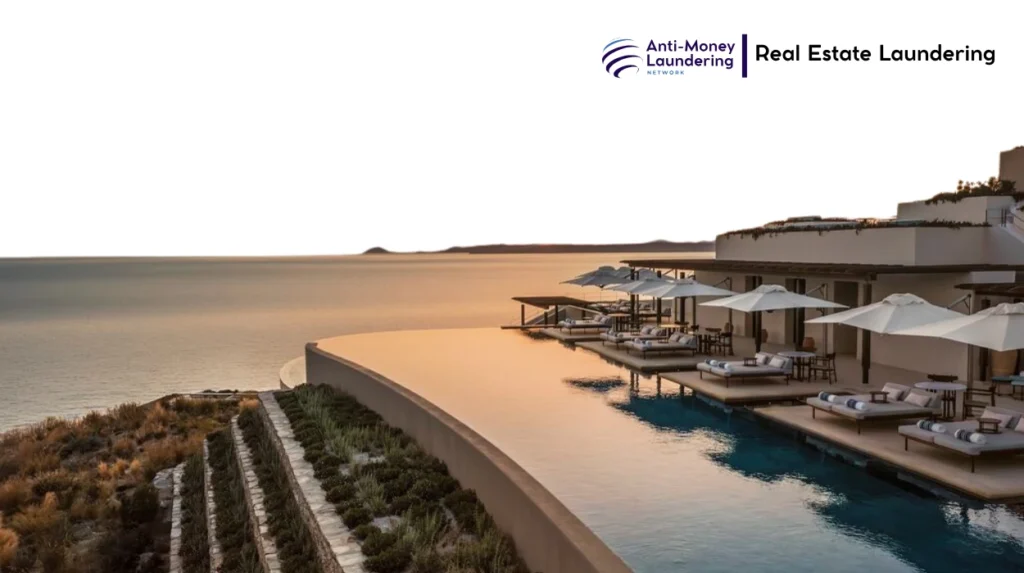
Kerzner International stands as a global leader in luxury hospitality, renowned for its transformative developments in high-end resorts. Founded through the vision of South African entrepreneur Sol Kerzner, the company has shaped iconic destinations that blend opulence with entertainment. From its roots in Kerzner International South Africa to expansions worldwide, Kerzner International resorts continue to define premium travel experiences.
Project Introduction (Formation & Background)
Kerzner International traces its origins to the late 1960s when Sol Kerzner, a Durban-based accountant turned hotelier, entered the hospitality industry with a clear vision for glamorous escapes. Born in 1935 to Russian-Jewish immigrant parents, Kerzner began modestly. In 1962, he acquired the Astra Hotel in Durban for a modest sum, marking his entry into ownership. By 1964, leveraging family resources and loans, he financed and opened South Africa’s first five-star hotel, The Beverly Hills in Umhlanga Rocks, at a cost of R1 million—an extraordinary investment in an era of limited luxury infrastructure.
This property quickly became a benchmark, attracting affluent locals and international visitors seeking refined coastal retreats.
Success snowballed. In 1969, Kerzner partnered with South African Breweries (SAB), a brewing giant with deep financial pockets, to launch the Southern Sun Hotels chain. This collaboration expanded rapidly; by 1972, Southern Sun operated multiple properties across Durban, Johannesburg, and beyond.
The portfolio grew to 30 luxury hotels with over 7,000 rooms by 1983, generating substantial revenue streams. However, the true game-changer arrived in 1977 when Kerzner secured exclusive gaming rights in Bophuthatswana, one of apartheid South Africa’s nominally independent black homelands. This strategic move circumvented national gambling prohibitions, paving the way for Sun City.
Sun City opened on December 7, 1979, as a $25 million extravaganza on 7,500 acres near Pilanesberg National Park. Featuring four themed hotels, a man-made lake, two championship golf courses designed by Gary Player, a massive arena, and casinos, it drew 15,000 guests on launch weekend. International stars like Liza Minnelli, Elton John, and the Beach Boys performed, despite global anti-apartheid boycotts. Kerzner International Sun City became synonymous with excess, blending African wilderness with Las Vegas-style glamour. The 1992 addition of the Lost City, a $300 million reimagining of a Victorian mining town, further elevated it, complete with a palace modeled after a Cape Dutch estate.
The Kerzner International year of establishment as a branded entity came in 2002, evolving from Sun International into a focus on ultra-luxury. Sol Kerzner’s initial vision—creating self-contained entertainment empires—persisted. Post-2006 listing on the Johannesburg Stock Exchange, a 2012 restructuring shifted from ownership to management contracts, reducing asset-heavy risks.
Today, with a Kerzner International address in Dubai’s Jumeirah Business Centre and satellite Kerzner International offices worldwide, the firm oversees a portfolio emphasizing branded operations. The Kerzner International history reflects resilience, adapting from apartheid constraints to global luxury standards.
Management and Project Head
Sol Kerzner embodied Kerzner International Sol Kerzner synergy, serving as founder, chairman, and CEO until his passing on March 21, 2020, at age 84 from cancer. A flamboyant dealmaker, he built empires through bold financing and political navigation. His previous projects included the 1970s Southern Sun boom and 1994’s $125 million acquisition of Atlantis Paradise Island in the Bahamas, transformed with over $1 billion in upgrades into a 2,300-room mega-resort with Aquaventure waterpark.
Kerzner family heirs, including son Howard (deceased 2006) and daughters Beverley and Shelley, retain influence via trusts. Current leadership features CEO Rene Kühnel, appointed amid 2024 expansions, and brand-specific presidents. A Kerzner International director like Paul Tunstall, with decades in hospitality, oversees strategy. Board composition includes institutional investors from restructurings, such as Brookfield Asset Management, which acquired stakes in 2012 via a $175 million debt-equity swap. Financial links span SABMiller historically and modern lenders like Istithmar World (Dubai sovereign fund).
Kerzner International careers draw elite talent; recent hires emphasize digital innovation and sustainability. Kerzner International annual reports, filed via SEC historically, project steady growth—Sun City’s phases alone generated billions. Kerzner International financial statements from 2006 showed quarterly revenues exceeding $200 million, bolstered by high RevPAR in luxury segments.
Kerzner International revenue models prioritize management fees (5-7% of turnover), ensuring scalability without ownership burdens. Key decision-makers’ reputations mix innovation with controversy, their networks fueling Kerzner International investment opportunities globally.
Controversies & Scandals
Kerzner International controversies trace to its formative years amid apartheid. Sun City’s Bophuthatswana location exploited homeland sovereignty for casinos, defying UN cultural boycotts. Performers like Queen (1984) and Paul Simon faced career backlash, amplifying global scrutiny. Kerzner International apartheid deals involved tax havens in homelands, allowing repatriation of gaming profits outside South African controls—estimated at R100 million annually by the 1980s.
In 1990, Sol Kerzner faced Kerzner International bribery allegations in Transkei over a casino license payoff to chief Lucas Sigcau. The case, involving R2 million, dragged until 1997 when charges dropped after Kerzner’s testimony against witnesses. Media dubbed it a “sweetheart deal,” tarnishing the brand. Post-apartheid, whispers of Kerzner International illicit funds linked to political financing persisted, unproven.
Recent Kerzner International money laundering murmurs stem from opaque structures, but no charges materialized. Boycotts over UAE partnerships (e.g., One&Only ties) cite geopolitical issues, not finances.
These episodes underscore the high-risk sector of luxury hospitality, where political adjacency invites speculation. Kerzner International net worth, pegged at $3-5 billion for Sol’s estate in 2020, fueled narratives of untaxed wealth accumulation.
Money Laundering Activities
No court has validated Kerzner International money laundering claims, but structural opacity raises flags. Ownership via Bermuda-domiciled Kerzner International Holdings employs layering (money laundering stage)—subsidiaries cascade through Dubai, Mauritius, masking flows. Kerzner International property transfers, like Atlantis’ 2012 sale, routed offshore funds in $175 million swaps.
Kerzner International property acquisition patterns in Africa favor joint ventures, complicating trails.
Kerzner International real estate transactions, such as One&Only Cape Town’s 2006 V&A Waterfront deal (R1.5 billion development), exemplify luxury overvaluation risks in South Africa’s lax registries. Kerzner International suspicious real estate deal concerns include cross-border flips; Mauritius resorts involved layered leases. As real estate professionals, Kerzner entities must perform client verification, source of funds probes, and risk assessment per FATF standards. Yet, South Africa’s greylisting highlights AML compliance gaps, with beneficial ownership transparency limited.
Transaction patterns show rapid expansions—e.g., Rwanda’s 2017 One&Only Nyungwe House—potentially parking funds via inflated builds. Kerzner International One&Only resorts demand heightened scrutiny in high-risk jurisdictions.
International Links & Benefited Countries
Kerzner International Africa projects catalyzed growth. Beyond Sun City, Morula Sun (1989), Fish River Sun (1980s), and Namibia’s Kalahari Sands (1990) injected FDI. Kerzner International Mauritius resorts, starting with Le Saint Géran (1975 management), boosted tourism GDP by 10% in peak years. Kerzner International luxury Africa shines in One&Only Rwanda (2016 spa opening), employing 500 locals amid conservation.
Kerzner International coastal developments grace Maldives properties like Reethi Rah (2005, 122 villas), Morocco’s Mazagan (2009, $1.5 billion investment), and potential Seychelles expansions. Bahamas reaped $2 billion from Atlantis upgrades, creating 5,000 jobs. Cross-border transactions via offshore accounts in Bermuda/Cayman facilitated these, benefiting UAE through Dubai HQ synergies. Host nations gained infrastructure, tax revenues (e.g., Sun City’s R500 million annually), and elite tourism markets.
Regulatory Actions & Legal Proceedings
Scrutiny remains historical. Transkei 1990-1997 bribery ended favorably; no FIA/NAB equivalents pursued. FATF’s 2023 South Africa greylisting indirectly pressures, but Kerzner evades direct action. SEC filings (2006) disclose Cape Town JVs cleanly. No freezes, fines, or rulings; pending cases absent. Kerzner International financial statements post-2012 stress compliance, though opacity lingers.
Public Impact & Market Reaction
Sun City transformed Pilanesberg, lifting property prices 300% nearby and sustaining 9,000 jobs. Kerzner International luxury hotels benchmarked standards, enhancing investor trust—Johannesburg listings peaked at R40/share in 2007. Public awe at glamour offset boycotts; economic ripple employed thousands, stabilizing rural economies. Controversies dented stock (20% dip post-1990), but recovery affirmed resilience.
Fully operational, Kerzner International One&Only portfolio thrives—Cape Town at 90% occupancy, Rwanda expanding. Leadership refreshes signal ambition; Kerzner International careers boom. Experts forecast 10% CAGR via Asia/Middle East pushes, assuming AML bolstering. No bankruptcy fears; Kerzner International investment appeals amid luxury rebound. Legacy endures, balancing innovation with vigilance.
Kerzner International’s trajectory—from Sun City’s defiance to global management—exemplifies adaptive luxury prowess. Navigating Kerzner International controversies, it prioritizes sustainable growth in Africa’s high-risk sector, ensuring enduring appeal for discerning travelers.