Lamda Development has established itself as a pivotal force in Greece’s real estate landscape, driving large-scale urban transformations that integrate commercial, residential, and leisure elements into cohesive developments. As a publicly traded entity on the Athens Exchange, it has weathered economic turbulence to spearhead initiatives like the expansive Hellenikon project, which aims to redefine Athens’ southern coastline.
This article provides a comprehensive examination of the company’s trajectory, projects, financial standing, and the complexities surrounding its flagship endeavor.
Lamda Development Greece overview
The Lamda Development Greece overview paints a picture of a company that has evolved from a modest commercial property developer into one of the nation’s largest real estate operators. Founded with a focus on retail spaces, it now manages a diverse array of assets including shopping malls, office buildings, and luxury housing complexes.
Headquartered in the upscale suburb of Marousi, just north of Athens, the company’s central location enables efficient oversight of its nationwide portfolio while fostering close ties to government and financial institutions.
Lamda Development Greece headquarters serves not only as an administrative hub but also as a symbol of the firm’s commitment to modern, sustainable architecture. The building itself incorporates energy-efficient designs and green technologies, reflecting broader corporate priorities. From this base, Lamda orchestrates operations that span property management, development, and investment, employing hundreds of professionals dedicated to delivering high-quality urban environments.
The company’s emphasis on integrated mixed-use projects distinguishes it in a market often fragmented by specialized developers.
Over the years, Lamda Development Greece real estate activities have contributed significantly to Greece’s post-crisis recovery, attracting both domestic and international capital. Its portfolio generates substantial rental income, providing stability amid development risks. Analysts often highlight Lamda’s ability to leverage public-private partnerships, turning underutilized land into vibrant economic hubs. This strategic positioning has cemented its role as a bellwether for the sector’s health.
Lamda Development Greece history
Delving into Lamda Development Greece history reveals a narrative of adaptation and growth spanning nearly five decades. Established in 1977 during a period of political transition following the fall of the military junta, the company initially concentrated on constructing and managing shopping centers in Athens’ expanding suburbs. The 1980s and 1990s marked a phase of aggressive expansion, coinciding with Greece’s integration into the European Community and preparations for the 2004 Olympic Games.
Key moments in Lamda Development Greece milestones include the opening of The Mall Athens in 2005, which became a landmark retail destination and set new standards for consumer experiences in the region. The global financial crisis and Greece’s subsequent sovereign debt meltdown in 2010 tested the firm’s resilience.
Rather than contracting, Lamda pivoted by acquiring distressed assets at discounted prices, a move that positioned it favorably for recovery. By 2014, it secured the transformative Hellenikon concession, a testament to its strategic foresight.
Throughout its Lamda Development Greece expansion, the company has balanced organic growth with opportunistic investments, divesting non-core holdings to fund flagship projects. This history underscores a pragmatic ethos, where economic downturns were viewed as opportunities to consolidate market share. Today, Lamda’s legacy is one of endurance, having navigated hyperinflation scares, bailouts, and regulatory shifts to emerge as a dominant player.
Lamda Development Leadership and Management
At the helm of Lamda Development Greece leadership is a cadre of seasoned executives whose expertise spans real estate, finance, and infrastructure. CEO Odysseas Kontominas brings over three decades of experience, having previously steered retail giants through competitive markets. His tenure has emphasized financial discipline, particularly the maintenance of a debt-free balance sheet, which has become a hallmark of the company’s stability.
The board of directors features prominent figures such as Panos Germanos, whose background in telecommunications and media provides invaluable networks for securing partnerships and navigating regulatory landscapes.
Lamda Development Greece management operates with a collaborative structure, where department heads oversee specialized areas like sustainability, legal affairs, and project execution. Key decision-makers often hail from engineering and economics backgrounds, ensuring a blend of technical prowess and commercial acumen.
These leaders’ previous projects include successful revamps of aging commercial properties and early mixed-use ventures, earning them a reputation for timely delivery. Financial links to major Greek conglomerates facilitate access to capital, though they also invite scrutiny over potential conflicts of interest. Under this guidance, Lamda Development Greece investments prioritize long-term value, with a focus on stakeholder alignment and transparent governance practices.
Lamda Development Greece Projects: Spotlight on Hellenikon
Lamda Development Greece projects encompass a wide spectrum, from iconic retail venues like Golden Hall and Athens Metro Mall to premium office parks in the Golden Triangle of Athens. These assets form the backbone of the Lamda Development Greece portfolio, offering diversified revenue streams through leasing and management services. Residential developments, such as high-end apartments in coastal areas, further diversify the mix, catering to affluent locals and expatriates.
The Hellenikon project Lamda Development eclipses all others in scale and ambition, converting the site of Athens’ former international airport into a self-sustaining urban park city. Covering 6.2 million square meters, it promises 50,000 jobs, 38,000 homes, and amenities including schools, hospitals, and cultural venues.
Hellenikon Athens redevelopment Lamda secured the 99-year concession in 2014 after outbidding rivals with a €915 million offer, marking a milestone in Greece’s privatization drive.
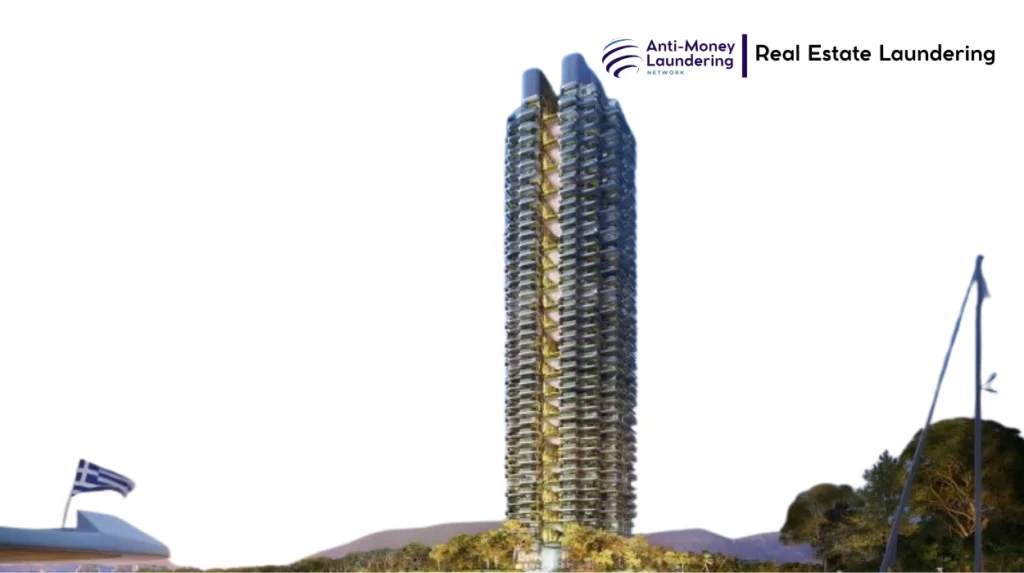
Central to the vision are Hellenikon towers Lamda Development, featuring the Riviera Tower as the tallest residential skyscraper in the EU at 200 meters. Luxury units here command prices from €9,000 to €32,000 per square meter, underscoring the premium positioning. Additional elements like a marina, conference center, and 2 million square meter metropolitan park aim to create a new Riviera for Athens, blending Mediterranean lifestyle with cutting-edge urban planning.
Lamda Development Greece Financials and Stock Performance
Scrutinizing Lamda Development Greece financials reveals a trajectory of progressive strengthening. In 2024, consolidated revenues reached €628 million, driven by rental income and pre-sales, with net profits climbing to €34.7 million. The company boasts a robust cash position, bolstered by its policy of zero bank borrowing, which shields it from interest rate volatility.
Listed on the Lamda Development Greece Athens Exchange under the ticker LAMDA.AT, the stock traded at approximately €6.76 per share in mid-2025, supporting a market capitalization of €1.14 billion. Lamda Development Greece stock performance has been characterized by moderate volatility, with a beta coefficient of 0.55 indicating lower market sensitivity. Dividend yields around 1.5% attract income-focused investors, while growth prospects from Hellenikon fuel capital appreciation bets.
Quarterly disclosures detail Hellenikon cash flow Lamda Development, with over €1.1 billion collected from plot dispositions and unit reservations by early 2026. Cost overruns in construction materials have tempered margins, yet strategic asset sales mitigate pressures. Overall, Lamda Development Greece financials project confidence in sustained profitability.
Lamda Development Greece Partners and Awards
Lamda Development Greece partners play a crucial role in amplifying project capabilities. Collaborations with international firms like Brook Lane Capital, a UK-based investor, and Dutch developer Tenbrinke have facilitated Lamda Development land sales Hellenikon, offloading five residential plots for €106 million in 2024. The €450 million pact with ION Group for an R&D campus exemplifies tech-oriented alliances.
Domestic banks such as Piraeus Bank, Eurobank, and Alpha Bank provide syndicated loans for infrastructure, despite Lamda’s aversion to debt. Lamda Development Greece awards include accolades for sustainability from the European Union and Greek Green Building Council, recognizing initiatives like zero-waste construction sites and biodiversity enhancements.
These partnerships not only de-risk developments but also infuse global best practices, enhancing Lamda Development Greece expansion prospects. Recognition bolsters brand equity, aiding tenant acquisition and buyer interest.
Hellenikon Project Progress and Challenges
Lamda Development Greece Hellenikon progress has seen foundational milestones, with site preparation and utility networks advancing since construction commenced in 2021. By February 2026, the Riviera Tower’s sales were fully subscribed, generating substantial upfront capital. Infrastructure like roads and sewage systems nears completion, setting the stage for vertical builds.
Nevertheless, Hellenikon delays Lamda Development have arisen from protracted environmental clearances and archaeological digs, common hurdles in Greece’s regulatory environment. Cost escalations, exacerbated by global supply chain disruptions, have inflated budgets by 20-30%. Lamda Development Greece scrutiny Hellenikon centers on negotiation tactics, with reports of defaults on preliminary agreements with shipping tycoons and Arab consortia.
Lamda Development EU probes Hellenikon tie indirectly to Greece’s EPPO-led investigations into subsidy fraud and cross-border finance, heightening sector vigilance without direct firm involvement. These challenges test Lamda Development cash flow Hellenikon strategies, reliant on phased sales and partnerships.
Lamda Development Real Estate Transactions and Risk Management
Lamda Development real estate transaction volumes underscore its market dominance, encompassing Lamda Development property acquisition through competitive tenders and bespoke negotiations. Lamda Development land sales Hellenikon via bilateral deals exemplify efficiency, though they bypass public auctions, sparking governance debates.
Operating as a Lamda Development real estate professional in the Lamda Development high-risk sector, the firm embeds Lamda Development AML compliance into operations. Protocols cover Lamda Development client verification, probing identities and fund origins for high-value deals. Lamda Development risk assessment evaluates buyer profiles against sanctions lists and PEPs.
Lamda Development source of funds documentation is mandatory, addressing opacity in international purchases. Lamda Development beneficial ownership transparency adheres to EU AMLD5 directives, mandating UBO disclosures. Amid patterns resembling Lamda Development layering (money laundering stage)—such as successive plot transfers—Lamda Development suspicious real estate deal monitoring flags anomalies for enhanced due diligence.
Controversies and Scandals
Lamda Development Greece scrutiny Hellenikon peaked in mid-2025 following disclosures of breached investor pacts, as detailed by Tovima. Shipping groups alleged mistreatment in talks, while Middle Eastern suitors withdrew, citing unreliability. Shareholder discontent in forums from New York to Dubai prompted governance reviews, though no formal probes materialized.
These episodes highlight tensions in Lamda Development suspicious real estate deal handling, where rapid flips invite speculation. Greece’s historical real estate secrecy, fueled by golden visa programs until their 2024 curtailment, amplifies perceptions of lax oversight. Lamda counters with compliance assertions, maintaining no regulatory infractions.
Money Laundering Activities: Analytical Perspective
In analytical terms, real estate’s vulnerability to money laundering necessitates vigilant Lamda Development AML compliance. Potential tactics like overvaluation in Hellenikon towers mirror global risks, inflating values to legitimize funds. Layered ownership via subsidiaries could facilitate Lamda Development layering (money laundering stage), though Lamda’s public status demands disclosures.
Lamda Development client verification processes scrutinize passports, proofs of funds, and transaction rationales. Lamda Development risk assessment categorizes deals by geography and buyer type, prioritizing high-risk jurisdictions. Lamda Development source of funds tracing integrates bank statements and tax returns, while Lamda Development beneficial ownership transparency filings deter nominee abuses.
No substantiated Lamda Development suspicious real estate deal cases exist, affirming procedural robustness.
International Links and Benefited Countries
International engagement defines Lamda Development Greece investments, with 17,000 buyers from 110 nations expressing interest in Hellenikon by late 2025. UAE, Saudi Arabia, the UK, and the Netherlands feature prominently, channeling FDI into Greece’s economy. Cross-border transactions, including offshore-registered entities, support Lamda Development property acquisition.
Benefited countries gain through investor repatriation of yields and tourism influxes from marinas. These links enhance Lamda Development Greece expansion, though they necessitate harmonized AML standards.
Regulatory Actions and Legal Proceedings
Regulatory landscape for Lamda remains largely untroubled, with no FIA, NAB, or FATF sanctions. Greek AML authority interventions targeted unrelated Attica networks in 2025. EPPO’s 37 arrests in fraud schemes provide contextual risk, not linkage.
Civil proceedings involve shareholder claims over Hellenikon defaults, ongoing in Athens courts without verdicts by 2026. EU state aid scrutiny resolved favorably, clearing permits.
Public Impact and Market Reaction
Public impact from Hellenikon manifests in job creation and infrastructure upgrades, boosting local economies. Property prices along Attica’s coast rose 25% post-announcement, reflecting premium spillover.
Market reaction to Lamda Development Greece stock showed temporary dips amid 2025 headlines, rebounding on sales momentum. Investor sentiment favors long-term upside, tempered by execution risks.
Entering 2026, Lamda Development operates steadily, with Hellenikon advancing amid controlled challenges. Lamda Development Greece portfolio yields reliable income, underwriting ambitions.
Experts project 2030 completion, valuing the project at €10-12 billion. Lamda Development Greece sustainability efforts, including net-zero goals, align with EU green agendas, portending Lamda Development Greece expansion into Southeastern Europe.