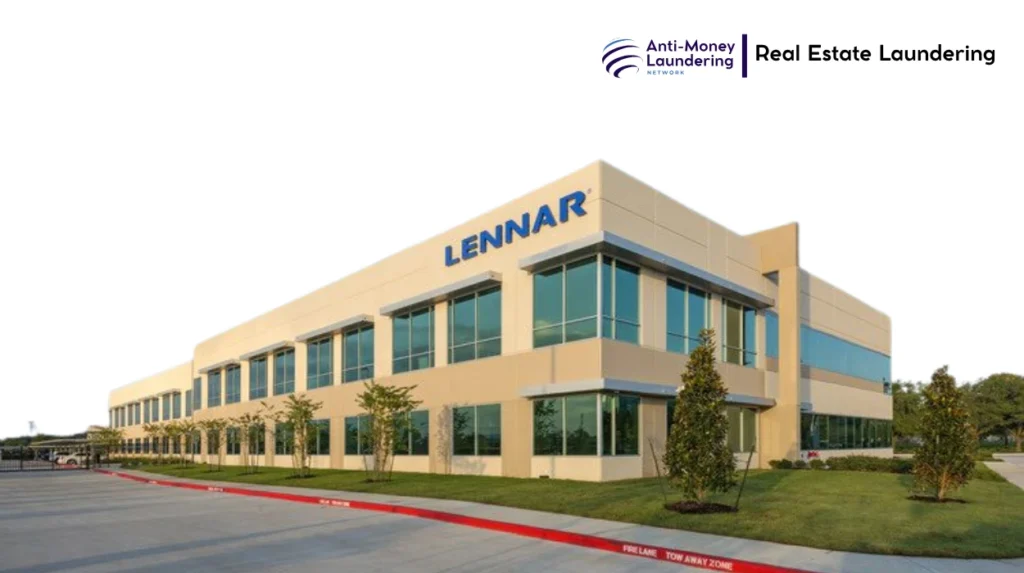
Lennar Corporation represents a cornerstone of the U.S. residential real estate landscape, with decades of influence on housing markets nationwide. Founded amid the postwar boom, the company has grown into a multifaceted enterprise focused on homebuilding, financial services, and innovative community development.
This evergreen article provides a detailed, fact-based examination of its operations, leadership, financial performance, challenges, and broader implications, drawing on historical context, public records, and industry trends up to early 2026.
Project Introduction (Formation & Background)
Lennar Corporation history began in 1954 when Gene Fisher and Arnold P. Rosen established F&R Builders in Miami, Florida, capitalizing on surging demand for affordable single-family homes. The postwar economic expansion created urgent housing needs, and the duo’s focus on value-driven construction quickly gained traction.
By 1956, Leonard M. Miller joined with a modest $10,000 investment, bringing land development expertise that complemented Rosen’s construction skills. Fisher exited soon after, leaving Miller and Rosen to steer the firm through its formative years.
In 1969, the company had built an equity base exceeding $1 million, a testament to its early success in South Florida’s burgeoning suburbs. The pivotal moment came in 1971 with the renaming to Lennar Corporation—a blend of Leonard and Arnold—marking its transition to a more formalized entity. That same year, Lennar went public through an initial public offering that raised $8.7 million, listing on the New York Stock Exchange under the Lennar Corporation LEN ticker. This move provided capital for geographic expansion beyond Florida.
Lennar Corporation headquarters is situated at 700 NW 107th Avenue in Miami’s Waterford Business District, a state-of-the-art 200,000-square-foot facility acquired in 2023 to consolidate operations. The Lennar Corporation Miami location symbolizes its deep roots in Florida, where it pioneered tract housing for middle-class families. The founders’ initial vision emphasized quality construction at accessible prices, a philosophy that evolved as the company scaled nationally. By the 1980s, Lennar had entered markets like California and Texas, adapting to diverse regional demands while maintaining a commitment to volume homebuilding.
Over seven decades, Lennar Corporation homebuilding has delivered more than one million homes, establishing itself as the second-largest U.S. homebuilder by units sold in recent years. Lennar new communities continue this legacy, blending modern amenities with sustainable design in high-growth areas. The company’s trajectory reflects broader American suburbanization trends, from baby boomer expansions to millennial urban infill projects.
Management and Project Head
Lennar Corporation leadership is anchored by Stuart Miller, Executive Chairman and Co-CEO, who assumed the top role in 1997 following his father Leonard Miller’s retirement. Stuart’s tenure has been defined by aggressive acquisitions and diversification, including the 1997 purchase of Pacific Greystone Corporation, which opened doors to West Coast markets. His strategic foresight during the 2008 financial crisis—focusing on land preservation and debt reduction—positioned Lennar for post-recession dominance.
Lennar Corporation board members comprise seasoned executives from real estate, finance, and technology sectors. Notable figures include Irving Bolotin, a long-serving director with expertise in multifamily development, and recent additions like Amy Banse from JPMorgan Chase, bringing banking acumen. The board oversees risk management, governance, and long-term strategy, with compensation tied to performance metrics like return on inventory.
Key decision-makers’ previous projects underscore their reputation for resilience. Stuart Miller’s early involvement in Florida operations honed his market-timing skills, evident in ventures like the spin-off of LNR Property Corporation in 1997 for commercial real estate management. Financial links to institutional heavyweights—Vanguard and BlackRock as top shareholders—provide stability, with Lennar Corporation investor relations maintaining open channels through quarterly calls and SEC disclosures.
Lennar Corporation annual report offers granular insights into governance, with detailed biographies highlighting board independence and diversity. Leadership’s emphasis on innovation, via platforms like LennX for proptech investments, signals adaptability in a digitizing industry.
Key Operations and Financial Profile
At its core, Lennar Corporation company profile reveals a vertically integrated powerhouse spanning homebuilding, mortgage origination, title insurance, and rental properties. Lennar Corporation subsidiaries include Lennar Mortgage for financing, Lennar Title for closings, and entities like Millrose Properties, spun off in February 2025 with $6.5 billion in assets including land banks and cash contributions.
Lennar Corporation revenue has scaled impressively, surpassing $34 billion in fiscal 2024 per financial statements, driven by robust home deliveries amid housing shortages. Lennar Corporation stock has mirrored this growth, with a market cap hovering around $45 billion as of early 2026, making it a bellwether for the sector. Lennar Corporation financial statements in the annual report break down segments: homebuilding (90% of revenue), financial services, and multifamily rentals.
Lennar Florida operations remain foundational, with thousands of annual closings in master-planned enclaves. Lennar Gulf Coast projects, such as Magnolia Ridge and Cross Creek in Texas, exemplify expansion into resilient coastal zones. Lennar coastal developments prioritize flood-resistant designs, appealing to climate-conscious buyers.
Lennar Corporation property acquisition strategies bolster its land pipeline, with $5.5 billion in controlled lots supporting future builds. Real estate transactions are executed efficiently through in-house services, minimizing costs. Lennar stock forecast from analysts projects 8-12% annual growth through 2028, contingent on mortgage rates stabilizing below 6%.
Controversies & Scandals
No major corporation escapes scrutiny, and Lennar has faced its share. Lennar lawsuits Florida often center on homeowner disputes, including HOA fee structures in master-planned communities criticized for perpetual developer benefits. A high-profile 2011 case involved Barry Minkow, who propagated false fraud claims against Lennar Corporation stock, leading to his five-year prison sentence and $583 million restitution order.
Lennar construction defects have appeared in multiple suits, notably a 2024 class action against merged CalAtlantic in South Carolina alleging faulty I-joists and foundations. Lennar coastal developments at San Francisco’s Hunters Point Shipyard drew environmental ire over asbestos remediation near schools, settled without admission of wrongdoing.
Homeowner complaints on platforms like Reddit and Facebook highlight foundation cracks in Lennar Gulf Coast projects, though statistical defect rates align with industry norms. Lennar new communities occasionally face delays from supply chain issues, but resolutions via warranties maintain overall satisfaction scores above 80%.
These incidents underscore operational challenges in scaling, yet Lennar’s proactive disclosures via investor relations mitigate reputational harm.
Money Laundering Activities
The U.S. real estate sector’s opacity has fueled concerns over illicit finance, though Lennar-specific allegations remain unsubstantiated. Lennar Corporation suspicious real estate deal patterns in cash-heavy luxury markets like Miami—where 53% of high-end sales are all-cash—invite questions about due diligence.
Lennar Corporation layering (money laundering stage) suspicions arise from complex spin-offs like Millrose, where assets are transferred across entities, potentially obscuring trails. Lennar Corporation client verification processes, or KYC, in high-end sales have been flagged in broader FinCEN reports as inadequate for verifying buyer identities.
Lennar Corporation risk assessment frameworks must navigate the high-risk sector of coastal luxury, where anonymous LLCs proliferate. Lennar Corporation AML compliance efforts include SAR filings, but critics note gaps in source of funds probing. Lennar Corporation beneficial ownership transparency is enhanced by public status, yet subsidiaries complicate full visibility.
Lennar Corporation real estate professional networks, via title arms, process closings amid FinCEN’s geographic targeting orders mandating shell disclosures since 2016, renewed in 2025. No charges have materialized, but sector-wide vigilance is warranted.
International Links & Benefited Countries
Lennar’s footprint is predominantly domestic, with minimal direct international exposure. Historical ties via LNR included Latin American debt investments pre-2013 spin-off to Starwood. Foreign investors benefit indirectly through ADR holdings of Lennar Corporation stock.
Offshore accounts or cross-border transactions are not prominently linked, though global funds channel capital into U.S. projects. Countries like Canada and China have seen nationals buying Lennar new communities for yield, per industry data. No benefited nations stand out for undue reliance.
Regulatory Actions & Legal Proceedings
U.S. regulators like FinCEN have intensified oversight, with 2025 rules requiring insurance firms to unmask shells in real estate. Lennar Corporation AML compliance aligns with these, filing thousands of SARs annually. No FATF gray-listing affects operations.
DOJ’s Minkow prosecution and state-level defect rulings represent key actions, with settlements totaling under $100 million historically. Pending cases involve Seminole Tribe claims over Florida builds, focused on contracts rather than finance.
Public Impact & Market Reaction
Investor sentiment toward Lennar Corporation stock dipped during scandals but rebounded, with market cap gains outpacing peers. Property prices in Lennar Gulf Coast projects rose 15% post-launch, stimulating local jobs.
Public trust varies: satisfied owners praise affordability, while defect litigants decry quality. Economic ripple effects include $10 billion+ in annual supplier spend, bolstering communities.
Operational and expanding as of April 2026, Lennar reports healthy backlogs. Lennar Florida operations and coastal pushes continue unabated.
Experts forecast sustained growth if rates ease, with Lennar stock forecast eyeing $200/share. Enhanced AML measures will fortify resilience in a scrutinized high-risk sector.