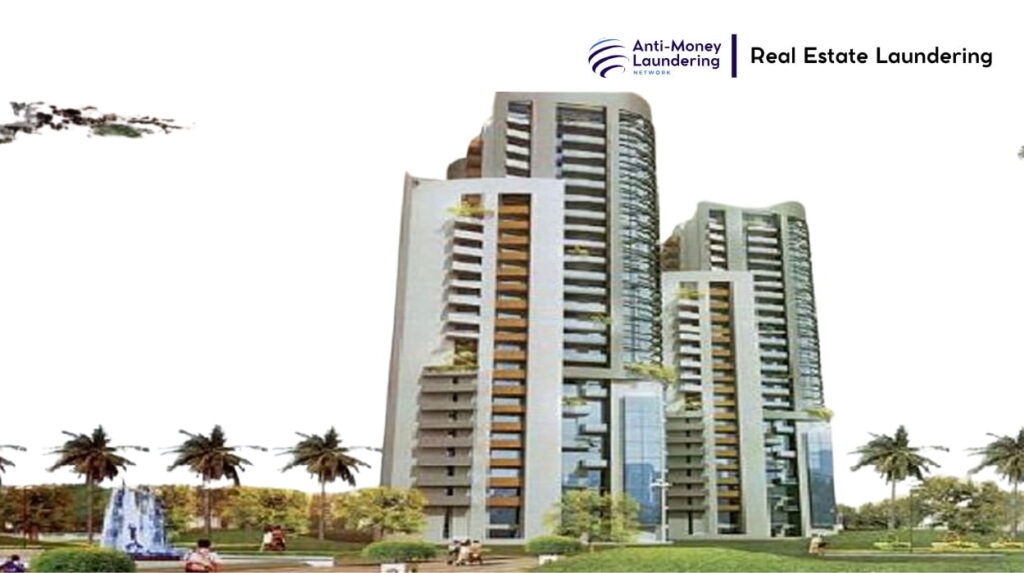
Lotus 300 Noida, situated in Sector 107, represents an ambitious ultra-luxury residential development that promised exclusivity amid Noida’s rapid urbanization. Launched over a decade ago by the 3C Group, this project aimed to deliver premium Lotus 300 Noida apartments, blending green living with high-end amenities, but it has since become emblematic of broader issues in India’s high-risk sector like real estate, including AML compliance lapses and stalled progress.
Project Introduction: Formation and Background
The Lotus 300 Noida project traces its origins to 2010, when developer Hacienda Projects Private Ltd, under the 3C Group banner, unveiled plans for an exclusive enclave on approximately 10 acres of prime land in Lotus 300 Noida location.
This initiative built on the group’s earlier success with eco-friendly commercial spaces, such as LEED Platinum-rated campuses developed for major corporations like Wipro and Patni in Gurgaon and Noida. The initial vision was to create a sanctuary of luxury and sustainability, targeting affluent buyers who valued privacy, spacious living, and environmental consciousness in the heart of a burgeoning urban hub.
At launch, the project was marketed as a limited-edition offering, with only 300 high-end units planned across six towers. These included expansive Lotus 300 Noida 3 BHK configurations starting at around 3,650 square feet and premium Lotus 300 Noida 4 BHK options extending up to 5,300 square feet, complete with servant rooms, studies, and modular designs tailored for modern family lifestyles.
The Lotus 300 Sector 107 positioning was no accident; it leveraged the area’s green buffers, low-density zoning, and strategic Lotus 300 Noida connectivity to key infrastructure like the Noida-Greater Noida Expressway and metro stations just 8-10 minutes away. Brochures from the era emphasized a resort-style ambiance, with promises of 75% open green spaces, rainwater harvesting systems, and energy-efficient features that aligned with the developer’s green building ethos.
The Lotus 300 Noida builder positioned the project as a benchmark for ultra-luxury living, drawing comparisons to global standards while adapting to Indian market demands. Initial marketing campaigns highlighted the exclusivity factor—two apartments per floor only—appealing to high-net-worth individuals seeking Lotus 300 Noida investment opportunities in a region poised for exponential growth.
Basic sale prices were set competitively at around ₹5,000 per square foot after inaugural discounts, with additional charges like lease rent at ₹100 per square foot and interest-free maintenance security (IFMS) at ₹75 per square foot. This pricing structure, coupled with flexible Lotus 300 Noida payment plan options, quickly attracted substantial buyer interest, with collections reportedly exceeding ₹636 crore in the early years.
Management and Project Head: Key Persons and Track Record
Leadership at the Lotus 300 Noida developer rested with the 3C Group, a firm founded by promoters with deep roots in sustainable construction. While specific board member names are not always publicly detailed—highlighting ongoing beneficial ownership transparency challenges in Indian real estate—key decision-makers were affiliated with Hacienda Projects Private Ltd.
The group’s track record included successful deliveries of over 12 million square feet across projects like Lotus Boulevard and Lotus Panache, which earned accolades for green certifications and timely execution.
The project head and management team envisioned Lotus 300 as an extension of their portfolio’s strengths, focusing on quality craftsmanship and innovative amenities. Financial links traced back to robust banking relationships and prior ventures that demonstrated fiscal responsibility. However, as construction stalled, questions arose about internal governance and project oversight.
Reputations that once shone with innovation dimmed under the weight of delays, though no major pre-Lotus 300 scandals tainted the record. This backdrop underscores the importance of robust client verification and risk assessment processes for real estate professionals handling such high-value developments in a high-risk sector.
Lotus 300 Noida Amenities, Layout, and Infrastructure
Central to the appeal of Lotus 300 Noida amenities was a sprawling 50,000 square foot clubhouse featuring a swimming pool, state-of-the-art gym, kids’ pool, tennis courts, and multipurpose halls. Landscaped gardens, jogging tracks, and ample visitor parking complemented the 75% open space commitment, fostering a sense of community in an otherwise dense urban setting.
The Lotus 300 Noida layout and floor plan were designed with meticulous attention to space utilization, incorporating Vastu-compliant orientations in marketing materials and modular kitchens equipped with RO systems.
Prospective buyers could access the Lotus 300 Noida brochure and Lotus 300 Noida brochure pdf through developer channels, detailing tower configurations rising up to 24 floors on a 6.62- to 10-acre plot. Under RERA registration UPRERAPRJ6828 (filed in 2017 with an expected completion by 2020), the Lotus 300 Noida units promised premium finishes, though delivery shortfalls altered perceptions.
The Lotus 300 Noida area in Sector 107 offered seamless Lotus 300 Noida connectivity via major highways, metro links, and proximity to business districts, enhancing its stature as a prime residential address.
Nearby social infrastructure further bolstered livability: Lotus 300 Noida schools like Lotus Valley International School (5 minutes away), hospitals such as Fortis or Jaypee, and malls including Starling Edge or The Grand Venice provided essential conveniences. This ecosystem contributed to positive Lotus 300 Noida review elements, despite overarching challenges, and supported potential Lotus 300 Noida rental markets for occupied units.
Lotus 300 Noida Price, Payment, Possession, and Financial Aspects
Pricing dynamics evolved significantly for Lotus 300 Noida price structures. Early Lotus 300 Noida price list entries quoted 3 BHK units at approximately ₹3.65 crore and 4 BHK at up to ₹9.28 crore, inclusive of base costs and extras. Homebuyers explored Lotus 300 Noida home loan tie-ups with leading banks, paired with customizable Lotus 300 Noida payment plan schedules that eased upfront burdens.
Possession timelines shifted dramatically from initial 2013-2016 projections to indefinite delays, fueling disputes over Lotus 300 Noida possession and Lotus 300 Noida possession date. Resale markets reflected resilience, with average rates climbing to ₹16,500 per square foot by late 2025—a 4% quarterly uptick—amid 52 real estate transactions totaling ₹122 crore.
Maintenance charges for Lotus 300 Noida maintenance added to ownership costs, while Lotus 300 Noida owner verification processes gained scrutiny in secondary markets. For support, Lotus 300 Noida contact number and customer care lines routed through 3C channels, with the Lotus 300 Noida official website offering brochure download and price list updates.
Controversies and Scandals
By 2022, Lotus 300 Noida plunged into controversy as homebuyers, having paid substantial sums, faced non-delivery. Police complaints alleged fraudulent practices, with the Allahabad High Court labeling it a “classic conning” case.
Media coverage amplified buyer frustrations, contrasting the project’s glittering promises with stark realities of incomplete towers. Lotus 300 Noida pros and cons debates emerged: pros included the unbeatable Lotus 300 Noida address and amenities potential, while cons centered on prolonged uncertainty and eroding Lotus 300 Noida rating.
These scandals highlighted vulnerabilities in property acquisition and real estate transaction oversight, prompting calls for stricter norms.
Money Laundering Activities
Enforcement Directorate (ED) investigations positioned Lotus 300 as a case study in suspicious real estate deal patterns, involving layering (money laundering stage) tactics like shell companies, over- and under-invoicing, and fake buyer placements. Buyer funds exceeding ₹636 crore were allegedly diverted to unrelated expenses, cash dealings, and layered entities, bypassing source of funds scrutiny.
Raids in 2024 uncovered ₹1 crore in cash, ₹19 crore in jewelry, and led to ₹23 crore asset attachments under PMLA. Weak AML compliance, inadequate client verification, and superficial risk assessment by real estate professionals enabled these high-risk sector exploits, underscoring the need for enhanced beneficial ownership transparency in Lotus 300-linked transactions.
International Links and Benefited Countries
Direct international links remain limited in public records, but probes hinted at offshore routing through shell entities, potentially benefiting tax havens. Ties to politically exposed persons (PEPs), including a retired IAS officer, suggested cross-border opacity. No major foreign investments were confirmed, though patterns aligned with FATF critiques of Indian real estate’s role in global laundering networks.
Regulatory Actions and Legal Proceedings
Regulatory escalation began with ED actions in 2024, including raids and asset freezes for AML violations. Insolvency proceedings launched in 2022 over a ₹33 crore bank default, advancing via NCLAT until a Supreme Court stay in February 2026, which also questioned a CBI probe’s basis. Earlier interim halts paused ED efforts, while partial flat registrations occurred by March 2025 under RERA pressures, despite outstanding dues.
The Lotus 300 Noida RERA status reflects ongoing flux, with Lotus 300 Noida status teetering between revival hopes and litigation shadows. No involvement from Pakistan’s FIA or NAB—as this is an India-centric case—but PMLA enforcement exemplifies cross-jurisdictional AML compliance imperatives.
Public Impact and Market Reaction
Homebuyers bore the brunt, with sunk investments and stalled dreams eroding market trust. Sector 107 property prices dipped temporarily before rebounding, buoyed by Noida’s infrastructure boom. Broader economic ripples included heightened investor caution, demands for owner verification in transactions, and forums amplifying reform calls.
Lotus 300 Noida investment sentiment remains polarized, with rental yields tempered by maintenance disputes and possession uncertainties.
As of March 2026, the project operates in limbo: partially handed over post-insolvency stay, with select units registered amid ED/CBI overhangs. Supreme Court interventions offer revival pathways, contingent on resolved probes and compliance upgrades.
Experts foresee measured recovery if beneficial ownership transparency and AML adherence strengthen, leveraging Noida’s growth trajectory. Risks persist sans litigation closure, advising cautious engagement for prospective stakeholders.
This analysis navigates the project’s dual narrative—from luxury aspiration to compliance cautionary tale—equipping readers with evergreen insights into real estate dynamics.