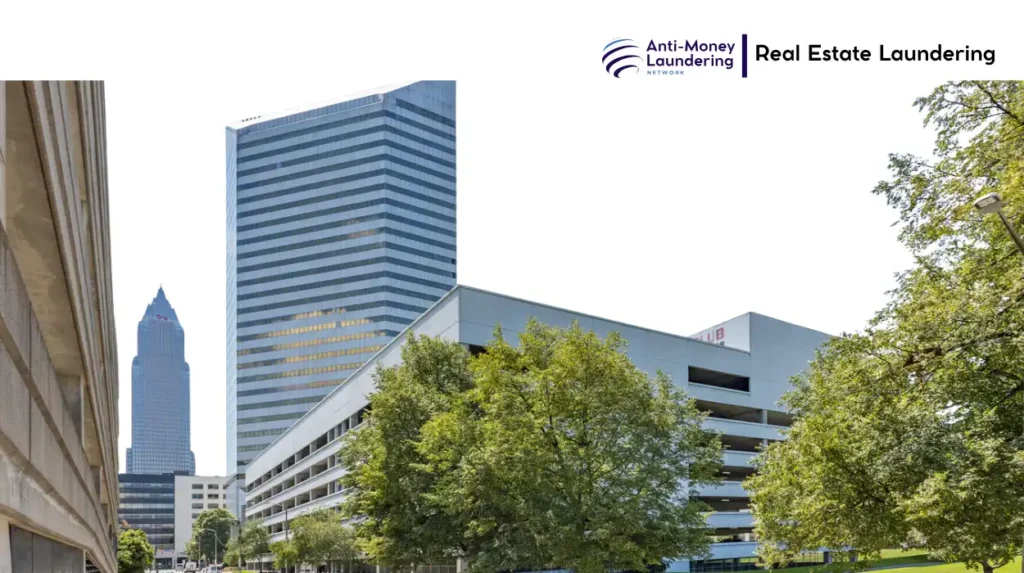
One Cleveland Center stands as a key landmark at 1375 E 9th St Cleveland, OH 44114, also referenced in records as 1300 East 9th Street Cleveland, OH 44114. This 31-story office tower, completed in 1983, offers about 530,014 square feet of Class A space in downtown Cleveland’s financial district. Designed in a modernist style with an angular silver facade, it features a glass atrium base, fitness facilities including the one cleveland center athletic club, and amenities like the one cleveland center garage and one cleveland center cafe.
The building hosts diverse tenants such as KPMG LLP, Grant Thornton, Sun Life Financial, and the Cleveland Metropolitan Bar Association, contributing to its role as headquarters in Cleveland for financial and professional services. Its one cleveland center directory lists firms focused on one cleveland center financial operations, while the one cleveland center plaza area enhances accessibility near the cleveland justice center.
Project Introduction (Formation & Background)
Groundbreaking for One Cleveland Center occurred on October 30, 1980, following land acquisition in 1979 by Medical Mutual from developer John W. Galbreath. The site, part of the Erieview urban renewal plan cleared in 1963, sat as a parking lot until Galbreath’s Galbreath Company envisioned a people-oriented office tower. Architect KlingStubbins drew inspiration from New York City’s Citigroup Center, incorporating a five-story atrium and 450-foot height—making one cleveland center height a notable feature at sixth tallest in downtown Cleveland.
Construction cost $52.1 million, managed by Turner Construction with structural engineering by LeMessurier Consultants. The one cleveland center year built aligns with Cleveland’s 1980s office boom, renovated in 1995 and 2011 to modernize interiors and add lake views. Initial vision emphasized functionality for insurers and bankers, positioning the one cleveland center building as a hub in the one cleveland center location.
Management and Project Head
Post-2008 acquisition, Optima Management Group oversaw operations, with Chaim Schochet as a key figure leading day-to-day decisions. Schochet, through Optima International LLC and entities like Optima One Cleveland Center LLC, handled leasing and maintenance. The firm’s structure involved layered ownership, complicating one cleveland center beneficial ownership transparency and client verification processes for tenants.
Board-level control traced to Miami-based Optima Ventures, partially owned by Ukraine’s Privat Group. Schochet’s prior projects included other Cleveland acquisitions, though his reputation faced scrutiny amid one cleveland center risk assessment concerns in real estate professional networks. Financial links extended internationally, raising questions on one cleveland center source of funds during economic downturns.
Controversies & Scandals
One Cleveland Center’s profile rose with a 2003 embezzlement case involving Lehman Brothers broker Frank Gruttadauria, who operated from its offices and defrauded clients of millions before federal imprisonment. This incident highlighted vulnerabilities in the one cleveland center tenants’ environment. More significantly, 2020 FBI and IRS raids targeted Optima offices inside the building, probing one cleveland center suspicious real estate deal allegations tied to neglect and opaque financing.
Reports surfaced of deferred maintenance, with appraisals dropping from $86.3 million purchase value amid visible deterioration. These events eroded market trust, impacting one cleveland center jobs in property management and prompting discussions on high-risk sector dynamics in U.S. commercial real estate. No direct tenant disruptions occurred, but the scandals amplified calls for stronger one cleveland center AML compliance.
Money Laundering Activities
A one cleveland center real estate transaction in May 2008 saw Optima pay $86.3 million—about $159 per square foot—for the 541,505-square-foot property from Meridian Realty Investments. This one cleveland center property acquisition fueled suspicions of layering (money laundering stage), with funds allegedly routed through Delaware LLCs obscuring origins. Court filings later alleged misappropriation from Ukraine’s PrivatBank, involving $12 million in misrepresented loans funneled via nominees.
Transaction patterns included rapid acquisitions making Optima Cleveland’s largest commercial owner by 2012, followed by value erosion and failed sales. Tactics reportedly encompassed shell companies for nominee ownership, bypassing robust source of funds checks. The one cleveland center net worth declined as probes revealed potential overvaluation, fitting patterns in high-risk sector investments lacking full beneficial ownership transparency.
International Links & Benefited Countries
Ownership connected to Ukraine via Privat Group principals Ihor Kolomoisky and Gennadiy Bogolyubov, with Cyprus entities like Pavanti Enterprises facilitating cross-border flows. Funds traced from PrivatBank’s Cyprus branch supported U.S. purchases, benefiting Ukraine-based networks indirectly through asset concealment. Austria emerged in reports as a laundering hub for repatriated proceeds.
The one cleveland center USA ties exemplified broader flows into the United States, where Delaware’s lax rules enabled offshore links. No direct benefits to other countries were documented beyond transactional paths, though the scheme spanned Europe and North America, underscoring global real estate’s role in one cleveland center layering tactics.
Regulatory Actions & Legal Proceedings
Federal probes intensified post-2020 raids at One Cleveland Center’s address, part of DOJ civil suits like FLSD Case 1:20-cv-25313 alleging $470 million in U.S. laundering from $5.5 billion PrivatBank theft. No seizures hit this specific property, but related assets like 55 Public Square faced forfeiture. FinCEN Files flagged transactions, prompting sanctions on Kolomoisky.
Delaware Chancery Court oversaw receiverships for Optima holdings. Pending federal cases remain sealed, with no convictions by 2025. These actions highlighted gaps in one cleveland center AML compliance enforcement, despite FATF-style recommendations for real estate risk assessment.
Public Impact & Market Reaction
Raids and scandals dented downtown Cleveland’s appeal, though property prices stabilized via revitalization. Investors eyed distressed sales, with K&D Group acquiring nearby Optima assets like 55 Public Square for mixed-use conversion. Public discourse focused on absentee ownership’s toll, reducing one cleveland center revenue potential and straining municipal resources.
Market trust waned briefly, slowing leasing, but tenants like accounting firms persisted. Economic effects included lost one cleveland center financial statements transparency, indirectly burdening taxpayers via code enforcement. No widespread investor losses occurred, as the building transitioned stably.
As of 2025, One Cleveland Center operates fully, post-Optima divestitures, with stable tenancy in finance and law sectors near one center court cleveland oh 44115. No one cleveland center apartments exist, but amenities sustain vibrancy. Renovations maintain competitiveness despite past neglect.
Experts predict steady performance amid Cleveland’s office recovery, potentially boosting one cleveland center revenue through hybrid work demand. Ongoing probes pose minimal disruption risk, with enhanced due diligence likely improving long-term one cleveland center client verification. The tower endures as a resilient asset in the one cleveland center united states portfolio.