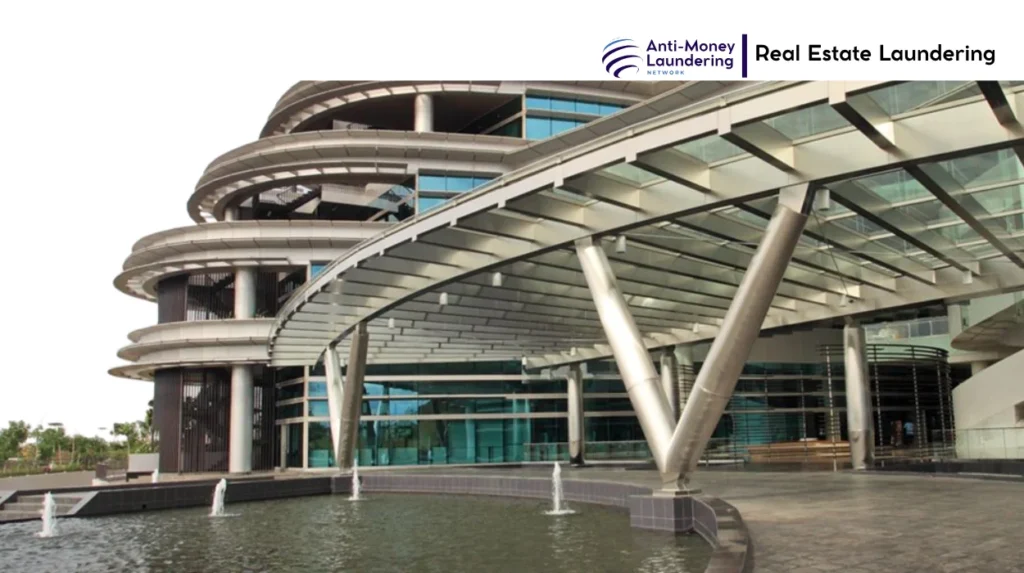
Sinarmas Land, the property development arm of Indonesia’s Sinar Mas Group, is one of the country’s most prominent real estate players. On paper, it is a diversified developer with a 10,000‑hectare landbank, flagship townships like BSD City, and a Singapore‑listed holding company. Beneath that veneer, however, lies a complex web of corporate structures, offshore vehicles, and long‑standing controversies that raise serious questions about Sinarmas Land beneficial ownership transparency, Sinarmas Land money laundering risk indicators, and Sinarmas Land ESG and environmental risks.
This article provides an evergreen, fact‑based examination of Sinarmas Land Indonesia company profile, its Sinarmas Land Sinar Mas Group overview, and the broader context of Sinarmas Land high‑risk jurisdiction links, Sinarmas Land offshore companies and ownership, and Sinarmas Land controversies and investigations.
When and how the project was launched
Sinarmas Land traces its origins to the early 1970s, when the Widjaja family began consolidating land and property interests in the Greater Jakarta area. The formal Sinarmas Land company overview and history commonly cites 1972–1973 as the founding period for what would become a major property development platform under the Sinar Mas umbrella.
In the late 1980s and early 1990s, Sinarmas Land emerged as a branded developer through two key listed vehicles: PT Bumi Serpong Damai (BSD) Tbk and PT Duta Pertiwi Tbk. These companies became the core of its Sinarmas Land property development portfolio and Sinarmas Land real estate projects Indonesia.
Background of the founders/developers and their initial vision
The group was founded by Eka Tjipta Widjaja, a Chinese‑Indonesian tycoon who built Sinar Mas into one of Indonesia’s largest conglomerates, spanning pulp and paper, palm oil, banking, telecommunications, and real estate. His vision for Sinarmas Land was to create large‑scale, integrated townships rather than isolated housing projects. BSD City (Bumi Serpong Damai) in Tangerang became the flagship embodiment of that vision: a self‑contained “city within a city” with residential zones, malls, offices, schools, and hospitals.
The Sinarmas Land BSD City developer history reflects this ambition. From a largely greenfield site in the 1990s, BSD City evolved into a major satellite city of Jakarta, attracting middle‑ and upper‑income buyers, multinational offices (e.g., BSD Green Office Park), and large retail and convention facilities such as ITC and ICE (Indonesia Convention Exhibition).
Management and Project Head
Sinarmas Land operates as part of the wider Sinarmas Land Indonesia corporate structure, ultimately controlled by the Widjaja family. While the group’s public materials emphasize professional management, decision‑making remains tightly aligned with family interests.
Key figures associated with Sinarmas Land and Sinar Mas Group include Eka Tjipta Widjaja (founder; deceased in 2019), who established the conglomerate and set the strategic direction. Franky Oerhard Widjaja and other family members represent the next generation, overseeing Sinar Mas Group’s diversified businesses. Stefanus Mulianto is identified in some corporate data as CIO of Sinarmas Land, reflecting the group’s push toward more sophisticated capital and investment management.
The Sinarmas Land shareholder structure and family control is characterized by concentrated family ownership, with significant control exercised through both onshore Indonesian entities and offshore holding structures. This concentration is a critical factor in any Sinarmas Land Indonesia corporate governance review and Sinarmas Land due diligence checklist for investors.
The Widjaja family’s reputation is mixed. On one hand, they are credited with pioneering large‑scale township development in Indonesia through Sinarmas Land BSD City township project details and other projects like Kota Wisata and Grand Wisata. On the other hand, Sinar Mas Group’s palm oil, pulp, and plantation businesses have been repeatedly linked to deforestation, land conflicts, and labor controversies, casting a long shadow over the group’s overall brand.
Financially, Sinarmas Land is closely tied to group banks (e.g., Bank Sinarmas) and other Sinar Mas entities, facilitating internal financing, cross‑subsidies, and complex inter‑company transactions. Such linkages amplify Sinarmas Land money laundering risk indicators in the eyes of compliance professionals, particularly when combined with offshore structures and opaque beneficial ownership.
Sinarmas Land Business Operations in Indonesia
A crucial dimension of any Sinarmas Land Indonesia general information file is the tension between its public identity as a real estate developer and its deep roots in palm oil and plantation assets. The Sinarmas Land Indonesia real estate vs palm business dynamic is not merely a matter of diversification; it is central to how the group mobilizes land, capital, and political connections.
Sinarmas Land property development portfolio includes townships (BSD City, Kota Wisata, Grand Wisata), commercial offices (Green Office Park), retail (ITC, malls), industrial estates, and hospitality assets. Sinarmas Land Tanjung Bintang and plantation holdings and related Sinar Mas agribusiness assets give the group control over vast tracts of land in Sumatra and Kalimantan. While not all of these are directly titled under Sinarmas Land, they form part of the broader Sinarmas Land supply chain and palm oil sourcing and Sinarmas Land Indonesia palm oil controversy narrative.
From a laundering and asset‑concealment perspective, this dual structure is significant. Land can move between “plantation” and “developable real estate” classifications, valuations can be adjusted based on zoning changes, and cash flows from palm operations can be commingled with property development finance.
Key assets and projects frequently associated with Sinarmas Land include BSD City (Tangerang, Banten), the flagship integrated township. Kota Wisata (Cibubur, East Jakarta) is a large residential and commercial township. Grand Wisata (Bekasi) is another major township development. Green Office Park (BSD) is a commercial office complex attracting multinational tenants. ITC and ICE (International Trade Center / Indonesia Convention Exhibition) are retail and convention infrastructure linked to Sinarmas Land’s ecosystem. There are also various residential clusters, apartments, and mixed‑use projects across Greater Jakarta and other urban centers.
These projects underpin the Sinarmas Land property acquisition and Sinarmas Land real estate transaction patterns that compliance teams examine for signs of Sinarmas Land suspicious real estate deal activity or Sinarmas Land layering (money laundering stage) behavior.
Corporate Structure, Listing, and Offshore Links
Sinarmas Land’s Sinarmas Land Indonesia corporate structure is multi‑layered. Sinar Mas Land Limited, incorporated and listed in Singapore (SGX: A26), acts as the regional holding company for property operations in Indonesia, China, Malaysia, and Singapore. In Indonesia, core operating companies include PT Bumi Serpong Damai Tbk and PT Duta Pertiwi Tbk, both publicly listed on the Indonesia Stock Exchange. Numerous unlisted subsidiaries and special‑purpose vehicles hold specific land parcels, projects, or financing arrangements.
The Sinarmas Land Singapore listing and subsidiaries structure allows the group to access international capital markets while maintaining tight control over Indonesian assets through local entities.
Investigative reports and NGO analyses have highlighted that Sinar Mas Group, including its property and plantation arms, uses offshore companies and ownership structures in jurisdictions such as the British Virgin Islands (BVI), Mauritius, Singapore, and the Netherlands.
These structures raise several red flags. Sinarmas Land beneficial ownership transparency is limited: while the Widjaja family is widely understood to control the group, the precise ownership chains for specific projects or land parcels are often obscured by intermediate holding companies. Sinarmas Land FATF high‑risk jurisdiction exposure is relevant because Indonesia itself has been assessed by FATF as having significant AML/CFT vulnerabilities, and several of the offshore jurisdictions used are classic secrecy havens. The presence of Sinarmas Land offshore companies and ownership vehicles complicates Sinarmas Land client verification and Sinarmas Land risk assessment for banks, investors, and counterparties.
For any real estate professional or compliance officer conducting a Sinarmas Land Indonesia due diligence checklist for investors, mapping these offshore layers is essential to understanding where funds originate, who ultimately benefits, and how assets might be shielded from scrutiny.
Controversies & Scandals
Sinarmas Land cannot be analyzed in isolation from Sinar Mas Group’s broader Sinarmas Land controversies and investigations context. While many high‑profile cases involve palm oil and pulp, they directly affect perceptions of the property arm and its Sinarmas Land ESG and environmental risks.
A palm oil bribery scandal in 2018 saw Indonesia’s anti‑corruption agency (KPK) arrest a Sinarmas representative and provincial legislators in Central Kalimantan over alleged bribery related to pollution permits and oversight. This case underscored the Sinarmas Land Indonesia palm oil controversy and the group’s willingness to engage in corrupt practices to protect its plantation interests. Hidden ties with Paper Excellence in 2022 saw investigative reporting reveal concealed links between Sinar Mas and Canadian paper company Paper Excellence, raising questions about corporate transparency and Sinarmas Land corporate governance review across the group’s businesses. Land rights and deforestation issues have been repeatedly documented by human rights and environmental organizations, including alleged encroachment on community lands, weak compensation, and destruction of peat forests. These issues feed into the broader Sinarmas Land human rights and community impact critique.
While some of these cases are formally tied to plantation or pulp entities, the shared brand, overlapping ownership, and common financing channels mean that Sinarmas Land Indonesia media coverage and criticism often lumps the property and agribusiness arms together.
Direct, court‑proven cases of “black money” specifically tied to Sinarmas Land’s property transactions are not extensively documented in public sources. However, several factors contribute to Sinarmas Land money laundering risk indicators. Use of offshore companies and ownership in high‑risk jurisdictions, concentrated family control and opaque Sinarmas Land shareholder structure and family control, and sector‑wide issues in Indonesian real estate and palm oil, including overvaluation, under‑invoicing, and complex inter‑company loans, all play a role.
In compliance terms, this does not mean guilt is established, but it does justify treating Sinarmas Land as a high‑risk sector entity requiring enhanced Sinarmas Land AML compliance measures, rigorous client verification, and careful source of funds analysis.
Money Laundering Activities and Typologies
While no single, definitive public case outlines a full laundering scheme centered on Sinarmas Land property, the structural preconditions are evident. Layering (money laundering stage) involves multiple tiers of onshore and offshore companies between ultimate owners and project assets, enabling Sinarmas Land layering (money laundering stage) typologies. Funds can move through several entities before reaching the development vehicle, obscuring origin. Shell companies and offshore vehicles, including use of BVI and other jurisdiction entities, allow Sinarmas Land offshore companies and ownership to hold shares or receive dividends without clear beneficial owner disclosure. Overvaluation/undervaluation risks mean large landbanks and future development rights can be valued using optimistic assumptions, potentially enabling Sinarmas Land real estate transaction prices that do not reflect market fundamentals. This can facilitate balance‑sheet manipulation, over‑collateralized loans, or disguised capital movement. Nominee arrangements and complex financing, including internal group financing, related‑party loans, and nominee directors/shareholders, further complicate tracing of Sinarmas Land source of funds.
For a real estate professional or compliance officer, these patterns align with classic red flags in Sinarmas Land AML compliance frameworks: opaque ownership, high‑value illiquid assets, cross‑border flows, and politically connected counterparties.
Publicly available data on specific Sinarmas Land property acquisition deals is fragmented. However, several patterns are notable. Aggressive land accumulation occurred in the 1990s–2000s, often via concessions and large‑scale purchases in peri‑urban and rural areas. Conversion of plantation or forestry land into “developable” real estate was accompanied by sharp increases in book value. Use of group banks and related entities to finance acquisitions and development sometimes occurred with limited external disclosure.
These patterns do not in themselves prove wrongdoing but do support a cautious Sinarmas Land risk assessment, especially when combined with the group’s Sinarmas Land high‑risk jurisdiction links and Sinarmas Land FATF high‑risk jurisdiction exposure.
International Links & Benefited Countries
Sinarmas Land’s operations and corporate structure create several international linkages. Singapore, as the listing location of Sinar Mas Land Limited and a regional financial hub, benefits from capital flows, professional fees, and prestige associated with hosting a major Indonesian developer’s regional holding company. BVI, Mauritius, and the Netherlands host intermediate holding companies and financing vehicles, benefiting from registration fees, tax structures, and financial services. China and Malaysia are home to Sinarmas Land property investments and operations, extending its regional footprint and diversifying revenue streams.
From a laundering perspective, these cross‑border structures enable Sinarmas Land real estate transaction flows that are harder to trace and regulate, particularly when combined with weak Sinarmas Land beneficial ownership transparency.
The group’s ability to tap international capital markets (via SGX and potential bond issuances) and use offshore financing vehicles enhances its financial flexibility but also raises Sinarmas Land Indonesia investment risks 2026 for investors concerned about governance and AML. Cross‑border transactions between Indonesian operating companies, Singapore holdcos, and offshore SPVs create multiple points where Sinarmas Land source of funds can be obscured or re‑characterized.
Regulatory Actions & Legal Proceedings
There are no widely reported cases of Indonesian financial intelligence units (PPATK) or courts explicitly seizing Sinarmas Land property as “laundered assets.” However, FATF and mutual evaluations have highlighted Indonesia’s systemic AML/CFT weaknesses, including in sectors like real estate and natural resources. KPK (anti‑corruption commission) actions against Sinarmas representatives in the palm oil context (e.g., 2018 bribery case) demonstrate that parts of the group are within the scope of serious corruption investigations. NGO and civil‑society pressure has led to repeated calls for greater Sinarmas Land beneficial ownership transparency and AML scrutiny of Sinar Mas–linked entities.
While specific court rulings directly targeting Sinarmas Land’s property assets as laundering vehicles are not prominent in open sources, the broader legal environment includes ongoing disputes over land rights, environmental permits, and community compensation in plantation areas linked to Sinar Mas. Periodic investigations into palm oil fraud and supply‑chain integrity indirectly affect the group’s reputation and financing conditions.
For compliance purposes, the absence of a smoking‑gun court case does not negate the need for a robust Sinarmas Land due diligence checklist for investors that accounts for Sinarmas Land controversies and investigations and Sinarmas Land Indonesia corporate governance review.
Public Impact & Market Reaction
For investors, Sinarmas Land presents a paradox. On one hand, it is a large, established developer with a substantial landbank, flagship projects like BSD City, and access to regional capital markets. On the other, its Sinarmas Land ESG and environmental risks, Sinarmas Land deforestation and land rights issues, and opaque ownership structures create reputational and regulatory liabilities.
Public perception is similarly mixed. In Greater Jakarta, many residents view BSD City and related projects as symbols of modern urban development. Yet environmental and human rights advocates highlight Sinarmas Land human rights and community impact concerns, particularly where plantation expansion and land conversion have displaced communities or degraded ecosystems.
There is no clear public evidence that Sinarmas Land‑specific scandals have caused dramatic collapses in property prices in its core markets. However, broader Sinarmas Land Indonesia media coverage and criticism around deforestation and corruption can erode long‑term trust among ESG‑focused investors and international buyers. The group’s reliance on internal financing and related‑party transactions may insulate it from short‑term market shocks but also raises questions about true asset quality and Sinarmas Land source of funds.
Sinarmas Land Sustainability Commitments and Certifications
Sinarmas Land and Sinar Mas Group have issued various Sinarmas Land Indonesia sustainability commitments, including pledges to improve environmental performance, engage with communities, and adopt responsible sourcing policies. These are often framed within broader group‑level ESG narratives.
For palm oil operations, Sinarmas Land RSPO certification and deforestation policy is a key metric. Sinar Mas has made public commitments to no‑deforestation, no‑peat, no‑exploitation (NDPE) policies and has some RSPO‑certified mills and plantations. However, independent monitors continue to report gaps between policy and practice, including ongoing deforestation and land conflicts in certain areas. This discrepancy feeds directly into Sinarmas Land ESG and environmental risks assessments and complicates any claim of clean separation between “green” property projects and “dirty” plantation assets.
As of 2026, Sinarmas Land remains operational and active. BSD City and other townships continue to expand and attract residents and businesses. The Widjaja family has moved to consolidate control, including making cash offers to acquire remaining shares and delist Sinarmas Land from the Singapore Exchange, reflecting a desire for greater strategic flexibility and reduced public scrutiny. The group continues to position itself as a leader in integrated urban development, with a focus on smart city concepts and mixed‑use projects.
Looking ahead, several trends are likely. Increased consolidation and delisting are expected as the Widjaja family’s moves to take Sinarmas Land private suggest a preference for tighter control and less disclosure, which may heighten Sinarmas Land beneficial ownership transparency concerns. Continued ESG pressure means international investors and buyers will increasingly scrutinize Sinarmas Land deforestation and land rights issues, Sinarmas Land human rights and community impact, and Sinarmas Land supply chain and palm oil sourcing. Failure to close the gap between policy and practice could limit access to certain capital pools. AML and governance focus will intensify as global AML standards tighten and Indonesia remains under FATF scrutiny, making Sinarmas Land AML compliance, Sinarmas Land client verification, and Sinarmas Land risk assessment more critical for banks and counterparties.
For a real estate professional or investor, the Sinarmas Land future outlook and business expansion must be weighed against persistent Sinarmas Land Indonesia investment risks 2026, particularly around governance, transparency, and environmental performance.
Practical Implications for Compliance and Due Diligence
For institutions and individuals conducting a Sinarmas Land Indonesia due diligence checklist for investors, key steps include mapping the full Sinarmas Land corporate structure and subsidiaries, including offshore vehicles and financing arrangements. Assessing Sinarmas Land beneficial ownership transparency and identifying any Sinarmas Land shareholder structure and family control features that obscure ultimate controllers is essential. Evaluating Sinarmas Land source of funds for major Sinarmas Land property acquisition and Sinarmas Land real estate transaction deals, with particular attention to related‑party loans and cross‑border flows, is critical. Reviewing Sinarmas Land controversies and investigations, including palm oil‑related cases, helps gauge reputational and regulatory exposure. Incorporating Sinarmas Land ESG and environmental risks, Sinarmas Land deforestation and land rights issues, and Sinarmas Land human rights and community impact into overall Sinarmas Land risk assessment frameworks is necessary.
Treating Sinarmas Land as a high‑risk sector entity does not presume guilt but acknowledges the structural conditions that make it a plausible vehicle for Sinarmas Land money laundering risk indicators, Sinarmas Land layering (money laundering stage) tactics, and Sinarmas Land suspicious real estate deal patterns.
Sinarmas Land is more than a property developer; it is a node in a vast, politically connected conglomerate with deep roots in palm oil, pulp, finance, and infrastructure. Its Sinarmas Land Sinar Mas Group overview reveals a business model that thrives on scale, complexity, and jurisdictional arbitrage. While its Sinarmas Land property development strategy has delivered impressive urban projects like BSD City, the same structures that enable rapid growth also facilitate opacity, regulatory arbitrage, and potential abuse.
For investigators, compliance officers, and critical researchers, Sinarmas Land exemplifies how real estate can serve as a vehicle for asset concealment and financial engineering in a high‑risk jurisdiction like Indonesia. The absence of a single, definitive laundering conviction should not obscure the systemic risks embedded in its Sinarmas Land offshore companies and ownership, Sinarmas Land beneficial ownership transparency gaps, and Sinarmas Land Indonesia corporate governance review challenges.
A sober, evidence‑based approach—anchored in Sinarmas Land AML compliance, rigorous client verification, and transparent source of funds analysis—is essential for anyone engaging with this high‑risk sector in Indonesia’s evolving property and agribusiness landscape.