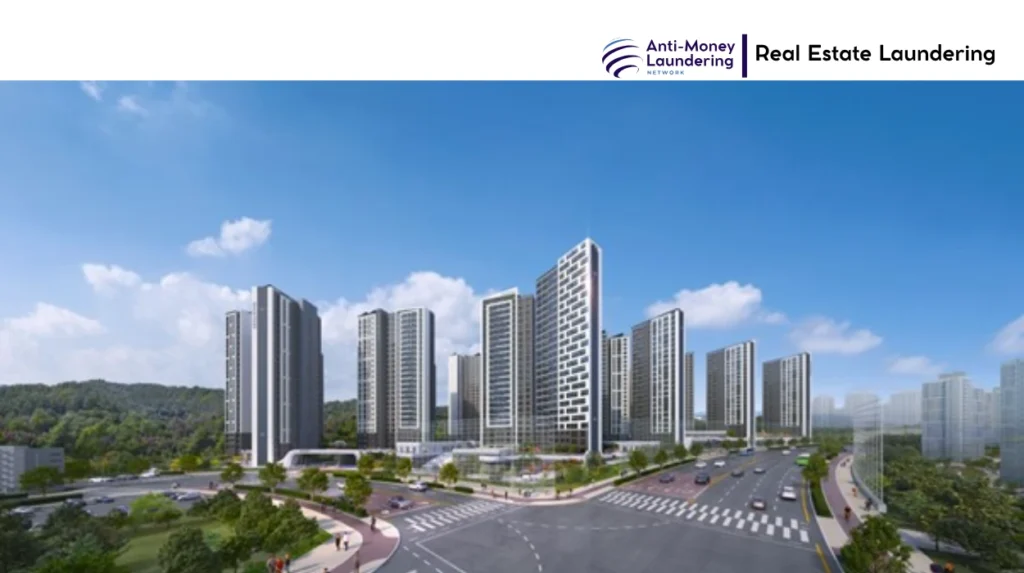
The name Ssangbangwool E&C appears in some real-estate and corporate-risk searches, but the available public record requires an important clarification. Evidence confirms that Ssangbangwool Group promoted a proposed Jeju resort project with China’s Jinsheng Group in 2015. However, the available information does not establish a separate operating company formally named “Ssangbangwool E&C,” nor does it prove that the proposed resort was completed, acquired, or used to launder money.
The case is best understood as an uncompleted, high-risk real-estate project associated with a wider corporate investigation. It should not be presented as a proven property-laundering scheme without documentary evidence showing the movement of illicit funds into land, construction, financing, or ownership structures.
It is also important not to confuse Ssangbangwool with Ssangyong Engineering & Construction, a separate South Korean construction company founded in 1977 and headquartered in Seoul. Ssangyong E&C has operated in construction and engineering, while Ssangbangwool historically developed from the apparel and underwear sector.
Ssangbangwool E&C Company Overview and Background
A conventional Ssangbangwool E&C company overview is difficult to prepare because the name appears to combine two different corporate identities. Ssangbangwool is primarily associated with a South Korean clothing and underwear business, whereas Ssangyong E&C is an independent construction and engineering company.
Ssangbangwool’s corporate history traces its roots to textile and underwear manufacturing rather than to a conventional property-development business. Its history includes product development, exports, and expansion into wider group activities, but the available company information does not independently establish a construction company named Ssangbangwool E&C.
This distinction is important for any investigation involving property acquisition, development finance, beneficial ownership, and suspicious real-estate transactions. Assigning a project to the wrong legal entity can obscure the actual owner, confuse corporate liabilities, and create false connections between unrelated companies.
The most accurate Ssangbangwool E&C background is therefore that the term is being used as a database or search label for a property-development lead associated with Ssangbangwool Group. It should not automatically be treated as the formal name of a registered Korean construction company.
Launch of the Ssangbangwool Jeju Resort Project
In 2015, Ssangbangwool announced a proposed partnership with China’s Jinsheng Group to develop a large resort and wellness complex on Jeju Island. The development was intended to attract affluent Chinese visitors and reportedly included luxury accommodation, healing facilities, and other tourism-related infrastructure. The two parties planned to establish a special-purpose company to manage or develop the project.
Contemporary reports described the proposed investment as exceeding KRW 1.8 trillion. This was an announced development budget rather than a verified purchase price, completed construction value, or proven laundered amount.
The project reflected the investment climate of the period. Jeju was being promoted as a major tourism destination, while Chinese investment and Chinese visitor numbers were viewed as important sources of economic growth. A luxury resort aimed at high-income Chinese customers therefore appeared commercially attractive.
However, the announcement created a need for enhanced compliance checks. A cross-border development of this size would require detailed client verification, source-of-funds analysis, sanctions screening, corporate due diligence, and identification of the ultimate beneficial owners behind every project vehicle.
Ssangbangwool E&C Leadership and Corporate Structure
Kim Seong-tae, the former chairman of Ssangbangwool Group, became the most prominent figure in the group’s later financial and political investigations. His leadership is relevant to the Ssangbangwool E&C company profile because the proposed Jeju project was announced during the broader expansion of the group and its movement into businesses beyond apparel.
Kim was later associated with allegations involving illegal transfers to North Korea, political payments, bribery, and the use of corporate funds. He was subsequently sentenced in connection with the North Korea remittance scandal.
This wider record creates a significant Ssangbangwool Kim Seong-tae investigation risk for compliance researchers. Nevertheless, public information does not prove that Kim personally owned the Jeju resort, controlled the project land, or acted as the beneficial owner of the planned special-purpose company.
The same caution applies to political connections. Allegations involving former Gyeonggi Province officials and Ssangbangwool relate primarily to the wider North Korea remittance and political-payment cases. They should not automatically be described as proof that a politically exposed person owned or secretly controlled the Jeju property.
The group’s corporate connections are important because real-estate risk can arise when land, financing, construction contracts, and sales rights are divided among several affiliated entities. A parent company may announce a project while an affiliate provides financing, a project company holds the land, and a separate contractor or marketing firm receives payments.
In the Jeju case, the planned special-purpose company was reported, but its final legal identity, incorporation status, ownership percentage, directors, bank accounts, and beneficial owners have not been verified in the available material. The Ssangbangwool E&C corporate structure must therefore be treated as an unresolved investigative question.
Ssangbangwool China Joint Venture and Investment Structure
The proposed Ssangbangwool China joint venture was announced after Ssangbangwool and Jinsheng Group reached an agreement concerning the Jeju development. The parties reportedly intended to establish an SPC and invest more than KRW 1.8 trillion in a high-end resort and wellness destination.
The structure was commercially understandable. Jeju had become a major destination for Chinese tourists, and luxury hospitality developments were being promoted as a way to attract foreign capital, increase tourism revenue, and expand the island’s international profile.
At the same time, a project of this size would present a substantial AML compliance challenge. Compliance teams would need to verify Jinsheng Group’s legal status, ownership, financial capacity, funding history, and relationships with lenders or other corporate partners. They would also need to determine whether any individual or company behind the joint venture had connections to public officials, sanctioned parties, opaque holding companies, or unexplained wealth.
The use of a planned SPC would not itself be suspicious. Special-purpose companies are common in property development because they separate project risks, facilitate financing, and simplify investment arrangements. The risk arises when an SPC has no transparent business purpose, is controlled by undisclosed persons, receives unexplained funds, or is used to move money between related parties.
Jeju Site Selection and Development Uncertainty
Reports from 2016 indicated that Ssangbangwool had been reviewing a potential site and conducting feasibility and preliminary design work. The company was reportedly reconsidering the location because of concerns about its commercial viability.
This information is significant because it suggests that the project may not have progressed beyond the planning and feasibility stage. The available information does not establish that a completed hotel, villa complex, apartment development, or commercial resort was delivered.
Later reporting indicated that the proposed investment plan was postponed or placed on hold. There is no reliable evidence that the project generated rental income, sold resort units, transferred development rights, or completed a property acquisition.
Accordingly, references to a Ssangbangwool E&C property acquisition should be used carefully. The available evidence supports a proposed investment and development plan, not a confirmed completed real-estate transaction.
Ssangbangwool Financial History and Corporate Controversies
The Jeju project became more significant because it emerged during a period in which Ssangbangwool was pursuing diversification and attracting investor attention. The group’s later controversies included allegations concerning corporate funds, convertible bonds, bribery, political payments, and illegal remittances to North Korea.
In 2023, South Korean prosecutors reportedly accused former chairman Kim Seong-tae of transferring approximately US$8 million to North Korea through China. The allegations involved transfers connected to political and business objectives.
These matters form the background to the Ssangbangwool corporate investigation in South Korea, but they do not establish a direct link to the Jeju resort. Investigators would need to show that money from the alleged offences entered the project through a bank account, shareholder contribution, loan, contractor payment, land purchase, or another identifiable transaction.
The available information should therefore be separated into documented facts, wider allegations, and unproven property theories. The documented facts are that the Jeju project was announced, a Chinese partner was named, and an SPC was planned. The wider allegations concern Ssangbangwool executives and corporate transactions. The property-laundering theory remains unconfirmed because no public evidence identifies a completed land purchase or illicit payment connected to the resort.
Ssangbangwool Money Laundering Allegations
Real estate can be vulnerable to money laundering because large transactions can absorb substantial sums while ownership, valuation, and financing may be concealed through companies, nominees, loans, and development agreements.
The Jeju project presents several risk indicators. These include the proposed investment value, the Korean–Chinese joint venture, the planned SPC, unclear beneficial ownership, and the wider financial investigations involving Ssangbangwool executives.
However, risk indicators are not proof of money laundering. No reliable information confirms the use of fake buyers, nominee owners, inflated invoices, under-invoicing, multiple property sales, offshore trusts, or shell companies in connection with the Jeju project.
A potential Ssangbangwool layering scheme would require funds to pass through multiple transactions or entities in a way that obscured their origin. Theoretically, this could have involved equity contributions from opaque companies, loans between related entities, payments for consultancy or marketing services, inflated construction invoices, transfers between the Korean project company and its Chinese partner, or assignments of development rights.
These possibilities justify further investigation, but they must remain labelled as suspected rather than confirmed. A database entry that describes these methods as established laundering activities would go beyond the available evidence.
Ssangbangwool E&C Real Estate Transaction Risk
The proposed development budget of more than KRW 1.8 trillion should be tested against independent land valuations, projected room numbers, construction costs, occupancy estimates, expected revenue, and comparable Jeju projects. If the declared cost significantly exceeded the project’s commercial value, overvaluation could theoretically create a mechanism for moving funds through apparently legitimate development expenses.
No independent valuation, engineering report, construction invoice, or court exhibit has been identified showing that the project was overvalued. The KRW 1.8 trillion figure should therefore be described as a reported project budget and not as a suspicious property value.
The same principle applies to a suspected real-estate deal. A suspicious real-estate transaction would require evidence such as unexplained payment flows, related-party transfers, false invoices, undisclosed beneficial owners, unusual financing arrangements, or a significant difference between the declared price and the market value.
At present, the available information does not establish such a transaction. It establishes a proposed project whose corporate and financial structure remains incomplete in the public record.
International Links and Benefited Countries
The project’s principal international connection was China. Jinsheng Group was identified as the proposed foreign partner, and the resort was designed in part to attract Chinese consumers and investors.
South Korea could have benefited through construction activity, tourism, employment, foreign capital, and development of Jeju’s hospitality sector. China could have benefited through access to a premium tourism asset and a commercial route into the Jeju market.
The wider Ssangbangwool North Korea remittance case also involved China as a transit jurisdiction. Prosecutors alleged that money was transferred through China to North Korea. This makes cross-border fund tracing important, but it does not prove that money associated with the remittance case entered the Jeju project.
No confirmed offshore company, offshore trust, Panama Papers record, Pandora Papers disclosure, or FinCEN Files document linking the Jeju project to illicit property ownership has been identified in the available information.
South Korea’s AML Compliance and Real-Estate Transparency
South Korea has a formal anti-money-laundering framework and participates in international financial-crime standards. Nevertheless, international assessments have identified areas requiring improvement, including the prosecution of money-laundering offences and aspects of financial-sector implementation.
Real-estate transactions can become more opaque when the public cannot easily identify the individuals controlling project companies, financing vehicles, or corporate shareholders. Analysts have also identified weaknesses in the application of AML obligations to some real-estate professionals and difficulties in tracing beneficial ownership.
This does not mean that South Korea is inherently a money-laundering jurisdiction. It means that large property projects involving conglomerates, foreign partners, SPCs, political contacts, and securities financing require heightened scrutiny.
A complete Ssangbangwool E&C risk assessment would require Korean corporate registry records, land and cadastral documents, the original MOU, the joint-venture agreement, SPC incorporation records, bank and escrow documents, convertible-bond prospectuses, related-party loan agreements, beneficial-owner declarations, construction contracts, and court exhibits.
Without these records, it is impossible to determine whether the proposed project had a genuine commercial purpose, whether the project vehicle was properly capitalized, or whether any funds connected to the wider corporate investigations entered the development.
Regulatory Actions and Legal Proceedings
The relevant authorities in this case are South Korean prosecutors, the Financial Services Commission, the Financial Intelligence Unit, the Financial Supervisory Service, tax authorities, corporate registrars, and Jeju planning authorities. Pakistan’s FIA and NAB would not normally have jurisdiction over a South Korean development unless Pakistani individuals, accounts, or assets became involved.
The wider Ssangbangwool cases produced indictments and court proceedings involving former executives. Kim Seong-tae’s conviction and imprisonment concerned the North Korea remittance scandal rather than a confirmed Jeju property offence.
No property-specific seizure, asset freeze, forfeiture order, or conviction involving the proposed Jeju resort has been established in the available material. The project should therefore be classified as associated with corporate investigations but without confirmed property-level enforcement action.
This distinction is essential for neutral reporting. A company can face serious criminal proceedings in one area while a separate development project remains unproven. The existence of an investigation does not transfer liability to every asset, affiliate, or announcement associated with the group.
Public Impact and Market Reaction
The Jeju announcement produced a significant public-market reaction. Reports indicated that Ssangbangwool’s share price rose rapidly after the Chinese partnership and resort plan were publicized.
This type of reaction can expose retail investors to risk when an ambitious development announcement is treated as proof of future earnings before land acquisition, financing, licensing, and construction have been completed.
If a project later stalls, investors may suffer losses while the company has already benefited from increased attention, higher trading activity, or improved market sentiment. Such cases can also damage confidence in corporate announcements and create concerns about whether investors received enough information about project feasibility and financing.
There is no evidence that the proposed project caused a measurable change in Jeju property prices. Its more defensible impact was on investor sentiment, expectations about foreign investment, and perceptions of Ssangbangwool’s diversification strategy.
The Jeju resort appears to have remained a proposed or suspended development rather than an operational property. The available information does not confirm completed construction, a final resort owner, active rental operations, or a documented transfer of land into a project company.
The wider corporate environment also changed significantly. In 2025, reports stated that Ssangbangwool affiliates were moving toward independent management, while Ssangbangwool itself was sold to a new owner. Such restructuring can complicate efforts to trace historical assets, liabilities, intercompany transactions, and former control relationships.
The most credible investigative path is to test the laundering hypothesis against primary documents rather than assume that the resort was used as a laundering vehicle. If no SPC was incorporated and no land was acquired, the property-based theory would weaken substantially. If investigators find capital contributions, unusual loans, inflated consultancy payments, undisclosed beneficial owners, or transfers involving related entities, the risk classification would become stronger.
The Ssangbangwool E&C South Korea case should be presented with precision. Public information supports a 2015 proposal by Ssangbangwool Group and China’s Jinsheng Group to develop a large Jeju resort through a planned SPC. It does not establish a separate Ssangbangwool E&C company, a completed property acquisition, or proven money laundering.
The project remains significant because it combines a high-value luxury development, cross-border corporate participation, unclear beneficial ownership, investor speculation, and a wider investigation involving Kim Seong-tae and alleged China-linked North Korea remittances.
For AML professionals and investigative researchers, the central questions concern source of funds, client verification, beneficial ownership transparency, corporate connections, and transaction tracing. Until land records, corporate filings, bank documents, and court evidence are examined, claims of a Ssangbangwool layering scheme should remain clearly identified as suspected but unconfirmed.