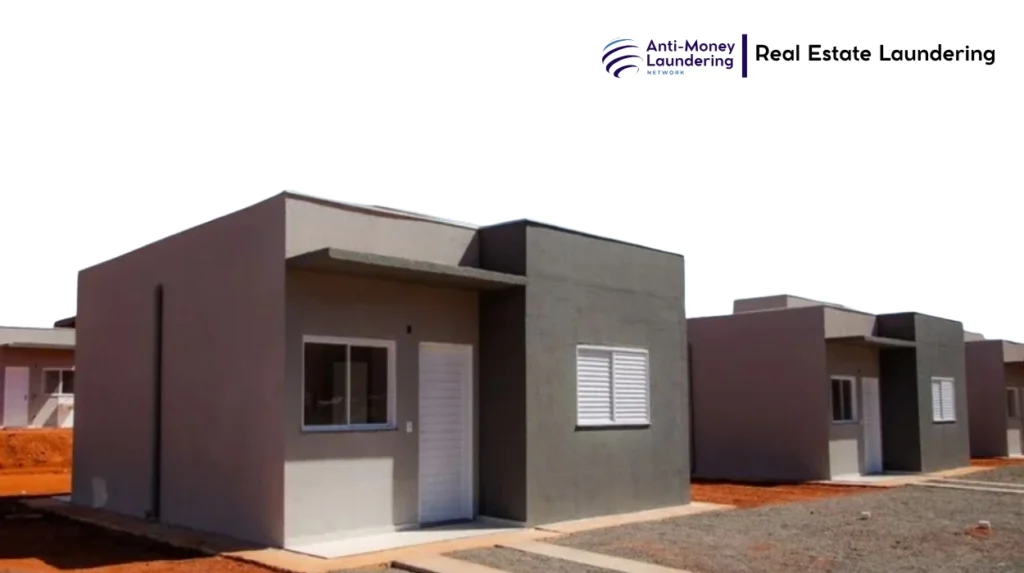
Tenda is one of the most important names in Brazil’s affordable housing market. It operates as a large-scale residential developer focused on lower-income homebuyers, with a business model built around standardization, volume, and access to Brazil’s subsidized housing framework. For readers looking for a clear Tenda Brazil profile, the company stands out because it is not a luxury developer or a niche boutique builder; it is a high-volume housing platform tied to the structural demand for affordable homes in major Brazilian urban centers.
The Tenda Brazil company has become a familiar reference point in discussions about housing access, construction efficiency, and the role of public financing in Brazilian real estate. Its operating strategy reflects the realities of Brazil’s housing deficit, where affordability, land availability, and credit conditions matter more than premium design or speculative prestige. At the same time, Tenda also sits inside a broader country context where real estate can carry governance, financing, and transparency risks, even when the underlying business is legitimate and listed on the stock exchange.
Tenda Brazil history
The Tenda Brazil history dates back several decades, with corporate roots commonly traced to 1969 and modern operating expansion beginning in the early 1990s. Tenda’s investor materials say the company has over 50 years of history and that it began working in its current form in the 1990s, when it focused more clearly on serving Brazil’s low-income housing segment. That long time horizon matters because it shows the company did not emerge as a short-lived speculative vehicle; instead, it developed gradually into a structured national developer.
A major milestone in the company’s history was its public listing. Tenda went through an IPO in 2007, selling 67 million shares at R$9.00 each and raising R$603 million. That move gave the firm access to capital markets and also subjected it to the discipline and transparency expectations that come with being a public company. For any Tenda Brazil business analysis, that listing is important because it helps explain why the company later had to manage debt, equity, and investor expectations in a much more visible way than a privately held contractor would.
Tenda Brazil headquarters and footprint
The Tenda Brazil headquarters are in São Paulo, Brazil, with public profiles identifying Rua Boa Vista, 280, as its base of operations. São Paulo is a logical headquarters choice because it is the country’s largest financial center and a major housing market. It also places Tenda close to lenders, capital market institutions, suppliers, regulators, and investors.
The company’s footprint is broader than its headquarters might suggest. Tenda says it operates across eight metropolitan regions, while other company profiles describe projects in multiple Brazilian states and a wide set of cities. This geographic spread is central to the Tenda Brazil operations model because housing demand is not limited to one city, and risk can be diversified across regions with different land markets, income levels, and subsidy conditions.
Tenda Brazil industry and sector
Tenda’s core Tenda Brazil industry is residential construction and real estate development. More specifically, it is active in the Tenda Brazil sector that serves the low-income and affordable-housing market. This is a sector where profitability often depends on efficiency rather than premium pricing. Developers must manage land costs, approvals, construction timelines, sales velocity, and financing access very carefully because margins can be thin.
The Tenda Brazil real estate model uses a factory-like logic. EMIS describes the business as resembling a production line of houses, with an emphasis on economies of scale and on the stages that add the most value, especially sales and client management. That means the company’s competitive advantage lies in process design, not just in the number of projects it launches. In practice, Tenda Brazil construction is about speed, repetition, and cost control as much as it is about architecture or land speculation.
Tenda Brazil homes and housing model
Tenda Brazil homes are designed for the lower-income buyer. The company’s mission is closely linked to democratizing access to homeownership, and its investor materials emphasize that it contributes to social mobility by delivering affordable units. This makes Tenda Brazil housing a structural part of the market rather than a luxury product line. The firm is aimed at buyers who need financing support and who rely on the economics of mass housing to make ownership possible.markets.
The Tenda Brazil apartments and broader housing products are typically built in urban and metropolitan zones where land is available and demand is substantial. Because the product is standardized, the company can operate at scale and keep prices within the affordability band required by its target customer base. This is one reason why Tenda Brazil units and inventory are watched so closely by analysts: the company’s future depends on how efficiently it can convert landbank into delivered homes.
Tenda Brazil MCMV and Minha Casa Minha Vida
A central pillar of the Tenda Brazil business is the Tenda Brazil MCMV framework, also known as the Tenda Brazil Minha Casa Minha Vida program. This is Brazil’s main subsidized housing initiative and a powerful driver of affordable-home demand. The program uses subsidies and reduced interest rates to expand access to housing, which in turn supports developers that specialize in lower-income segments.
Tenda’s positioning within the Tenda Brazil program is important because it links the company’s commercial success to public policy. When policy support is strong and mortgage conditions are favorable, demand is likely to improve. When rates rise or subsidy structures shift, developers in this segment face pressure on absorption, margins, and project timing. In other words, Tenda is not simply building homes; it is participating in a state-supported housing ecosystem that shapes the entire market.
Tenda Brazil portfolio and projects
The Tenda Brazil portfolio consists mainly of affordable residential developments, with a concentration in Brazil’s major metropolitan regions. According to company disclosures, Tenda operates in eight metropolitan regions, while market profiles indicate it also has projects across multiple states such as São Paulo, Minas Gerais, Rio de Janeiro, Bahia, Pernambuco, Ceará, Paraná, Goiás, and Rio Grande do Sul. That broad distribution gives the company market reach and reduces dependence on a single housing cycle.
The Tenda Brazil projects are shaped by affordability, not by prestige. Their commercial success depends on whether they can meet demand at a price point that is accessible to families who qualify for subsidized financing. In this sense, Tenda’s portfolio is best understood as a mass-market housing engine rather than a collection of signature assets.
Tenda Brazil revenue, debt, and financing
Tenda Brazil revenue is tied directly to how many units it can launch, sell, and deliver, and at what price. Because the company works in a lower-income segment, it must be highly disciplined in managing cost inflation, project delays, and financing costs. This is why Tenda Brazil financing and Tenda Brazil debt are so central to the company’s story.
Reuters reported in 2023 that Tenda was considering a follow-on share offering and debt restructuring, with the aim of raising up to R$250 million. That report shows how important the balance sheet is to the company’s trajectory. When housing developers expand aggressively, they can become vulnerable to leverage and working-capital stress, especially if project cycles slow or financing conditions tighten. Tenda Brazil equity, therefore, is not just a capital-market label; it is part of the company’s survival and growth equation.
Tenda Brazil stock and Tenda Brazil shares also reflect these realities. Investors in listed housing developers usually look beyond headline sales and focus on debt service, margins, landbank quality, and the efficiency of cash conversion. In Tenda’s case, those factors are just as important as raw growth figures.
Tenda Brazil growth and business outlook
Tenda Brazil growth has been pursued through regional diversification, a larger launch pipeline, and continued refinement of its industrialized housing model. The company remains one of the leading affordable-housing developers in Brazil, with investor materials describing it as among the largest in the country. That status is significant because scale is one of the few defensible advantages in a low-margin housing segment.
Still, growth in this business does not come without risk. Higher sales volumes can create pressure on execution, inventory management, and working capital. If launches are not well matched to demand, the company can carry unsold stock or face cancellations that weaken profitability. This is why Tenda Brazil inventory and Tenda Brazil units are not just operational statistics; they are indicators of how healthy the company’s pipeline is.
Tenda Brazil management, leadership, and governance
Tenda Brazil management and Tenda Brazil leadership operate within a public-company framework, which means the business must provide market disclosure and governance oversight. This is important because real estate developers often depend on trust from lenders, buyers, and investors. Good governance helps sustain capital access, while poor governance can quickly undermine confidence.
The company’s Tenda Brazil governance structure appears more institutional than personalized based on the public sources reviewed. That said, for any large developer, governance questions typically center on capital allocation, project selection, financial discipline, and related-party risk rather than on simple ownership labels. This is especially true in a sector where funding, land acquisition, and construction execution are tightly linked.
Risk, scrutiny, and AML context
It is important to be precise: the available sources do not show Tenda as a confirmed laundering case. However, the broader Brazilian property market has been flagged for real estate secrecy and offshore-linked ownership structures. Transparency International reported that billions of dollars in São Paulo property were linked to offshore secret companies, showing how opaque ownership can enter the Brazilian real estate system.
That means Tenda should be analyzed in a high-risk sector context, even if the company itself is not proven to be involved in laundering. In a Tenda Suspicious real estate deal review, analysts would look for warning signs such as overvaluation, layered ownership, shell companies, nominee buyers, or unusual source-of-funds patterns. That is where Tenda Layering (money laundering stage), Tenda Client verification, Tenda Risk assessment, Tenda Source of funds, and Tenda Beneficial ownership transparency become relevant as AML review concepts, even if no direct misconduct is confirmed.
For a Tenda Real estate professional, the key issue is distinguishing ordinary project finance from suspicious transactional behavior. In legitimate development, money flows through lawful corporate entities, project accounts, bank financing, and regulated sales contracts. In suspicious cases, the same structures can be abused through layered transfers and hidden beneficiaries. The difference is documentation, transparency, and the consistency of the economic logic behind each transaction.
Controversies and market reaction
The main controversy linked to Tenda in the sources reviewed is not laundering, but investor pressure over capital efficiency and losses at its Alea unit. In 2026, financial press reported that several asset managers pressed Tenda to shut down or stop funding Alea after years of losses. That reflects a recurring theme in corporate real estate: even when a company is not accused of illegality, it can still face serious scrutiny over whether it is allocating capital wisely.
Market reaction to such issues tends to affect valuation, funding conditions, and trust. In housing development, investors are especially sensitive to debt levels and project returns because margins are relatively narrow. As a result, the public impact of controversy can be subtle but meaningful: it may not stop operations, but it can raise the cost of capital and force strategic changes.
Tenda remains active and continues to operate as a major affordable-housing developer in Brazil. Its current status is therefore best described as operational, listed, and strategically important, but financially watched closely. The company’s future will depend on whether it can sustain sales, manage debt, and keep delivering projects efficiently.
The outlook for Tenda Brazil construction is closely tied to the broader housing cycle and to the strength of the Minha Casa Minha Vida framework. If public policy remains supportive and the company keeps its execution disciplined, Tenda can continue as a leading low-income developer. If capital costs rise or project performance weakens, the market may keep pressing the company on profitability, leverage, and governance.
Tenda is best viewed as a large, publicly listed affordable-housing developer with a long operating history, a strong role in Brazil’s mass-housing market, and an ongoing need for disciplined financing. It is not a confirmed laundering entity in the evidence reviewed, but it exists in a country and sector where transparency risks are real and often discussed by watchdogs and market observers. For that reason, any serious Tenda Brazil profile should combine business fundamentals with a careful read of ownership transparency, financing structure, and governance quality.