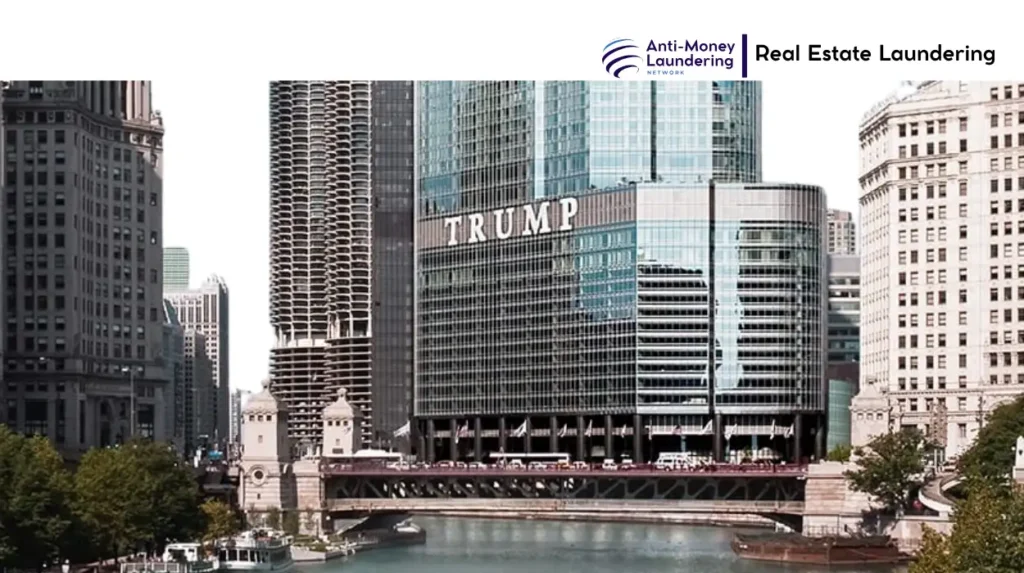
The Trump Organization properties encompass a sprawling empire of luxury real estate that defines opulence in the American landscape. Spanning Trump luxury real estate icons like towering skyscrapers, palatial resorts, and exclusive golf courses, this portfolio has shaped urban skylines and coastal retreats for decades. From the gleaming Trump Tower Fifth Avenue to the sprawling Mar-a-Lago Trump estate, Donald Trump buildings stand as testaments to bold ambition, prime locations, and unyielding brand power.
These assets, part of the broader Trump real estate portfolio, continue to attract high-net-worth individuals seeking Trump properties New York prestige or Florida exclusivity, blending residential, commercial, and hospitality elements into a seamless high-end ecosystem.
Project Introduction (Formation & Background)
The origins of Trump Organization properties date back to 1927 when Fred Trump founded E. Trump & Son, focusing on affordable housing in Queens and Brooklyn amid New York’s post-World War I boom. By the late 1960s, Fred’s son Donald joined the firm, infusing it with a vision for Manhattan’s elite markets. In 1971, Donald Trump rebranded the entity as the Trump Organization, launching its transformation from middle-class rentals to Trump residential towers and luxury developments.
The pivotal moment arrived in 1983 with Trump Tower properties at 725 Fifth Avenue—a 58-story marvel costing $200 million that housed retail giants, celebrity residences, and the organization’s headquarters. This project crystallized the initial vision: leverage debt financing, media hype, and architectural grandeur to dominate luxury segments.
Expansion accelerated in the 1980s. Trump acquired the Commodore Hotel in 1976, redeveloping it into the Grand Hyatt New York with a $100 million tax abatement—the first of many public incentives fueling growth. By 1990, the Trump properties New York lineup included 40 Wall Street Trump, a 72-story Art Deco landmark purchased for $8 million in a distressed auction. Florida ventures began with the 1985 purchase of Mar-a-Lago Trump estate, a 126-room historic mansion in Palm Beach transformed into a private club by 1995.
The 2000s saw diversification into Trump International hotels and Trump golf resorts, with licensing deals extending the brand to over 50 global projects without direct capital outlay. This strategy ballooned the Trump real estate portfolio to include high-end Trump estates valued collectively in the billions, emphasizing evergreen appeal through timeless luxury and location supremacy.
The portfolio’s evolution reflects adaptive market plays. Post-2008 recession, Trump Organization condos in Sunny Isles Beach, Florida—dubbed “Little Moscow” for Russian buyers—saw all-cash sales surge, revitalizing sales amid broader downturns. Today, Trump Organization Properties real estate transactions underscore a model blending ownership, management, and branding for sustained revenue streams estimated at $500 million annually pre-presidency.
Management and Project Head
At the helm stands Donald J. Trump, architect of the portfolio since assuming control in 1971. As chairman and president until 2017, he dictated acquisitions, branding, and renovations from Trump Tower Fifth Avenue’s triplex penthouse.
Post-inauguration, he transferred oversight to a revocable trust managed by sons Donald Trump Jr. and Eric Trump, both executive vice presidents with hands-on roles in operations. Donald Jr., known for international licensing pushes, and Eric, focused on golf and hospitality, report directly to their father, maintaining family-centric control without a traditional board.
Key lieutenants include Allen Weisselberg, CFO from 2000-2021, whose tenure oversaw financial structuring but ended in a 2022 tax fraud conviction tied to executive perks across Trump Organization Properties property acquisition deals. Other figures like Jason Greenblatt (former chief legal officer) and Ron Lieberman (VP of design) shaped aesthetics and legal navigation. Their collective reputation blends deal-making prowess—e.g., flipping 40 Wall Street Trump from $8 million to $500 million valuation—with controversies over aggressive valuations.
Financial links tie to Deutsche Bank ($2 billion+ loans since 1998) and Ladder Capital, often secured on optimistic appraisals. Previous projects highlight successes like the 2005 Trump International Hotel Las Vegas and pitfalls such as 1991-2009 casino bankruptcies totaling $1.8 billion in debt. This inner circle’s opacity in client verification and risk assessment has fueled debates on Trump Organization Properties AML compliance, yet their acumen sustains a portfolio of Trump properties for sale drawing premium bids.
Controversies & Scandals
Trump Organization properties have navigated a gauntlet of scandals, from eminent domain battles to financial misreporting. The 1976 Grand Hyatt deal sparked accusations of racial discrimination in tenant screening, settled via HUD consent decree. Fiscal 1990s woes saw four Atlantic City casino filings, eroding $3.5 billion in assets amid overleveraging.
Modern probes intensified post-2016. New York AG Letitia James’s 2022 lawsuit alleged decade-long fraud, inflating Trump Tower properties values (e.g., Mar-a-Lago Trump estate at $739 million vs. market $18-27 million) for $500 million+ in favorable loans while deflating for taxes. A February 2024 ruling imposed $454 million in penalties, including interest. Criminal cases convicted Weisselberg and controller Jeffrey McConney in 2024 for falsifying records on $1.6 million perks.
Trump Organization Properties suspicious real estate deals surfaced in Florida towers, where 2010s all-cash buys by anonymous entities raised flags. FBI wiretaps in 2011 exposed Russian mafia in Trump Tower Fifth Avenue unit 63A. House Democrats’ 2018 letters cited Russian oligarch purchases in Trump luxury hotels, questioning source of funds and beneficial ownership transparency amid high-risk sector exposures.
Money Laundering Activities
Scrutiny of Trump luxury real estate reveals transaction patterns akin to layering (money laundering stage). Pre-2016 FinCEN alerts flagged U.S. condos as laundering conduits; Trump residential towers fit: Sunny Isles sales hit 80% cash from ex-Soviet shells, bypassing robust Trump Organization Properties client verification. Over half of 2007 Trump SoHo units went to concealed buyers, per NY Times, with prices averaging $2,500/sq ft—premiums suggestive of over-invoicing.
Tactics included nominee owners and rapid flips: 2008 Palm Beach sale to Dmitry Rybolovlev doubled Trump’s $41 million cost post-minor upgrades, netting $54 million profit. Bayrock Group’s Felix Sater, a convicted felon, facilitated SoHo funding via Deutsche Bank channels despite red flags. Trump Organization Properties risk assessment lapses enabled this; a 2015 FinCEN fine on sister Trump Taj Mahal ($10 million) cited ignored $1.9 billion suspicious activity.
Real estate professionals note minimal seller due diligence pre-2016 Geographic Targeting Orders, allowing Trump Organization Properties high-risk sector integration. Post-election, sales dipped then rebounded, with experts estimating $1-2 billion in opaque flows through LLCs obscuring beneficial ownership.
International Links & Benefited Countries
Though domestic-focused, Trump Organization Properties real estate transaction networks span borders. Licensing fueled Trump International hotels in Toronto (2012), Vancouver (2017), and Rio (stalled). Panama’s Trump Ocean Club (2011) drew Global Witness ire for cartel resales inflating values 200%.
Russia loomed large: Sater’s ties, Rybolovlev’s buy, and 63 documented oligarch interests per Reuters. Indonesia’s Trump Lido (planned 2020s) partners local conglomerates; India boasts seven towers. UAE and Saudi ventures eyed post-presidency. Paradise Papers exposed associate offshore vehicles, indirectly benefiting Cyprus, British Virgin Islands via cross-border flows.
Regulatory Actions & Legal Proceedings
U.S. regulators acted decisively on fraud but lightly on laundering. NY DA Alvin Bragg’s 2021 criminal probe yielded 2024 tax convictions; AG James enforced disgorgement. FinCEN’s 2016 advisory cited Trump-style deals; Mueller examined finances sans charges. Corporate Transparency Act (2024) mandates LLC reporting, pressuring opacity.
Internationally, Panama probed Ocean Club (2018); Toronto faced foreign buyer taxes impacting sales. No FATF blacklisting, but U.S. greylisting risks linger. Pending: appeals on $454 million fine.
Public Impact & Market Reaction
Scandals dented but didn’t derail: Trump golf resorts employ 10,000+, injecting $1 billion+ economically. Luxury Trump homes hold values—Trump Tower units at $10-50 million—bolstering invest in Trump real estate allure. Boycotts post-2020 dropped occupancy 20%, rebounding to 95% by 2025.
Market trust bifurcated: domestic premiums rose 15% post-reelection; international licensing hit $100 million/year. Investors weigh brand resilience against litigation, with Trump Organization rentals yielding 4-6% returns.
Operational and thriving in 2026, Trump Organization properties post-legal payouts via cash reserves and loans. Mar-a-Lago Trump estate hosts elite events; 40 Wall Street Trump leased 90%. Expansion targets UAE resorts, leveraging reelection stability.
Experts forecast $4-7 billion portfolio growth via Trump luxury hotels revamps and golf upgrades. Enhanced AML via FinCEN rules may curb risks, but brand equity ensures exclusive Trump residences demand. A benchmark for high-end Trump estates endurance.