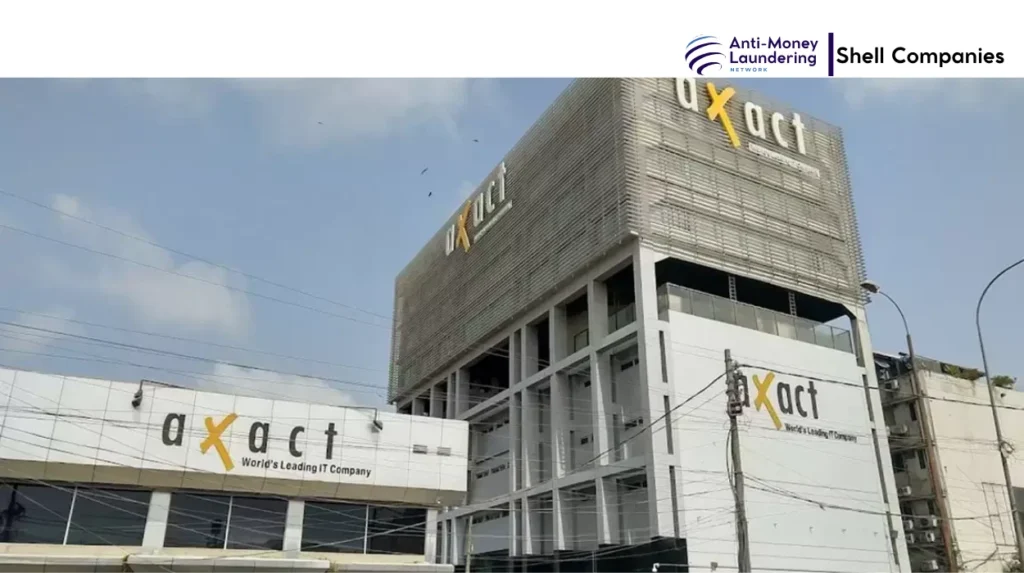
Axact subsidiaries represent a shadowy network of entities primarily registered in the UAE, particularly Dubai, that have garnered significant scrutiny for their role in channeling funds linked to the parent company Axact’s global fake diploma operations. These Axact subsidiaries, often structured as shell companies with minimal operational footprint, facilitated the movement of millions in proceeds from fraudulent degrees sold worldwide, raising persistent questions about money laundering and financial transparency.
While categorized alongside typical offshore companies, Axact subsidiaries stand out due to their direct ties to a high-profile Pakistani IT firm exposed for generating illicit revenues through bogus credentials, underscoring their unique position in global financial crimes networks.
The opaque beneficial ownership and cross-border financial flows of Axact subsidiaries highlight broader challenges in tracing ultimate beneficial owners (UBOs) in jurisdictions like the UAE, where regulatory oversight has historically lagged. Axact subsidiaries’ involvement in layering funds from diploma mills to Pakistan exemplifies how such structures exploit gaps in anti-money laundering (AML) frameworks, making them a focal point for investigators tracking financial misconduct.
This evergreen examination delves into their corporate intricacies, revealing a deliberate design for concealment amid international scrutiny.
Formation and Corporate Structure
Axact subsidiaries emerged as part of the expansion of the Karachi-based Axact conglomerate, with key entities like Axact LLC registered in Dubai’s free zones during the mid-2000s, coinciding with the ramp-up of fake degree sales. The Axact subsidiaries incorporation detail points to Dubai as the primary jurisdiction, leveraging free zone benefits such as zero taxes and anonymous nominee services to obscure ownership.
Directors and shareholders of Axact subsidiaries, including proxies linked to CEO Shoaib Ahmed Shaikh—the Axact subsidiaries owner—utilized pseudonyms like “Ryan Jones” for offshore filings, creating multiple layers that defy beneficial ownership tracing.
The Axact subsidiaries company structure relied on private limited companies and free-zone entities, often with virtual addresses rather than physical premises, a hallmark of shells designed for fund transit. Axact subsidiaries directors included Axact executives and nominees, while shareholders formed a web connecting back to Pakistan, with family members suspected as secondary controllers.
This setup, typical of entities aimed at moving funds across borders, challenged financial transparency by nesting ownership in high-opacity venues, complicating efforts to map the full Axact subsidiaries legal status.
Such structural choices enabled Axact subsidiaries to operate with minimal disclosure, as UAE registries provided limited public access to UBO details. The multi-layered approach, spanning UAE free zones and parallel offshore registrations, mirrored patterns in money laundering where legitimacy cloaks illicit intent. Investigators have noted how this Axact subsidiaries corporate structure facilitated seamless repatriation of diploma-mill profits, evading Pakistani tax authorities and AML checks.
Financial Activities and Operations
Financial activities of Axact subsidiaries centered on receiving payments from global clients purchasing fake diplomas, then routing these through exchange houses and bank accounts to Pakistan. Over four years, Axact subsidiaries moved Rs8 billion (approximately $30 million at the time) in tax-free currency from Dubai, per Federal Investigation Agency (FIA) probes, highlighting patterns of unusual cross-border transfers. These Axact subsidiaries financial transfers often bypassed formal banking via hawala-like channels, layering funds to obscure origins from fraudulent “universities” like Rochville and Belford.
Axact subsidiaries investment patterns showed no overt legitimate commerce, instead focusing on asset holdings in Dubai’s high-value sectors, with suspicions of luxury real estate overvaluation for laundering. Partnerships with UAE exchange firms enabled rapid fund movement, raising red flags in suspicious activity reports tied to bulk diploma payments from Gulf professionals.
The Axact subsidiaries acquisition of funds—estimated in tens of millions annually—integrated illicit proceeds under covers like IT services, a classic placement and layering tactic in money laundering schemes.
Unusual transactions, such as clustered wire transfers coinciding with fake degree sales peaks, triggered international alerts. Axact subsidiaries operations thus served as a conduit, blending crime proceeds with any nominal business to achieve integration, all while maintaining plausible deniability through sparse records.
This financial opacity fueled allegations of Axact subsidiaries money laundering on a scale supporting the parent firm’s lavish Karachi operations.
Jurisdictions and Global Reach
Axact subsidiaries operated from Dubai free zones, extending to offshore accounts in Delaware, British Virgin Islands (BVI), Cyprus, and Panama, exploiting regulatory arbitrage across secrecy havens. The UAE’s lax beneficial ownership rules allowed Axact subsidiaries to anchor a global footprint, drawing revenues from nearly 200 countries, with the Gulf—especially UAE and Saudi Arabia—as prime markets for over 200,000 fake degrees.
Linked companies like Caribbean shells funneled U.S. payments, demonstrating Axact subsidiaries connected firms’ role in worldwide flows.
This jurisdictional spread enabled Axact subsidiaries to navigate weak oversight, parking funds in low-tax UAE while repatriating to Pakistan via Dubai intermediaries. Offshore connections amplified reach, with Axact subsidiaries linked companies posing as accreditation bodies to legitimize transactions. The global accountability deficit in these venues positioned Axact subsidiaries as a pivotal node, channeling diploma fraud profits amid minimal regulatory interference.
Dubai’s free zones, criticized for enabling shell proliferation, provided Axact subsidiaries with a hub for high-volume, low-scrutiny dealings. International ties to U.S. and European buyers underscored the entity’s expansive operations, where jurisdictional mismatches thwarted unified enforcement. Axact subsidiaries’ multi-venue strategy thus exemplified how offshore companies thrive on disparate AML standards.
Investigations, Scandals, and Public Exposure
Axact subsidiaries drew exposure through the 2015 New York Times investigation into Axact’s diploma mill, revealing Dubai shells in a “maze of deceit” for laundering millions. FIA probes in Pakistan uncovered seven offshore entities, including UAE-based ones, tied to the scandal, with Axact subsidiaries leaks investigation detailing pseudonym use and fund trails.
No direct Panama or Paradise Papers hits emerged, but overlaps with leak-heavy jurisdictions fueled scrutiny of Axact subsidiaries scandal dimensions.
Media reports highlighted Gulf sales volumes, implicating high-profile clients and potential PEPs in Axact subsidiaries corruption networks. U.S. charges against Axact executives referenced UAE routing, amplifying public outcry over financial crimes. Pakistani courts remanded suspects, exposing Axact subsidiaries suspicious activity report triggers like mismatched trade invoices.
These revelations prompted FIA raids and asset freezes, though UAE responses remained muted. The Axact subsidiaries investigation painted a picture of systematic concealment, with clients from governments and corporations unwittingly fueling the scheme. Public discourse shifted focus to Axact subsidiaries UBO anonymity as a laundering enabler.
Regulatory and Legal Response
Pakistani regulators, via FIA and SECP, pursued Axact subsidiaries through criminal cases, resulting in CEO arrests and ongoing money laundering trials. U.S. DOJ actions targeted related U.S. shells, seeking forfeiture of diploma proceeds indirectly linked to UAE entities. UAE probes into Axact LLC were reported but yielded no public convictions, underscoring enforcement gaps in anti-money laundering (AML) regimes.
International AML bodies critiqued UAE’s opacity, prompting calls for beneficial ownership registers post-Axact exposure. Legal proceedings in Sindh High Court challenged Axact defenses, freezing local assets but struggling with extraterritorial UAE holdings. Challenges arose from jurisdictional silos, where Axact subsidiaries exploited non-extradition norms and weak info-sharing.
Global regulators tightened free-zone scrutiny, yet Axact subsidiaries persisted amid partial compliance. Court-mandated disclosures revealed fragmented ownership, but full regulatory oversight eluded capture. This response highlighted the uphill battle against transnational shells like Axact subsidiaries.
Economic and Ethical Implications
Axact subsidiaries’ conduct contributed to capital flight from Pakistan, evading billions in taxes while distorting UAE real estate markets via suspected overvalued holdings. Economic fallout included eroded trust in credentials, impacting Gulf hiring and remittances. Axact subsidiaries tax avoidance schemes undermined legitimate commerce, fostering market manipulation through fake qualifications.
Ethically, Axact subsidiaries blurred asset protection and illicit concealment, sparking debates on offshore legitimacy. Their role in financial crimes eroded global accountability, with diploma buyers—often professionals—complicit in ethical lapses. As a case study, Axact subsidiaries illuminated how weak regulatory oversight enables corruption, prompting ethical reckonings in finance.
The thin line between legal structures and laundering underscored broader implications, where Axact subsidiaries’ opacity fueled inequality by shielding elites from scrutiny. Ethical imperatives now demand reconciling innovation with transparency to curb such abuses.
Axact subsidiaries may face restructuring or dissolution amid sustained probes, with potential UAE compliance shifts under global pressure. Broader reforms, like UAE’s nascent UBO registry and FATF gray-list exits, target entities like Axact subsidiaries, mandating enhanced disclosures. Pakistan’s SECP pushes beneficial ownership rules, inspired by Axact fallout.
Global initiatives, including OECD transparency pacts, signal tighter AML nets, potentially forcing Axact subsidiaries’ legal status evolution. Public debate has elevated Axact subsidiaries as a reform catalyst, advocating real-time registries and cross-border data swaps. Future viability hinges on adaptation, with dissolution risks if opacity persists.
These trajectories promise heightened corporate accountability, positioning Axact subsidiaries’ saga as a harbinger of change in financial secrecy battles.
Axact subsidiaries’ trajectory—from Dubai formation to global laundering exposure—encapsulates vulnerabilities in offshore finance, with layered structures enabling fake degree profits’ concealment. Key lessons include the perils of beneficial ownership opacity and jurisdictional arbitrage, as seen in FIA and media unveilings. Greater transparency, via robust AML and registries, offers the path to preempting such financial misconduct, ensuring systems prioritize integrity over evasion.