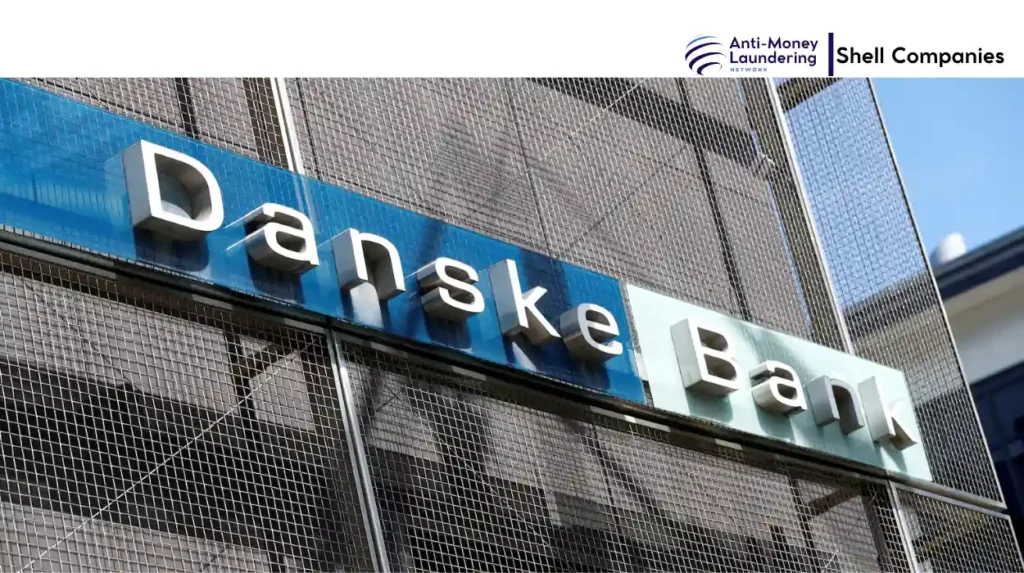
Danske Bank’s Estonian shells represent a notorious network of opaque financial vehicles that operated through the bank’s Estonian branch, drawing intense scrutiny for their role in facilitating massive suspicious transactions. These shells, primarily UK-registered limited liability partnerships (LLPs) and limited partnerships (LPs) holding non-resident accounts at Danske Bank Estonia, obscured beneficial ownership while channeling funds across borders, raising alarms about money laundering and financial crimes. Danske Bank’s Estonian shells emerged as a focal point in the global financial landscape, exemplifying how lax oversight in jurisdictions like Estonia enabled the movement of illicit capital under the guise of legitimate banking.
While often labeled as shell companies due to their lack of economic substance, Danske Bank’s Estonian shells were uniquely tied to Danske Bank’s operations in Tallinn, where they processed billions in high-risk flows from 2007 to 2015. Their relevance persists in discussions of Danske bank Estonia money laundering scandal, highlighting vulnerabilities in anti-money laundering (AML) frameworks and the challenges of tracing beneficial ownership in complex structures.
Formation and Corporate Structure
Danske Bank’s Estonian shells took shape following Danske Bank’s 2007 acquisition of Sampo Bank’s Estonian operations, transforming the Tallinn branch into a hub for non-resident portfolios that ballooned rapidly. Registered primarily in the UK at addresses in Cardiff and London, these entities—such as Ergoinvest and Chadborg Trade—were mass-produced by Baltic-linked formation agencies like IOS and Beta Consult, often using nominee directors and layered ownership to conceal true controllers. Danske Bank’s Estonian shells incorporation detail reveals a web of UK LLPs/LPs operated via Estonian accounts, with directors including Danske staff like Juri Kidjajev and Anna Kurilenko, who secretly ran Beta Consult as a shell factory.
The corporate setup of Danske Bank’s Estonian shells company structure featured multiple layers: nominee owners in tax havens, power-of-attorney transfers to hidden ultimate beneficial owners (UBOs), and minimal reporting to Companies House, declaring trivial incomes despite billion-euro movements. Danske Bank’s Estonian shells directors, such as Kidjajev, and shareholders tied to Russian networks created profound challenges for financial transparency, as Estonian and Danish regulators struggled with language barriers and independent branch management. This structure, typical of offshore companies designed for fund concealment, allowed Danske Bank’s Estonian shells owner—suspected Russian oligarchs and FSB-linked figures—to evade beneficial ownership tracing.
Financial Activities and Operations
Danske Bank’s Estonian shells engaged in extensive financial transfers totaling €200-236 billion in suspicious flows through Danske Bank Estonia’s non-resident accounts from 2007 to 2015, with 23% originating from Russia. These entities conducted fictitious trades, mirror transactions, and rapid inflows-outflows, often mirroring schemes like the Russian Laundromat, while holding no apparent business operations beyond banking. Danske Bank’s Estonian shells financial statements, if any existed, showed negligible revenue—e.g., Ergoinvest and Chadborg Trade reported under $35,000 annually—yet processed $2.6 billion and $700 million respectively via US correspondents.
Unusual patterns in Danske Bank’s Estonian shells suspicious activity report included high-velocity cross-border payments to Azerbaijan, Georgia, and Switzerland, bypassing AML checks due to inadequate customer due diligence at the Tallinn branch. Danske bank Estonia branch facilitated layering through these shells, integrating potentially illicit funds from drug trades, sanctions evasion, and corruption into global commerce. Partnerships with scandal-hit banks like Swedbank and ABLV amplified these activities, positioning Danske Bank’s Estonian shells as conduits for Danske bank Estonia revenue from high-risk clients.
Jurisdictions and Global Reach
Danske Bank’s Estonian shells operated from Estonia as the banking hub, with UK registration enabling regulatory arbitrage against stricter Danish oversight from Danske bank headquarters in Copenhagen. Subsidiaries and partner entities spanned the Baltics, Russia, and offshore havens, leveraging Estonia’s weak AML enforcement—despite EU membership—for favorable tax structures and opacity. Danske bank Estonia location at Paraadi tee 4/57, Tallinn, served as Danske Bank’s Estonian shells registered address for operations, while UK shells accessed US dollars via New York clearing.
This jurisdictional footprint extended to former Soviet states, with Danske Bank’s Estonian shells linked companies like Lantana Trade tied to Putin associates, facilitating global flows amid US sanctions risks. Danske bank Estonia us sanctions exposure grew as correspondents like Deutsche Bank severed ties in 2015, underscoring how Danske Bank’s Estonian shells global accountability relied on Estonia’s financial opacity. The network’s reach made Danske bank locations in the Baltics a magnet for Danske Bank’s Estonian shells connected firms seeking Danske bank estonia net worth preservation through hidden channels.
Investigations, Scandals, and Public Exposure
Danske Bank’s Estonian shells surfaced in the FinCEN Files, revealing thousands of UK shells mass-produced for Danske clients, alongside Estonian police leaks exposing Beta Consult’s role. The Danske Bank money laundering scandal: a case study PDF from official probes detailed ignored warnings from 2013-2014, with whistleblowers threatened over FSB-linked accounts. Danske Bank’s Estonian shells leaks investigation uncovered PEPs like Irene Ellert and proxies laundering via Ergoinvest, prompting media exposés by OCCRP and ICIJ.
Public reaction intensified after Danske Bank’s 2018 admission of €200 billion suspicious flows, linking Danske bank’s estonia annual report lapses to Russian corruption. Danske bank estonia ceo Aivar Rehe ordered hasty closures, but revelations of staff-run shells fueled the Danske Bank’s Estonian shells scandal, implicating Danske bank Estonia history in Baltic laundering hubs. Clients included Russian PEPs, with transactions tied to Danske bank estonia owner networks evading scrutiny.
Regulatory and Legal Response
Regulators responded decisively: Estonia’s FIU ordered Danske Bank Estonia branch closure in 2019, charging six ex-staff with laundering $2 billion in 2023. Danish FSA and US DOJ/SEC imposed $2 billion fines in 2022, with Danske pleading guilty to fraud; NYDFS hit linked Deutsche with $575 million. Anti-money laundering (AML) actions targeted Danske Bank’s Estonian shells legal status, mandating enhanced due diligence on non-resident portfolios.
Enforcement challenges arose from cross-jurisdictional opacity, with Estonia blaming Copenhagen and vice versa, delaying Danske bank estonia fine resolutions. Danske bank estonia jobs dwindled post-scandal, while global regulatory oversight tightened via FATF recommendations on beneficial ownership. Court proceedings, including against ex-CEO Thomas Borgen, highlighted Danske Bank’s Estonian shells money laundering enforcement gaps.
Economic and Ethical Implications
Danske Bank’s Estonian shells contributed to capital flight from Russia, tax avoidance via fictitious trades, and market distortion through inflated flows, costing economies billions in lost revenue. Danske bank estonia revenue from these activities masked deeper financial crimes, eroding trust in Danske bank estonia worth. Ethically, Danske Bank’s Estonian shells corruption blurred lines between asset protection and concealment, fueling debates on offshore companies’ role in global accountability.
As a case study, Danske Bank’s Estonian shells investment risks exposed how regulatory oversight failures enable PEPs to exploit systems, prompting ethical scrutiny of Danske bank’s estonia careers in high-risk banking. The scandal underscored economic fallout, including Danske bank estonia shareholders losses amid €10 million asset seizures.
Danske Bank’s Estonian shells face dissolution post-branch closure, with surviving UK entities under heightened scrutiny and potential compliance overhauls. Broader reforms, like EU AML directives and UK beneficial ownership registers, stem from this case, influencing Danske bank estonia year of establishment lessons. Danske Bank’s Estonian shells acquisition history now informs global rules targeting shell transparency.
Public debate on financial secrecy has intensified, with Danske Bank’s Estonian shells UBO tracing inspiring Corporate Transparency Acts. Future restructuring may involve AI-driven AML at Danske bank locations, reducing risks for entities like Danske bank estonia office.
Danske Bank’s Estonian shells illustrate the perils of opaque structures in money laundering networks, from their formation amid lax Estonian oversight to exposure via FinCEN Files and massive fines. Key lessons include the need for robust beneficial ownership disclosure and cross-border regulatory harmony to dismantle such operations. Greater transparency and accountability promise to avert future Danske Bank scandals, safeguarding global financial systems.