

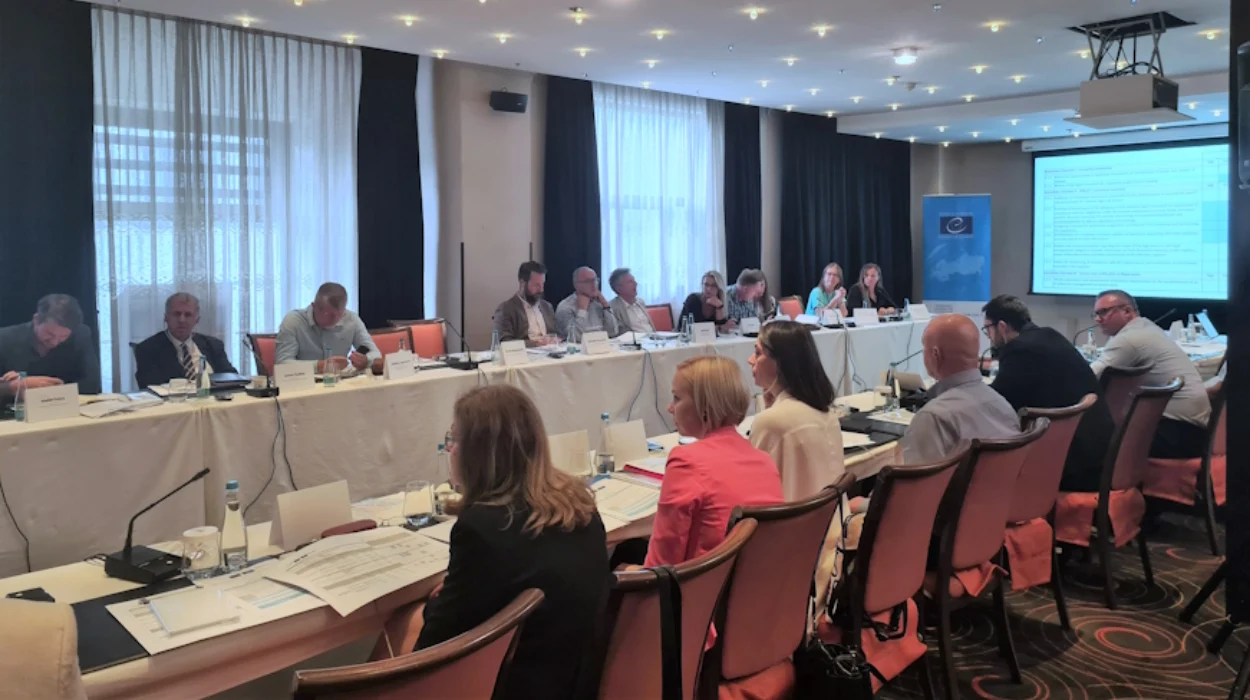
The Council of Europe has launched a new cooperation initiative to strengthen Europe’s resilience against financial crime, focusing on supporting member states in combating money laundering, corruption and related threats. The project, implemented by the Economic Crime and Cooperation Division, aims to improve legislation, institutional capacities and regional cooperation through tailored technical assistance.
A new Council of Europe initiative to reinforce resilience against financial crime in Europe has been launched, with the organisation’s Economic Crime and Cooperation Division set to provide targeted support to member states and partner jurisdictions to address money laundering, corruption, terrorist financing and related risks. The multi-country initiative focuses on strengthening legal frameworks, enhancing the capacity of specialised authorities and boosting cross-border cooperation to protect the integrity of Europe’s financial systems.
New cooperation initiative launched to reinforce resilience against financial crime in Europe
Council of Europe unveils regional anti-financial crime project
As reported in the official press release by the Council of Europe’s Directorate General of Human Rights and Rule of Law (DGI) on the Council of Europe website, the organisation announced the launch of a new regional cooperation initiative designed to reinforce resilience against financial crime in Europe. According to the Council of Europe communication, the project will be implemented by the Economic Crime and Cooperation Division (ECCD), which is the body responsible for delivering technical assistance and capacity-building activities in the fields of anti-corruption, anti-money laundering and counter-terrorist financing.
The Council of Europe statement explains that the initiative is aimed at supporting participating states in strengthening their legal, institutional and operational frameworks to better prevent, detect and prosecute financial crime, including money laundering, corruption, terrorist financing and related offences. The announcement underscores that this cooperation project builds on the Council of Europe’s long-standing work in promoting integrity, transparency and the rule of law across Europe.
Strategic objectives and scope
According to the Council of Europe press information, a central objective of the new initiative is to enhance resilience of national systems against financial crime threats by aligning domestic frameworks with Council of Europe standards, including those developed under the Group of States against Corruption (GRECO) and the Committee of Experts on the Evaluation of Anti-Money Laundering Measures and the Financing of Terrorism (MONEYVAL).
The Council of Europe notes that the initiative covers multiple jurisdictions in Europe and is structured as a regional cooperation platform, allowing participating countries to learn from each other’s experiences, share good practices and receive tailored technical assistance. The project will, according to the Council of Europe description, focus on areas such as reviewing and improving anti-money laundering and counter-terrorist financing (AML/CFT) legislation, strengthening anti-corruption frameworks and integrity systems, enhancing the capacity of financial intelligence units, law-enforcement bodies, prosecutors and supervisory authorities, and supporting inter-agency and international cooperation in financial crime cases.
Implementation through the Economic Crime and Cooperation Division
In its announcement, the Council of Europe specifies that the Economic Crime and Cooperation Division will act as the implementing body for the new initiative. The Division, as highlighted on the Council of Europe’s dedicated economic crime pages, is tasked with designing and delivering capacity-building and advisory programmes in the fields of corruption, money laundering, terrorist financing and related economic crimes.
The Council of Europe presentation of the project indicates that ECCD will coordinate expert missions, training activities, legislative and institutional reviews, and the development of practical tools and guidance. The Division will also facilitate regional workshops and peer-to-peer exchanges to ensure that lessons learned in one jurisdiction can inform reforms and operational approaches in others.
Tailored assistance and country-specific support
The Council of Europe communication stresses that the initiative is not a one-size-fits-all programme, but will instead provide tailor-made support to participating states, taking into account each country’s risk profile, institutional arrangements and existing reform efforts. According to the Council of Europe material, this may include legal gap analyses and recommendations to bring national laws into line with Council of Europe conventions and international standards, support in developing or updating national strategies and action plans on anti-corruption and AML/CFT, training and mentoring for investigators, prosecutors, judges and supervisory authorities on financial crime investigation and prosecution techniques, and assistance with improving beneficial ownership transparency, supervision of high-risk sectors and risk-based approaches.
The organisation explains that, by combining regional activities with country-specific interventions, the initiative is intended to help participating jurisdictions move from formal compliance to effective implementation of standards.
Focus on money laundering, corruption and terrorist financing
In the description published by the Council of Europe, the initiative is framed as part of broader efforts to protect Europe’s financial systems and democratic institutions from abuse. The Council of Europe notes that money laundering and terrorist financing pose systemic risks, allowing proceeds of corruption, organised crime and other serious offences to infiltrate the legal economy.
The Council of Europe information emphasises that the project will support states in strengthening preventive AML/CFT measures, including customer due diligence, reporting of suspicious transactions, and risk-based supervision of financial and non-financial sectors. It will also support criminalisation of money laundering and terrorist financing in line with Council of Europe and international standards, and asset recovery and confiscation mechanisms, so that proceeds of crime can be traced, frozen and seized. Similarly, the Council of Europe states that anti-corruption measures are a core component of the initiative, with activities expected to promote integrity in the public sector, transparency in decision-making, and accountability measures to reduce corruption risks.
Enhancing institutional capacity and coordination
The Council of Europe’s economic crime programmes, as presented on its website, consistently highlight the importance of effective institutions and coordination in combating financial crime. In line with this approach, the new initiative will seek to reinforce the capacity of key institutions, including financial intelligence units (FIUs), law-enforcement agencies and specialised investigative units dealing with financial and corruption offences, prosecutorial services and the judiciary handling complex economic crime cases, and supervisory and regulatory authorities overseeing banks, payment institutions, and designated non-financial businesses and professions.
The Council of Europe notes that the project will encourage stronger inter-agency cooperation at national level, as well as improved cross-border collaboration, reflecting the transnational nature of financial crime.
Alignment with Council of Europe standards and monitoring bodies
In its presentation of the broader policy framework, the Council of Europe recalls that it has developed a comprehensive set of conventions, recommendations and monitoring mechanisms in the fields of corruption and AML/CFT. These include the Criminal Law Convention on Corruption, the Civil Law Convention on Corruption, and the Convention on Laundering, Search, Seizure and Confiscation of the Proceeds from Crime and on the Financing of Terrorism (CETS No. 198).
Monitoring bodies such as GRECO and MONEYVAL assess how member states implement these standards in practice. According to the Council of Europe’s description, the new initiative is designed to complement and support the implementation of recommendations issued by these monitoring bodies.
The Council of Europe explains that activities under the project may be informed by findings and priority areas emerging from GRECO and MONEYVAL evaluations, helping participating states address identified shortcomings and strengthen their resilience to financial crime.
Supporting effective implementation of reforms
The Council of Europe material underlines that countries often face challenges in translating legislative reforms into effective practice. Through this initiative, the Economic Crime and Cooperation Division aims to bridge the gap between standards and implementation, supporting authorities in operationalising new laws and regulations, developing internal procedures, guidance and training for frontline staff, and introducing information-technology tools and data-driven approaches to supervision and enforcement.
By offering a combination of legal expertise, policy advice and practical training, the project is intended to ensure that reforms deliver tangible results in terms of prevention, detection and punishment of financial crime.
Regional approach and sharing of good practices
The Council of Europe announcement notes that the initiative is structured as a regional cooperation programme, covering several European jurisdictions rather than a single country. According to the Council of Europe, this approach offers several advantages: it allows comparative learning, where states can draw on regional peers’ experiences in drafting legislation, building institutions and managing complex cases; it creates a network of practitioners across borders, facilitating ongoing contacts between officials dealing with similar challenges; and it supports the harmonisation of approaches and encourages compatible frameworks, which can make cross-border cooperation more efficient.
The Council of Europe highlights that regional seminars, workshops and thematic meetings will be a central feature of the initiative, bringing together policy-makers, regulators, investigators and prosecutors from participating states.
Peer-to-peer exchanges and expert support
As outlined on the Economic Crime and Cooperation Division’s programme pages, many Council of Europe projects use peer-to-peer methodologies, whereby experts from one jurisdiction share their experiences with counterparts in another.
The Council of Europe indicates that the new initiative will continue this practice by organising peer exchanges and study visits, involving practitioners and experts from states with advanced systems to advise on reforms and operational practices, and encouraging joint discussions on regional typologies of financial crime, emerging risks and innovative supervisory or investigative tools.
The Council of Europe describes this model as a way to ground reforms in practical experience while respecting each country’s specific context and legal traditions.
Contribution to Europe’s broader efforts against financial crime
In its wider policy narrative, the Council of Europe has repeatedly warned that financial crime threatens democratic governance, economic stability and public trust in institutions. The organisation notes in its general materials on corruption and money laundering that rapid technological developments, complex financial products and cross-border flows can be misused to hide illicit funds and finance criminal or terrorist activities.
The new initiative is presented by the Council of Europe as part of a broader, long-term effort to update and reinforce Europe’s safeguards against such threats, complementing legislation, monitoring mechanisms and cooperation with other international bodies and organisations. According to the Council of Europe communication, the core aim of the initiative is to reinforce the resilience of European states’ institutions and financial systems against abuse, thereby strengthening the rule of law, supporting good governance and protecting citizens’ rights.
By supporting more effective responses to financial crime, the project is intended to reduce the space for corruption and organised crime to operate, protect public finances and the integrity of markets, and contribute to safer and more transparent financial environments for individuals and businesses.
This article is based on and attributed to the official information, descriptions and programme materials published by the Council of Europe and its Economic Crime and Cooperation Division regarding the launch of the new cooperation initiative to reinforce resilience against financial crime in Europe.