

Offshore finance relies on tax havens like the Seychelles, where shell companies can be erected in days for under $2,000, concealing true owners through nominees and layered entities. These jurisdictions enforce scant transparency, enabling assets to evade taxes, sanctions, or probes while layering in bank accounts abroad. Elites weaponize this opacity to privatize public resources, leaving nations like Zimbabwe bled dry.
Pandora’s Glimpse: A Presidential Insider’s Seychelles Shadow
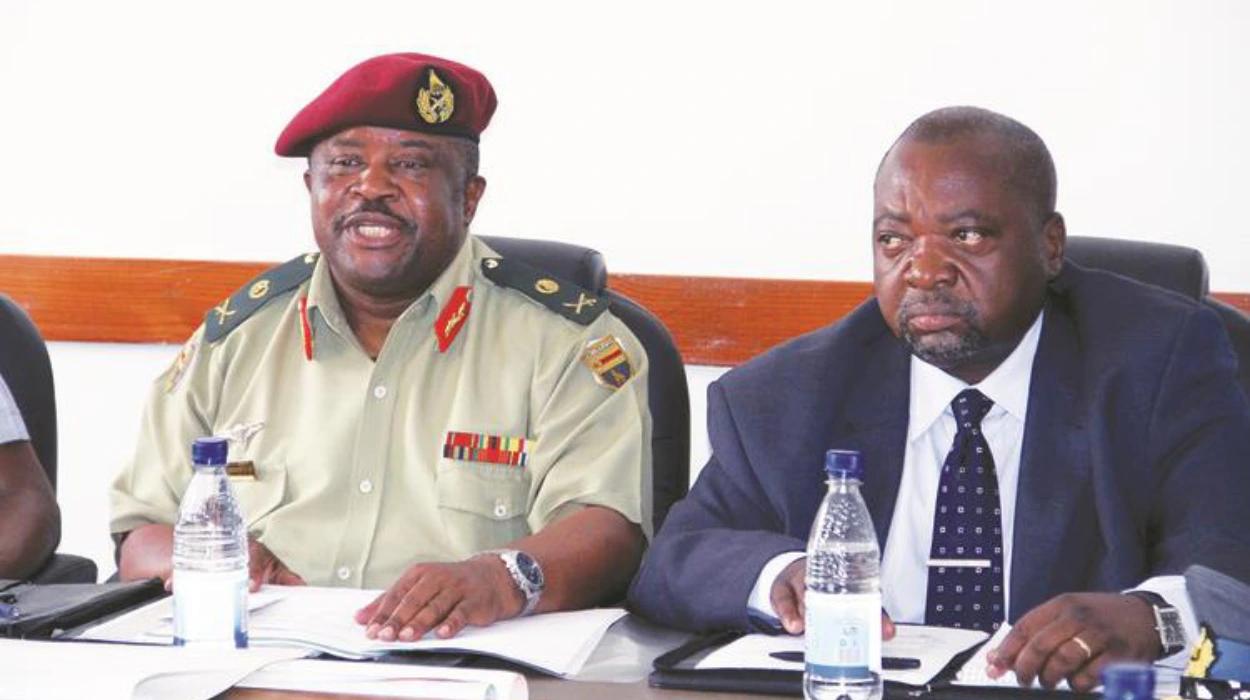
ICIJ’s Pandora Papers 11.9 million files exposing 336 politicians and officials illuminate how proximity to power breeds offshore impunity. Martin Rushwaya, Zimbabwe’s presidential adviser and cousin to President Emmerson Mnangagwa, embodies this fusion of influence and concealment.
In 2010, amid his tenure as defense secretary, Rushwaya co-founded Seychelles shell Greatgem Corp. via a Moscow law firm. He shared ownership with a shell tied to Moscow’s Olga Bakina; Grey Mashava, then a Zimbabwean army colonel, served as sole director. The entity held a Latvian bank account, perfect for cross-border flows. This emerged as Rushwaya sat on a Zimbabwean-Chinese diamond venture’s board hailed as a global giant but later accused of “off-budget” financing camouflaging military involvement.
The offshore provider, Alpha Consulting, flagged Greatgem to Seychelles’ Financial Intelligence Unit in 2012, citing media on Rushwaya’s diamond ties and “corruption of state high officials.” Rushwaya dodged ICIJ queries after initial contact, offering no defense. Such silence, amid Zimbabwe’s plunder economy, fuels skepticism: a top adviser lecturing on “African business ethics” in his 2019 thesis while anchoring secrecy vehicles.
Anatomy of a Resource-Plundered State
Zimbabwe’s woes amplify offshore risks. Once Africa’s breadbasket, it hemorrhages from elite capture: diamond fields like Marange yielded $15 billion since 2008 (Global Witness estimates), yet 72% live in poverty (World Bank 2022). Corruption devours 20% of GDP yearly, per Transparency International’s 2023 index ranking Zimbabwe 149/180.
Pandora ties mirror this. ICIJ data shows 14 African power players in havens, part of $32 trillion global offshore holdings. IMF pegs illicit outflows from sub-Saharan Africa at $90 billion annually 8% of GDP starving health and education as tax-to-GDP ratios limp at 15% (vs. 34% OECD). Watchdogs like Tax Justice Network tally $427 billion in yearly elite tax dodging worldwide, with Zimbabwe’s top 1% hoarding 18% of income (World Inequality Database).
Rushwaya’s Greatgem born in defense corridors, linked to diamonds exemplifies military-commercial fusion, echoing “off-budget” scandals that sideline treasuries.
Blueprint of Offshore Opacity: Shells, Nominees, and Red Flags
Shell mechanics are elegantly ruthless. Seychelles demands no public owner registries; nominees like Bakina or directors like Mashava mask controllers. Latvian accounts facilitate untraceable wires, evading sanctions Zimbabwe faced them post-2008 land grabs.
Greatgem’s setup tracks 30% of Pandora cases (ICIJ): state insiders using foreign firms for resource side-hustles. Post-2017 CRS, havens pivoted Seychelles reports selectively, exempting 40% of shells (Tax Justice Network). IMF correlates such laxity with 25% corruption spikes; World Bank links it to $1.26 trillion global graft losses, laundered offshore.
Diamonds amplify: Kimberley Process flaws let “blood” gems flow, with Zimbabwe exporting $700 million yearly amid smuggling (Trident estimates).
Power’s Inner Circle: Kinship, Mining, and Impunity
In kleptocracies, family-adviser nexuses thrive unchecked. Rushwaya’s Mnangagwa ties span decades from provincial administrator to defense chief overlapping Marange diamond rushes where security forces allegedly looted $2 billion (US Senate 2017). His board role in a “world’s largest” venture raises flags: Chinese firms dominate 70% of Zimbabwe mining (Chamber of Mines), often via opaque JVs.
Accountability crumbles. Zimbabwe’s asset rules exist on paper, but enforcement is nil public trust at 12% (Afrobarometer 2022). Pandora sparked no probes here, unlike 1,000+ globally (ICIJ). Parallels abound: Pandora’s Kenyan president, Jordan’s king resource custodians turned secrecy architects.
Global Countermoves: Dismantling the Haven Network
Reforms gain traction. Panama Papers catalyzed CRS in 100+ countries, reclaiming $11.4 billion (OECD 2023); IMF aid unlocked $1.36 billion more. Seychelles’ 2020 beneficial ownership register exposed 65% more entities, though trusts dodge (Tax Justice Network).
Zimbabwe lags: FATF greylisting (2019-2023) forced tweaks, but military mining exemptions persist. EU’s 6AMLD (2020) jails enablers; US Magnitsky sanctions hit 50+ Zimbabwe elites. Civil leaks empower: ICIJ ignited parliamentary scrutiny in 20 nations.
Yet havens adapt trusts veil 50% of flows demanding unified clamps.
The Enduring Stain: Rushwaya’s Case as Cautionary Archetype
Martin Rushwaya’s Seychelles shell flagged for high-level graft links amid diamond heists and defense oversight encapsulates global financial secrecy’s toxic core. It reveals how havens fortify insider networks, siphoning Zimbabwe’s mineral bounty while citizens endure hyperinflation scars and 90% unemployment (ILO 2022). State Bank tallies $12 billion annual losses, echoing IMF’s $600 billion worldwide tax hemorrhage.
Pandora’s 14,000 elite clients unveil a regime where power insulates plunder. Without relentless transparency mandatory offshore audits, nominee bans, resource-tracing tech secrecy entrenches inequality, mocks democracy, and perpetuates plunder. Rushwaya’s impunity signals peril: in secrecy’s fortress, public good yields to private gain, demanding global resolve to breach the walls.