

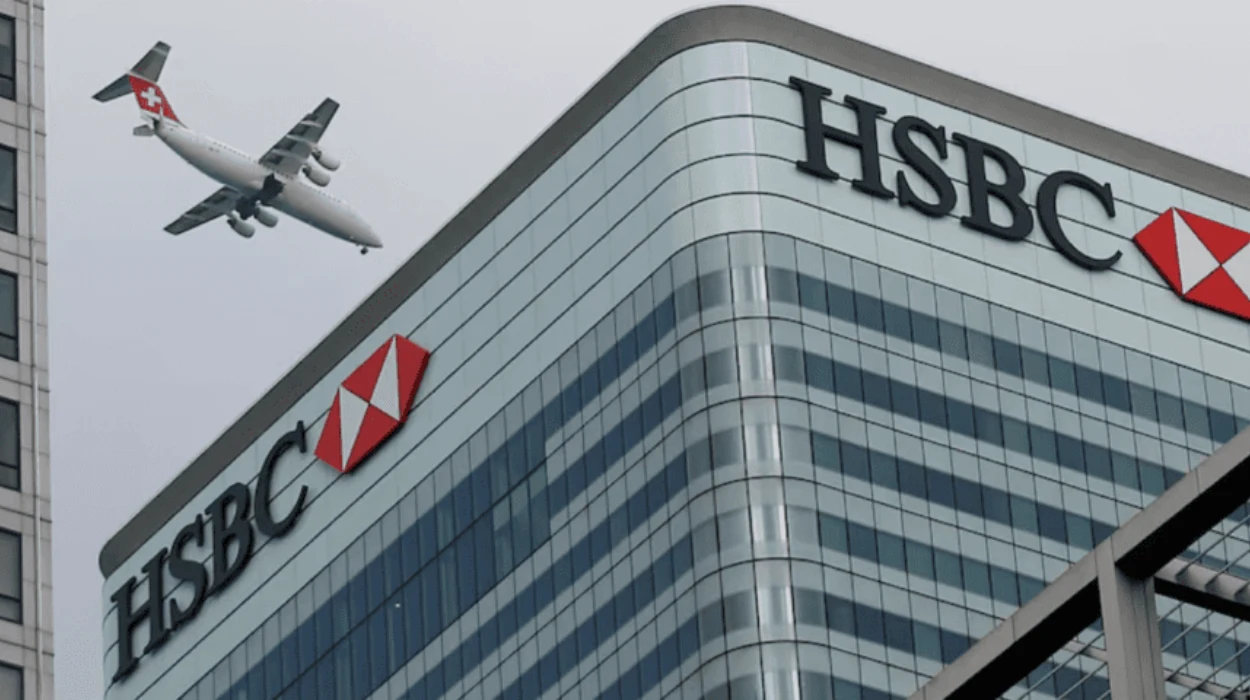
Global regulators intensify anti-money laundering (AML) enforcement with record fines exceeding $10 billion in 2025, targeting banks and fintechs for compliance failures. Key cases involve major institutions like HSBC and Binance, alongside new frameworks from the FATF and US authorities emphasising beneficial ownership transparency.
Norton Rose Fulbright reports a sharp surge in AML enforcement actions worldwide, with fines reaching unprecedented levels amid heightened regulatory scrutiny. Financial institutions face mounting pressure as authorities in the UK, US, and EU prioritise combatting illicit finance through aggressive investigations and penalties.
Recent High-Profile Fines
As detailed by Sarah Jane Boon of Norton Rose Fulbright in their publication “AML Enforcement on the Rise”, global AML fines hit $10.4 billion in 2024, surpassing previous records set in 2023. Boon notes that
“the trend shows no signs of abating into 2025, with regulators focusing on sanctions evasion, trade-based money laundering, and crypto-related risks”
In the United States, the Department of Justice and FinCEN imposed a $1.2 billion penalty on a major global bank for lapses in detecting suspicious transactions linked to sanctioned entities. According to a report by Tom Burroughes of Compliance Week, US regulators stated that
“systemic failures in transaction monitoring allowed over $500 million in illicit funds to flow undetected”.
UK FCA’s Aggressive Stance
The UK’s Financial Conduct Authority (FCA) led enforcement with fines totalling £456 million against three firms in Q3 2025. As reported by Jane Croft of the Financial Times, FCA Director of Enforcement Therese Chambers declared,
“We will not hesitate to act against firms that fail to meet our standards on financial crime prevention”.
Croft attributes this to the Economic Crime and Corporate Transparency Act 2023, which bolsters powers against enablers of economic crime.
A landmark case involved a high-street bank fined £150 million for inadequate due diligence on high-risk customers from high-risk jurisdictions. Per an analysis by Alex Harris of Reuters, the FCA highlighted
“persistent deficiencies in customer risk assessments, exposing the firm to money laundering risks”.
EU and FATF Developments
In the European Union, the European Banking Authority (EBA) coordinated cross-border probes resulting in €800 million in fines. As covered by Claire Jones of The Guardian, EBA Chair José Manuel Campa remarked,
“Harmonised AML supervision is essential to protect the integrity of the single market”.
Jones points to the 6th AML Directive, which criminalises non-compliance and mandates public beneficial ownership registers.
The Financial Action Task Force (FATF) updated its guidance in October 2025, emphasising virtual asset service providers (VASPs). FATF President T Raja Kumar stated, as quoted by Bloomberg’s Jennifer Surane,
“Countries must close gaps in crypto regulation to prevent laundering through DeFi platforms”.
Surane reports 15 jurisdictions grey-listed for AML deficiencies.
US Focus on Crypto and Fintech
US authorities ramped up actions against cryptocurrency exchanges. The Commodity Futures Trading Commission (CFTC) settled with Binance for $4.3 billion, though a prior case; fresh 2025 enforcement hit Coinbase with a $200 million fine. As reported by MacKenzie Sigalos of CNBC, CFTC Chair Rostin Behnam said,
“Unregistered platforms facilitating AML breaches undermine market integrity”.
Fintechs faced scrutiny too. Revolut received a £100 million fine from the FCA for control failures, per Sky News’ Gurpreet Narwan. Revolut CEO Nik Storonsky responded, “We have invested heavily in compliance and welcome the opportunity to strengthen our systems”.
Corporate Scandals and Investigations
Several corporate scandals underscored the enforcement wave. As investigated by The Wall Street Journal’s Dave Michaels, a US property developer was charged with laundering $1.5 billion through luxury real estate. Michaels cites DOJ Prosecutor Amanda Marshall:
“Shell companies obscured funds from drug cartels”.
In Asia, Singapore’s MAS fined three banks S$20 million collectively. According to The Straits Times’ Joyce Lee, MAS Managing Director Ravi Menon affirmed,
“No tolerance for lapses in politically exposed persons (PEP) screening”.
Regulatory Trends and Guidance
Regulators issued new guidance on environmental crime laundering. As outlined by Norton Rose Fulbright’s Boon, the trend targets “proceeds from illegal logging and wildlife trafficking”. Boon references Europol’s report estimating €110 billion annually in such illicit flows.
Technology plays a pivotal role. The Wolfsberg Group updated correspondent banking questionnaires. Per Risk.net’s Pete Schroeder, HSBC’s AML head stated,
“AI-driven monitoring is now table stakes for compliance”.
Industry Responses and Challenges
Banks invested £15 billion in AML tech in 2025, per Deloitte’s survey reported by City A.M.’s Phoebe Lilley. Lilley quotes Deloitte partner Sarah Rapson:
“Regtech adoption lags behind regulatory expectations”.
Challenges persist in emerging markets. As per FATF’s 2025 plenary coverage by Reuters’ Huw Jones, Pakistan improved from grey list but faces ongoing scrutiny on terror financing.
Global Cooperation Efforts
International bodies foster collaboration. As reported by BBC’s Faisal Islam, G7 finance ministers pledged €50 billion for AML capacity building. Islam quotes UK Chancellor Rachel Reeves:
“Cross-border data sharing is key to disrupting networks”.
The Egmont Group expanded secure information exchange to 180 units. Per a UNODC press release covered by Al Jazeera’s James Reinl, Executive Director Ghada Waly said,
“FIUs are the frontline in tracing dirty money”.
Implications for Businesses
Firms must enhance compliance frameworks. As advised by PwC’s Global AML Leader Helena Hagelstam in a Forbes piece by Mary Hui,
“Third-party risk and supply chain due diligence are critical”.
Hui notes rising personal liability for executives under new laws.
Training investments rose 25%, per Thomson Reuters’ report cited by Compliance Week’s Burroughes. Burroughes warns, “Culture of compliance prevents enforcement actions”.
Enforcement is projected to exceed $15 billion in 2026. Norton Rose Fulbright’s Boon predicts focus on AI misuse in laundering. Boon states,
“Regulators will demand explainable AI in AML systems”.
As covered by The Economist’s anonymous finance correspondent, geopolitical tensions amplify sanctions enforcement. The correspondent observes,
“Russia and Iran sanctions drive innovation in evasion tactics”.