

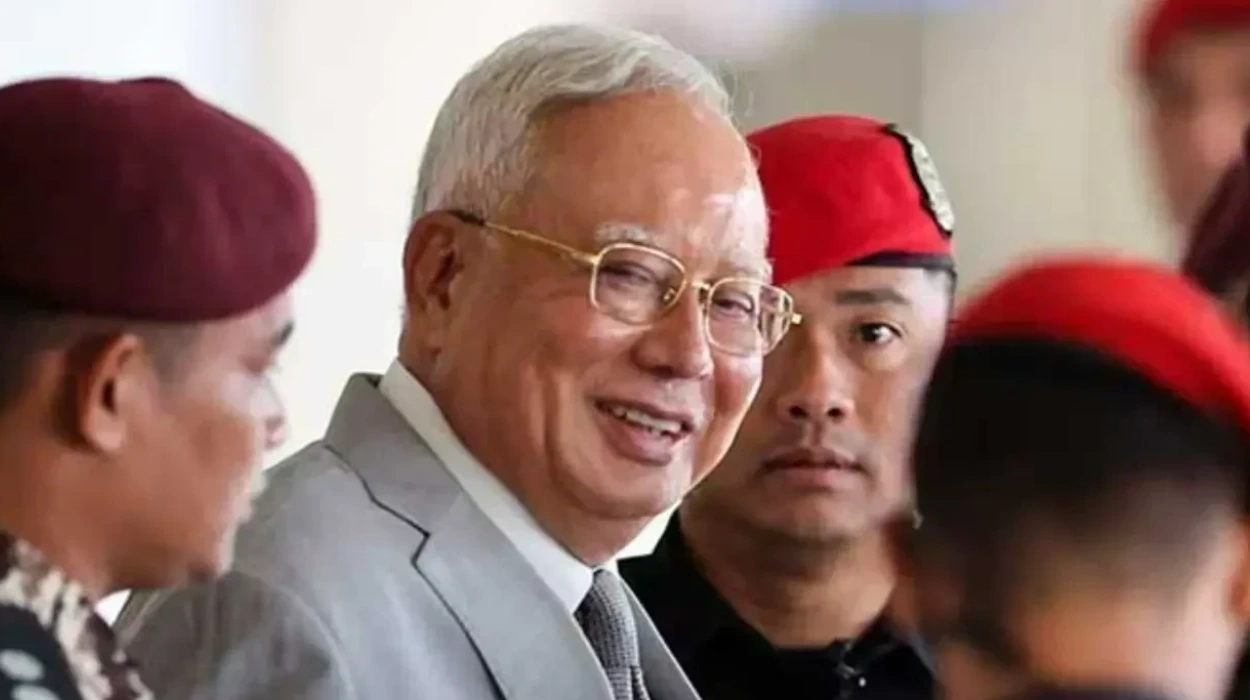
A Malaysian court sentenced former Prime Minister Najib Razak to 15 years in prison and a fine of RM210 million for his role in the 1MDB scandal, marking a significant victory for anti-corruption efforts. The verdict, upheld after appeals, involves charges of money laundering and abuse of power, with assets seized exceeding billions in value.
Inverted Pyramid Structure
The High Court in Kuala Lumpur delivered a decisive ruling on 27 December 2025, sentencing former Malaysian Prime Minister Najib Razak to 15 years’ imprisonment in the multibillion-dollar 1MDB corruption case. As reported by staff writers at News Tribune in their article titled “Former Malaysian leader sentenced to 15 years in …”, the court also imposed a fine of RM210 million (approximately $48 million USD), with an additional 15 years in jail as an alternative if the fine remains unpaid.
This sentencing follows years of legal battles stemming from the 1Malaysia Development Berhad (1MDB) fund scandal, where billions were allegedly siphoned off through complex financial schemes. Najib Razak, aged 70, appeared in court composed, surrounded by family members including his wife Datin Seri Rosmah Mansor, as the judge pronounced the sentence.
Court Proceedings and Verdict Details
The verdict centres on three charges: one count of abuse of power and two counts of money laundering involving RM114 million (about $27 million USD). As detailed by News Tribune reporters, Judge Datuk Collin Lawrence Sequerah stated that the prosecution successfully proved Najib received gratification illegally from 2013 to 2014 via accounts linked to SRC International Sdn Bhd, a former 1MDB unit.
Najib was convicted in 2020 on these charges, with an initial 12-year sentence and RM210 million fine upheld by the Court of Appeal in August 2024 and the Federal Court in December 2024. The High Court on 27 December 2025 finalised the imprisonment term at 15 years, effective from 3 August 2015, his date of arrest.
Defence lawyer Tan Sri Muhammad Shafee Abdullah argued for a discharge not amounting to acquittal, citing Najib’s health issues including atrial fibrillation, sleep apnoea, and gout, but the judge rejected this, deeming the offences grave. The Attorney General’s Chambers pushed for the maximum penalty, emphasising public interest.
Background of the 1MDB Scandal
The 1MDB scandal erupted in 2015, revealing how approximately $4.5 billion was misappropriated from the sovereign wealth fund established in 2009 under Najib’s leadership. Funds were allegedly used for luxury purchases, including a luxury yacht, artworks by Picasso and Monet, and Hollywood financing for the film “The Wolf of Wall Street”.
As covered extensively in global media, investigations by the US Department of Justice labelled it “the largest kleptocracy case to date”. Najib has maintained innocence, claiming the funds in his accounts were donations from Saudi royalty.
Low Taek Jho, known as Jho Low, a fugitive businessman, remains a key figure accused of masterminding the scheme alongside former 1MDB executives.
Reactions from Key Figures
Najib’s daughter, Nooryana Najib, expressed gratitude to supporters on social media, stating the family remains resilient. Supporters gathered outside the court, chanting slogans in his defence.
Prime Minister Anwar Ibrahim welcomed the ruling as a demonstration of judicial independence. As quoted in various reports, Anwar said,
“This is a victory for the rule of law and a message that no one is above accountability.”
Umno president Ahmad Zahid Hamidi, Najib’s party colleague currently facing his own graft trials, urged members to stay united amid the verdict.
The Malaysian Anti-Corruption Commission (MACC) chief Azam Baki highlighted the case’s role in strengthening national integrity systems.
International Implications
The sentencing draws global attention, with the United States having recovered over $1.4 billion in 1MDB assets through civil forfeiture. The US DOJ noted cooperation with Malaysian authorities facilitated these returns.
Singapore and Switzerland have also repatriated millions seized in related probes. Goldman Sachs, which underwrote 1MDB bonds, paid $3.9 billion in settlements.
This outcome bolsters Malaysia’s reputation in combating financial crime, aligning with international efforts under frameworks like the Financial Action Task Force (FATF).
Previous Legal Developments
Najib faced multiple trials. In another 1MDB case, he was acquitted on five charges in March 2025 due to evidentiary issues but awaits retrial on the remaining seven.
His 2022 conviction on seven abuse of power charges was overturned by the Court of Appeal, with acquittal on three and retrial ordered on four.
Rosmah Mansor faces ongoing trials for money laundering and tax evasion linked to 1MDB funds.
Economic and Political Context
The scandal contributed to Najib’s 2018 election loss, paving the way for Pakatan Harapan’s victory. The new government under Mahathir Mohamad initiated probes, recovering RM11.8 billion by 2023.
Under Anwar Ibrahim’s administration since 2022, reforms include amendments to anti-corruption laws enhancing MACC powers.
Public sentiment remains divided, with some viewing Najib as a political victim amid factional struggles within Barisan Nasional.
Expert Commentary
Transparency International Malaysia chairman Muhammad Shanmugam described the sentence as “a strong signal against high-level corruption”. He noted it could deter future offences but stressed asset recovery remains crucial.
Legal expert Sugumar Nadeson told media the verdict sets a precedent for holding leaders accountable, regardless of status.
Timeline of Key Events
- 2009: 1MDB founded under Najib Razak’s premiership.
- 2015: Wall Street Journal exposes funds in Najib’s accounts; investigations begin.
- July 2018: Najib charged with corruption post-election defeat.
- 2020: Convicted on SRC charges; 12-year sentence.
- 2022: Acquitted in ultra-luxury jewellery case (later appealed).
- August 2024: Court of Appeal upholds conviction.
- December 2024: Federal Court dismisses final appeal.
- 27 December 2025: High Court imposes 15-year term.
Najib begins serving his sentence immediately at Kajang Prison. Parole eligibility arises after two-thirds served, potentially around 2030 considering time credited.
Ongoing civil suits seek to recover laundered assets, including properties abroad.
The case underscores Malaysia’s commitment to governance reforms amid geopolitical financial scrutiny in Southeast Asia.