

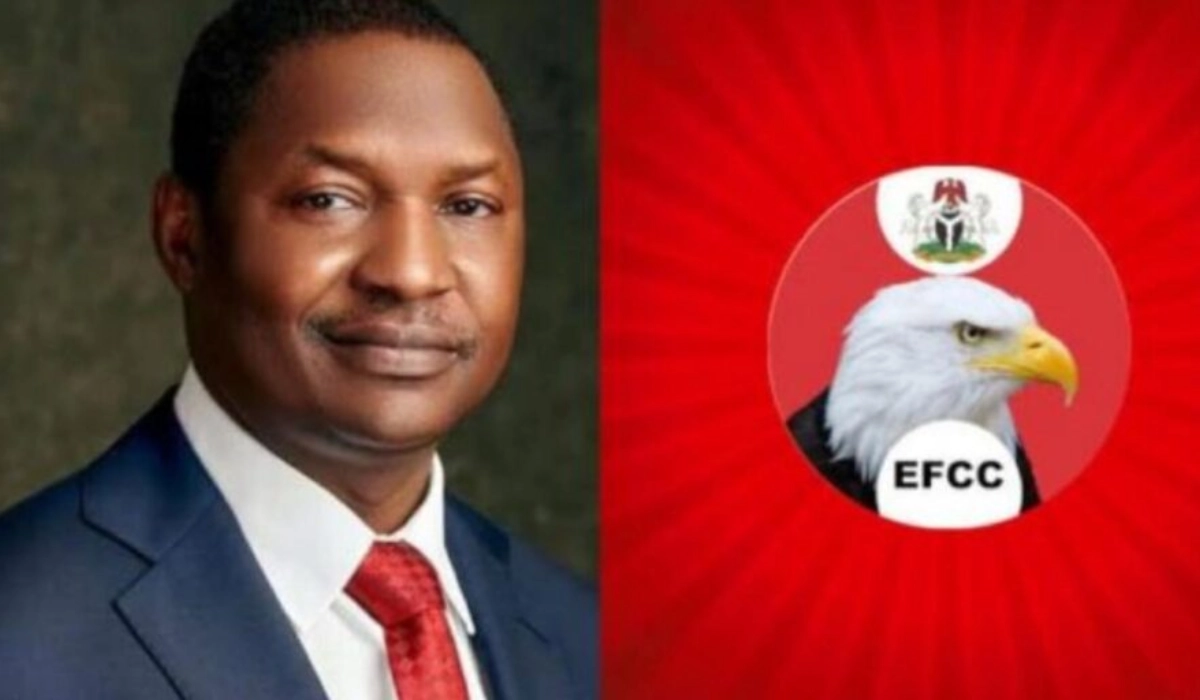
Abubakar Malami, who served as Attorney General and Minister of Justice from 2015 to 2023 under former President Muhammadu Buhari, faces 16 counts of money laundering alongside his wife Asabe Bashir, son Abdulaziz Malami, and associate Bashir Asabe. The Economic and Financial Crimes Commission (EFCC) accuses them of conspiring between 2015 and 2025 to conceal the origins of billions of naira through companies like Metropolitan Auto Tech Limited and Efab Properties Limited. Key allegations include lodging N1.014 billion in a Sterling Bank account in 2022-2025, retaining N600 million as loan collateral in 2021, and purchasing a luxury duplex in Abuja’s Maitama district for N500 million in 2022—all purportedly proceeds of unlawful activities under the Money Laundering (Prevention and Prohibition) Act, 2022.
The defendants were arraigned after detention periods: Malami over a month, his wife and son 16 days in EFCC custody and Kuje Prison. Prior disputes arose in December 2025 when Malami’s team claimed an ex-parte bail order from an FCT High Court in Nyanya, which Okutepa denied receiving, citing subsisting remand orders from Justices S.C. Oriji (December 10) and Babaginda Hassan (dismissing bail on December 18). Okutepa labeled such moves “absurd, bizarre, and gross professional misconduct,” emphasizing no order was served on EFCC or his firm.
Bail Ruling Details
On January 7, 2026, Justice Nwite granted each defendant bail at N500 million (about $350,000), totaling N1.5 billion with sureties. Conditions require two sureties per defendant owning verifiable properties in Abuja’s Maitama, Gwarimpa, or Asokoro districts, affidavits of means, and surrender of international passports—no travel without court approval. The judge weighed factors like evidence strength, flight risk, interference potential, and offence gravity but prioritized trial attendance over pre-trial detention. An interim forfeiture order was also granted for 57 properties linked to Malami. Meeting conditions ends their detention; trial commences February 17.
Judge’s Alarm on Interference
Delivering the ruling, Justice Nwite issued a stern warning against any attempts to “approach” him for influence, addressing defendants, EFCC, lawyers, and litigants directly. “Irrespective of my familiarity with you, when I am dealing with any case, do not approach me. The law cannot be bent,” he stated, adding his leniency is not weakness and any tarnishing efforts would face resistance. He urged reliance on competent counsel, not unethical conduct, emphasizing, “To be forewarned is to be forearmed. I warned, I warned, and I warned.” The admonition followed undisclosed approaches seeking favorable rulings, amid the case’s high profile.
Okutepa’s Push for Sanctions
EFCC lead counsel Chief J.S. Okutepa, SAN, reacted swiftly on January 7, 2026, calling for “naming and shaming” and tough sanctions against interferers. Reports indicate he urged severe penalties post the judge’s allegations of influence attempts in the Malami money laundering case. This aligns with his prior defenses of EFCC actions, rejecting Malami’s unlawful detention claims and stressing lawful proceedings under valid court orders. Okutepa’s stance underscores demands for judicial integrity amid what he views as professional misconduct by defence tactics.
Broader Implications
The developments highlight Nigeria’s anti-corruption drive under EFCC, targeting Buhari-era officials like Malami and aviation minister Hadi Sirika. Critics like Chidi Odinkalu urged Justice Nwite to name or act on interferers rather than warn vaguely. Malami has sought EFCC Chairman Ola Olukoyede’s recusal, claiming bias. The trial tests enforcement of the 2022 Money Laundering Act amid economic concerns from alleged N8.7 billion fraud. Public reaction focuses on transparency, with Okutepa’s sanctions push amplifying calls for accountability in high-stakes cases. As bail conditions pend, the judiciary’s independence remains central.