

Montenegro’s Parliament adopted amendments to the Law on Prevention of Money Laundering and Terrorist Financing on February 28, 2025, published in the Official Gazette on March 12, 2025, and effective from March 20, 2025. Key changes include defining crypto assets as digital representations of value transferable via distributed ledger technology (DLT), covering tokens like electronic money equivalents. The law now regulates services such as crypto custody, trading platforms, fiat-to-crypto exchanges, and order execution, requiring only registration in a public online register managed by the Capital Market Commission within nine months.
Financial penalties for non-compliance have increased significantly. Minimum fines for legal entities rise from €3,000 to €5,000, with credit institutions and similar entities facing €10,000 to €40,000 for violations. These align with MONEYVAL’s fifth-round evaluation (2023), urging better investigation, prosecution of ML, and supervision of high-risk non-financial sectors. No transitional provisions exist for crypto services until the register launches, potentially challenging existing operators.
Central Bank of Montenegro’s Role
The Central Bank of Montenegro (CBCG) plays a pivotal supervisory role under the updated Law on the Prevention of Money Laundering and Terrorist Financing (OGM 110/2023, 65/24, 24/25). CBCG issues guidelines for risk analysis and management systems in supervised entities like credit institutions, payment providers, and leasing firms. In June 2024, CBCG released a Decision on guidelines for ML/TF risk assessment, promoting a risk-based approach.
CBCG monitors compliance, licenses entities, and imposes measures like warnings or administrative decisions for irregularities, referring cases to the Misdemeanour Court in Podgorica. Its 2025-2028 Strategic Plan prioritizes regulatory upgrades and financial stability, including AML enforcement amid rapid bank lending and real estate surges noted in the IMF’s 2025 Article IV review. CBCG also integrates Montenegro into SEPA and TIPS Clone to cut transaction costs and bolster oversight.
International Compliance and Evaluations
Montenegro demonstrates substantial effectiveness in understanding ML/TF risks and international cooperation per MONEYVAL’s 2023 mutual evaluation, compliant or largely compliant with 21 of FATF’s 40 Recommendations. However, it must enhance ML investigations, prosecutions, and non-financial sector supervision; a follow-up report is due in December 2025. The EU’s 2025 Enlargement Report praises progress in AML/CFT, recommending improved supervisory capacity as Montenegro provisionally closed Chapters 23 and 24 benchmarks in June 2024.
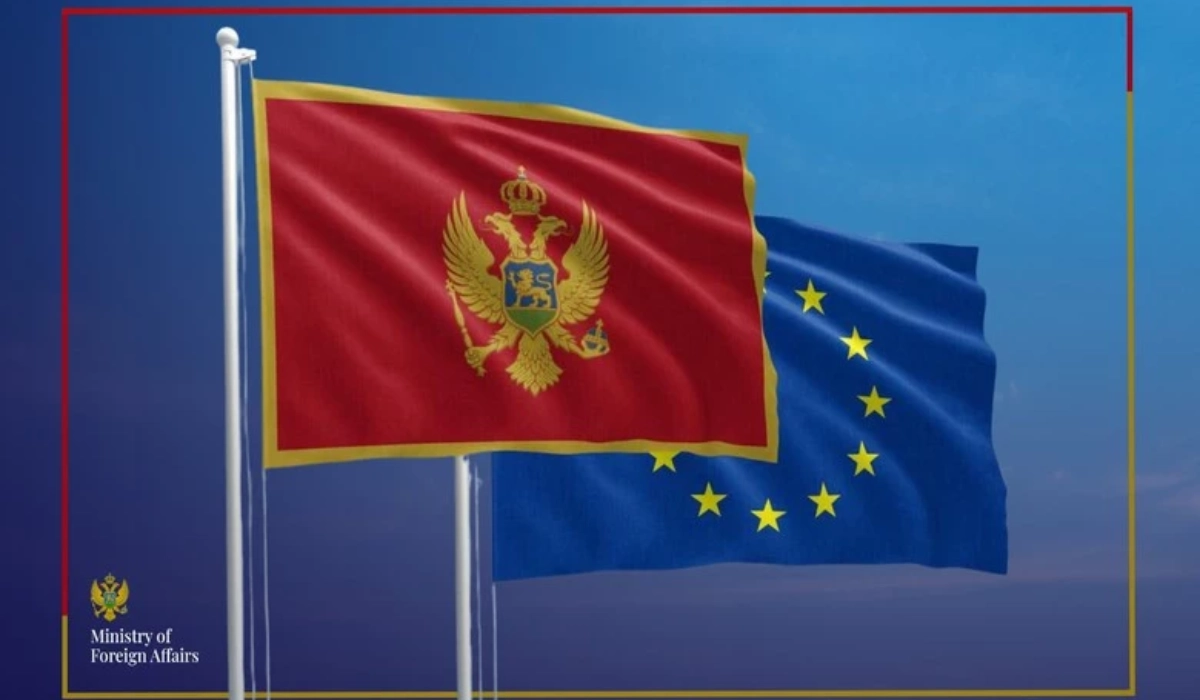
These steps support EU accession ambitions, with Montenegro on track to conclude negotiations by 2026 after closing four chapters recently. FATF regional reports urge stepped-up ML prosecutions, while crypto rules address FATF Recommendation 15 via MONEYVAL alignment.
Crypto Assets and Emerging Risks
The 2025 amendments mark Montenegro’s first crypto framework, resolving prior regulatory grey areas that hindered innovation. Providers, including foreign entities, face no licensing but must register publicly, enhancing transparency for services like crypto exchanges and custody. This responds to risks in virtual assets, a MONEYVAL priority, amid global trends.
CBCG and other authorities now scrutinize crypto-related ML/TF vulnerabilities, building on the National Risk Assessment’s intelligence-led detections, though no TF convictions align with low risk profiles.
Broader Impacts and Future Outlook
These enhancements fortify Montenegro’s financial system, promoting investor confidence and EU integration. Stricter fines and crypto oversight deter abuse, while CBCG’s proactive supervision mitigates real estate and lending risks. Challenges remain in prosecuting complex ML cases and fully implementing non-financial controls.