

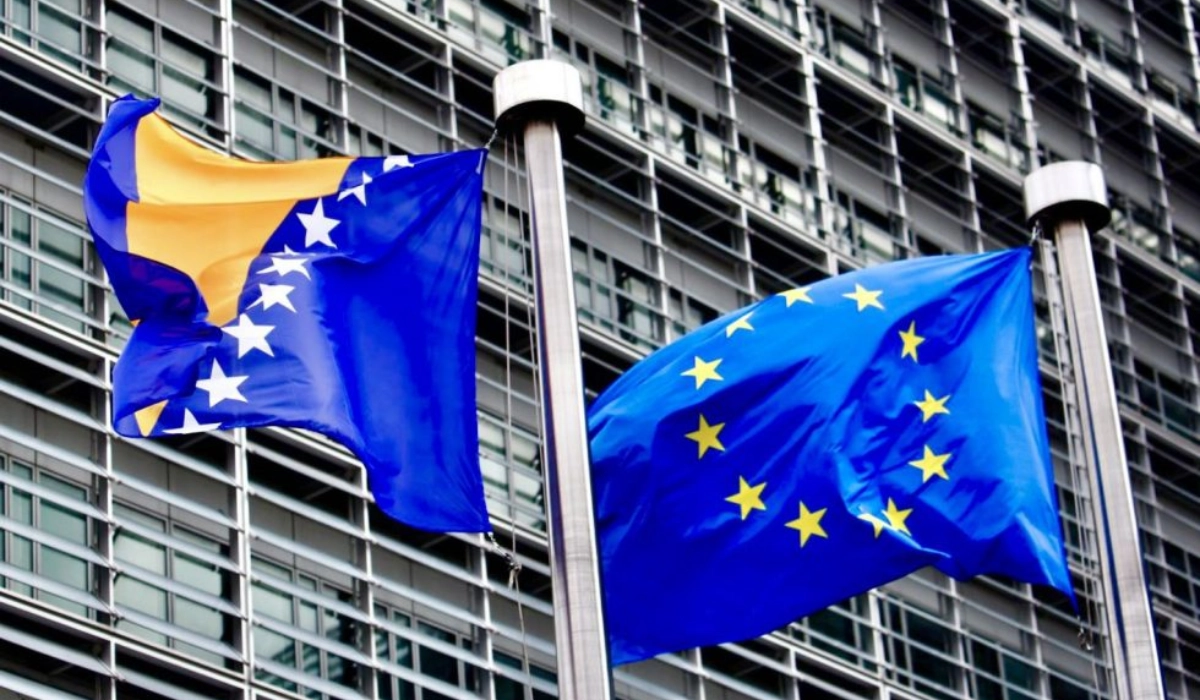
The Financial Action Task Force (FATF) maintains a “grey list” of jurisdictions under increased monitoring for strategic AML and counter-terrorist financing (CFT) shortcomings. Placement signals elevated risks, prompting global financial institutions to apply enhanced due diligence, which raises transaction costs and hampers international business. Unlike the blacklist, greylisting lacks direct sanctions but carries reputational damage, often leading to de-risking by banks and reduced foreign investment. Countries like Turkey and the Philippines have faced these effects, with some exiting after implementing action plans within 2-5 years.
MONEYVAL’s Key Findings
MONEYVAL’s mutual evaluation report, released around December 2024 to February 2025, rated Bosnia and Herzegovina’s AML/CFT effectiveness as moderate in most areas but flagged major gaps. Deficiencies include inadequate risk understanding of money laundering (ML) and terrorist financing (TF), especially in non-profits and digital assets, weak FIU enforcement, poor cross-border cooperation, and insufficient ML investigations. The report triggered an enhanced follow-up procedure, requiring progress reports by December 2026, but immediate FATF scrutiny stems from unaddressed strategic issues. Technical compliance exists in some laws, yet implementation lags due to fragmented governance across entities.
Timeline of Observation Period
Bosnia entered a one-year FATF observation period in February 2025 following MONEYVAL’s identification of systemic AML/CFT flaws in its December 2024 report. This period, expiring in weeks as of January 2026, demands swift remediation to avoid greylisting at the next FATF plenary. Prior efforts, like adopting the AML/CFT Law and forming a Permanent Coordination Body, show potential but fall short on core reforms. The EU notes BiH demonstrated progress with political will before, urging repetition now.
Specific AML Shortcomings
Key vulnerabilities encompass missing state-level laws on asset confiscation and targeted financial sanctions for terrorism and weapons proliferation. A central beneficial ownership register remains absent, complicating entity transparency across the Federation, Republika Srpska, and Brčko District. Additional issues involve harmonizing ML/TF criminalization, bolstering FIU resources, improving non-profit oversight, and establishing cross-border cash controls—echoing historical gaps since 2015. These hinder effective intelligence use and international alignment, particularly with EU standards.
EU and Official Statements
The EU Delegation in Bosnia warned on January 13-16, 2026, of “high likelihood” of greylisting without urgent action on the two laws and beneficial register. They highlighted BiH’s prior successes, like the AML/CFT Law for EU integration, and called for entity-level coordination. “Greylisting would impact businesses, banks, payments, investments, SEPA access, and fiscal affairs,” the statement emphasized, stressing weeks remain for intervention. MONEYVAL urged immediate legislative amendments, while BiH authorities have not yet publicly responded in detail.
Potential Economic Impacts
Greylisting triggers enhanced scrutiny on all inbound/outbound payments, elevating compliance costs for banks and firms by 10-30% in similar cases. International aid, remittances, and FDI decline due to de-risking, as seen in grey-listed nations reliant on foreign assistance. For Bosnia, SEPA membership stalls, private transactions slow, and economic credibility erodes, potentially costing GDP growth amid post-pandemic recovery. Blacklisting remains a worst-case escalation for non-compliance.
Required Urgent Reforms
Authorities must prioritize adopting the Law on Confiscation and Management of Assets and the Law on Targeted Financial Sanctions. Establishing a nationwide beneficial ownership register demands entity and district collaboration. Further steps include FIU empowerment, risk-based supervision, and non-profit TF mitigation to meet FATF’s 40 Recommendations. The EU and MONEYVAL stress political commitment and coordination, proven feasible in past BiH efforts.
Broader Regional Context
Bosnia’s plight mirrors Balkan AML challenges, with fragmented structures exacerbating vulnerabilities to organized crime and corruption. As an EU aspirant, greylisting jeopardizes integration, contrasting neighbors like Croatia, once grey-listed but reformed. Global trends tighten scrutiny on high-risk jurisdictions, amplifying pressure amid cryptocurrency and digital asset risks. Success hinges on unified action before FATF’s next review.