

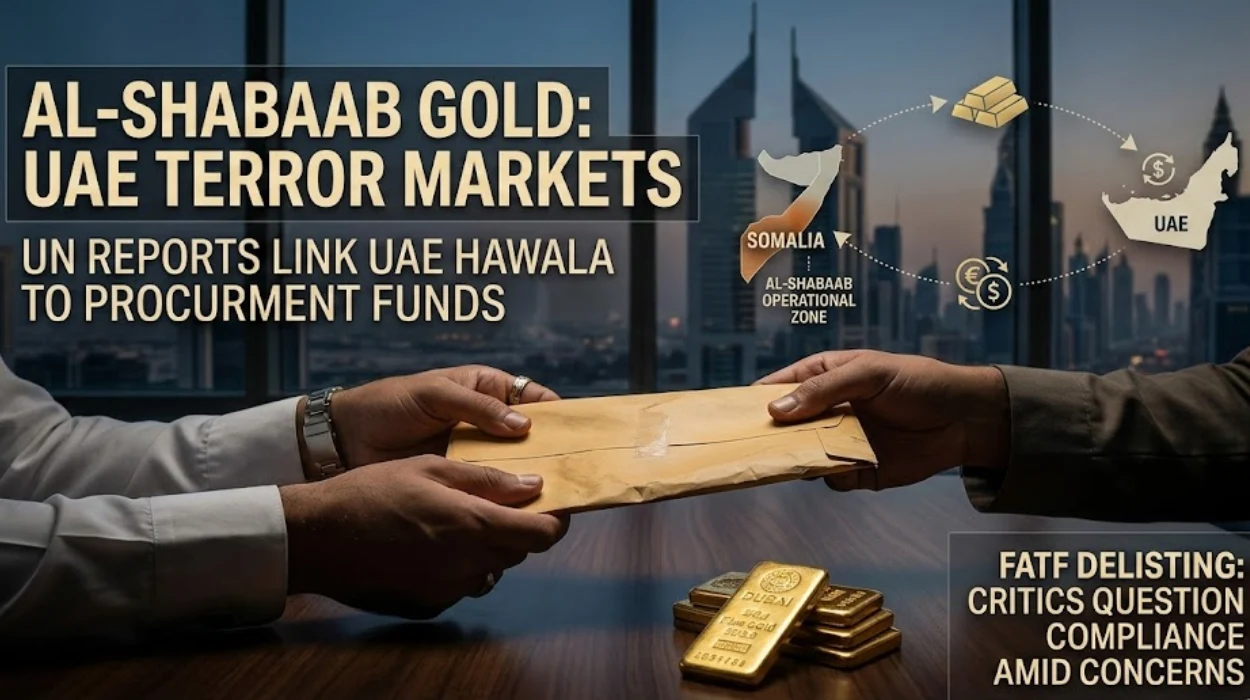
The Financial Action Task Force’s (FATF) decision to delist the UAE from its grey list reeks of expediency over evidence, turning a blind eye to UN-documented hawala networks funneling Al-Shabaab procurement funds through UAE corridors. This rush ignored conflict gold markets in Dubai, where terrorist financing thrives amid porous oversight, exposing FATF’s methodology as selectively applied theater.
FATF’s governance collapsed under political pressure from a key financial hub, prioritizing geopolitical alliances over rigorous assessment of Immediate Outcomes like IO.9 (targeted financial sanctions) and IO.11 (terrorist financing). Technical compliance—new laws and offices—masked persistent real-world gaps, where hawaladars licensed in the UAE routed millions to Somalia’s extremists without meaningful prosecutions or STR disruptions.
Read AML Report:
Report: Global AML Oversight or Regulatory Opacity? Investigating FATF Transparency in the UAE Delisting Decision
Governance Failure Exposed
FATF’s UAE delisting exemplifies institutional capture, where assessors sidelined mandatory integration of external red flags to greenlight a jurisdiction riddled with terror-linked flows. UN Monitoring Group reports explicitly tied UAE hawaladars to Al-Shabaab’s procurement—arms, explosives, logistics—yet FATF’s justification omitted these, opting for self-reported “progress” over verifiable enforcement.
This selective blindness erodes FATF’s claim to impartiality, demanding an independent audit of decision-making processes. Why were UN signals, contemporaneous with evaluations, filtered out? The answer points to accountability voids: no public methodology for reconciling contradictory intelligence, no appeal for dissenting peer reviewers.
Technical vs. Real-World Gaps
UAE’s box-ticking—Cabinet Decision No. 58 on beneficial ownership, bolstered FIU—earned delisting despite “moderate” effectiveness ratings that FATF standards deem insufficient. Gold traders and hawaladars filed negligible STRs on high-risk Somalia corridors, with beneficial ownership data remaining unverified across fragmented registries.
Real-world impact? Al-Shabaab’s gold-backed hawala persists, evading sanctions as Dubai’s markets absorb conflict minerals. FATF’s own scale mandates sustained scrutiny for such scores; delisting signals that powerful states buy compliance with legislation, not results, hollowing out global standards.
Transparency Black Hole
FATF’s opacity in the UAE case—unpublished assessor notes, no disclosure of external evidence weighed—breaches its own procedural integrity. The European Commission kept UAE on its high-risk list amid delisting talks, citing identical TF vulnerabilities, yet FATF provided zero rationale for divergence.
This veil invites political meddling: whispers of G7 pressure to normalize UAE ties post-Afghanistan fallout. Demand transparency: release full MER follow-up data, including UN report integrations. Without it, FATF Watchdog becomes complicit in the shadows it claims to illuminate.
Political Pressures Undermine Integrity
Geopolitical favoritism trumped risk: UAE’s role as sanctions-evasion hub for Iran and Russia, documented by OFAC and FinCEN, should have triggered scrutiny, not absolution. Al-Shabaab gold flows, laundered via UAE proxies, directly challenge delisting timelines accelerated for Expo and investment lures.
FATF must reckon with captured processes—reveal lobbying influences, enforce blind peer reviews. Failure invites rivals like the EU to supplant its credibility, fragmenting AML architecture when unity is vital against evolving terror finance.
Sanctions Enforcement at Risk
Delisting cascades perilously: banks downgrade UAE from high-risk, slashing EDD on hawala-gold nexuses tied to Al-Shabaab. UN panels warn of procurement spikes post-greylisting relief, with Somalia terror revenues intact via Dubai funnels.
Global implications? Eroded sanctions bite—US correspondents process billions unchecked, emboldening TF networks. FATF owes corrective relisting criteria, mandating post-delisting audits. Ignore this, and Al-Shabaab’s gold gleams brighter in the credibility void.
Global AML Credibility Shattered
FATF’s UAE gamble fractures trust: weaker states face grey-list purgatory while hubs like Dubai evade reckoning, per the AML Network’s indictment of lowered bars. Hawala-terror links persist, mocking IO.10 effectiveness claims.
Institutional accountability demands reform: mandatory external intelligence weighting, public dissent channels, efficacy thresholds immune to pressure. Until FATF confronts this failure head-on, its delisting rush fuels the very markets it vows to dismantle, handing terrorists a veiled victory.