

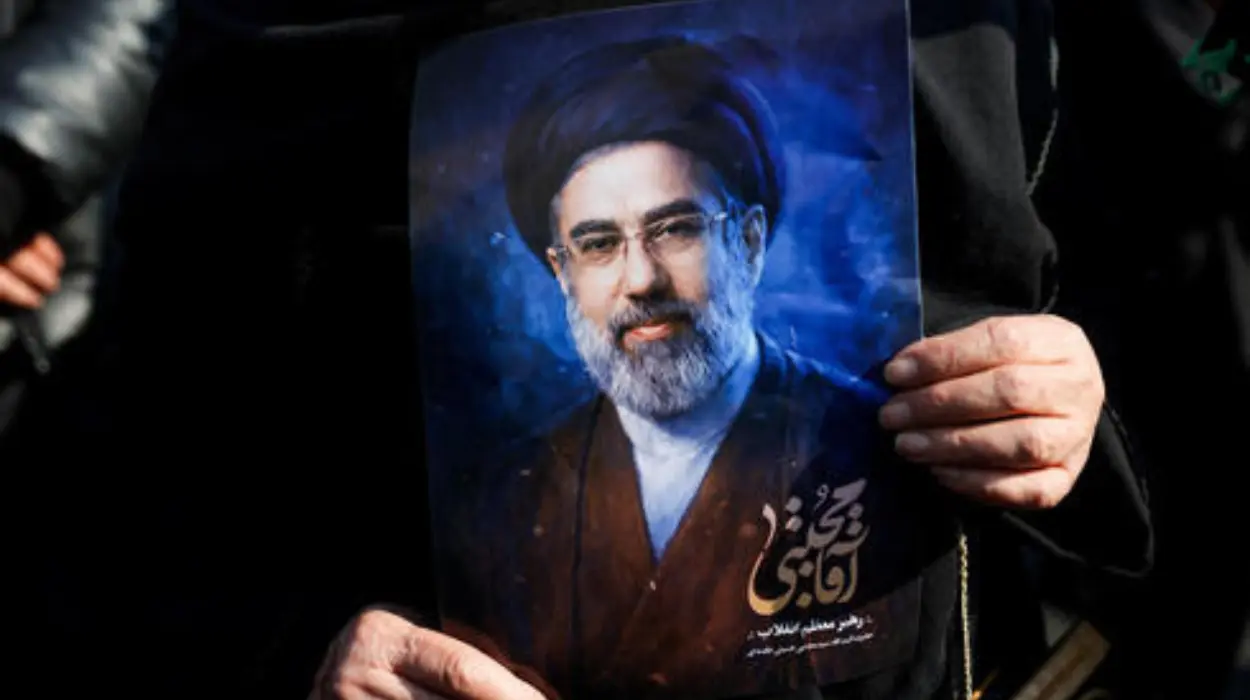
An investigation by Israeli watchdog outlet Shomrim, in cooperation with the International Consortium of Investigative Journalists (ICIJ), traced the financing behind some of the largest real estate acquisitions associated with Mojtaba Khamenei in the UK capital. According to these reports, a loan of approximately £36 million was extended in 2013 to a company registered in the Isle of Man, which was then used to purchase a portfolio of luxury homes in London.
The Isle of Man entity is described as a shell company operating in a well‑known tax haven, and it served as the vehicle through which the financing was channelled. Documents reviewed by the investigators show that the loan was arranged via a British private investment fund acting as an intermediary, while the underlying funds came from another firm linked to British‑Israeli business interests. The investigation emphasizes that at the time of the transaction there were no sanctions on the individuals or companies involved, and no legal barriers that would have prevented the loan from being issued.
Role of British‑Israeli‑owned company
The financing was reportedly provided by Topland Jupiter Limited, part of the wider Topland group, a British investment group founded by Israeli‑born brothers Sol and Eddie Zakai. Shomrim and ICIJ reporting indicates that Topland supplied the capital while a subsidiary of another fund, identified as LJ Partnership, stood in as the formal borrower in public communications, obscuring the direct link to the Isle of Man company that ultimately acquired the properties.
According to documents cited in the investigation, Topland’s name appears in guarantee papers listing 12 London homes as collateral for the loan, indicating that the Iranian side was aware of the source of the funds. Topland later described the deal in general terms as a successful transaction in a press statement, without explicitly naming the offshore entity tied to Khamenei’s network. The loan was reportedly repaid in full around September 2015, roughly two years after it was granted.
Scope and location of the London properties
The properties linked to the loan cover more than 20 dunams (about five acres) on Bishops Avenue in north London, an exclusive stretch often referred to as “Billionaires’ Row.” Media reports have described a broader portfolio associated with Mojtaba Khamenei in the city, including luxury apartments and mansions across high‑value districts such as Kensington, Bayswater and Hampstead.
Separate British and international reporting has highlighted that Khamenei is believed to have beneficial interests in more than a dozen properties, with estimates of the portfolio’s total value running into the hundreds of millions of pounds. These assets reportedly include two apartments on the sixth and seventh floors of a building on Palace Green in Kensington, on the same street as the Israeli embassy, purchased in 2014 and 2016 for a combined price of about £35.75 million.
Allegations of oil money and complex financial networks
Investigators and media outlets have suggested that at least part of the money used to service or repay the loan originated from the sale of Iranian oil, with funds moving through networks of shell companies and multiple bank accounts before being deployed into London real estate. These structures, involving offshore jurisdictions and intermediaries, are portrayed as designed to complicate efforts to trace ultimate ownership and the origin of funds.
Reports note that some transactions associated with properties linked to Khamenei have involved figures later placed under sanctions by the UK for alleged ties to Iran’s Islamic Revolutionary Guard Corps (IRGC) and for acting as financiers for the organization. One such sanctioned banker has been named in earlier coverage as playing a role in arranging the acquisition of high‑end London apartments on behalf of Iranian interests.
Political and ethical criticism
From a legal standpoint, experts cited in the investigations underline that the 2013 loan and associated property purchases occurred before sanctions applied to the individuals involved, meaning the underlying transaction was not in breach of UK or international law at the time. However, the revelation that the future supreme leader of Iran benefited from financing ultimately tied to a company founded by British‑Israeli businessmen has prompted accusations of hypocrisy from critics of the Iranian regime.
These critics argue that the deal sits uneasily with Tehran’s longstanding hostile rhetoric towards Israel and its portrayal of itself as ideologically opposed to Israeli interests. Opposition figures and activists have also pointed to the contrast between the luxury lifestyle suggested by ownership of prime London property and the economic hardship faced by many ordinary Iranians under sanctions and domestic mismanagement.
Calls for sanctions and official reactions
The emerging picture of a substantial London property empire tied to Mojtaba Khamenei has fuelled political debate in the United Kingdom. Joe Powell, Labour MP for Kensington and Bayswater, has publicly called for tougher action, arguing that recent revelations underscore the need to intensify sanctions against the IRGC and to improve transparency around foreign property ownership in the UK.
Powell has described media reports on the size and location of the assets as a “deep concern” and cited them as an example of why an accurate foreign property register is vital to “clamp down on dirty money” in London. Advocacy groups focused on financial transparency have similarly used the case to press for stricter enforcement of anti‑money‑laundering rules, more robust beneficial ownership disclosures, and closer scrutiny of high‑value real estate transactions involving politically exposed persons.
Iranian authorities have not issued a detailed public response to the specifics of the Shomrim–ICIJ investigation, and Iranian state media have given limited coverage to the allegations. Supporters of the regime often characterize such investigations as politically motivated efforts to discredit Iran’s leadership, while critics inside and outside the country view them as evidence of entrenched elite enrichment and opaque financial practices.
Wider implications for financial transparency
Analysts note that the Khamenei property revelations intersect with broader international concerns about the use of luxury real estate in major financial centers as a destination for wealth linked to politically exposed individuals. The case is being cited by transparency advocates as further proof that complex cross‑border structures, including offshore jurisdictions and intermediary companies, continue to be used to move large sums into property while keeping beneficial owners at arm’s length from public scrutiny.
Regulators and lawmakers in the UK and elsewhere are expected to face renewed pressure to close loopholes in property ownership registers and tighten oversight of professional service providers involved in structuring such deals. For Iran, the ongoing reporting is likely to remain a point of contention between the regime’s official narrative and external investigations into the wealth and financial dealings of its top leadership