

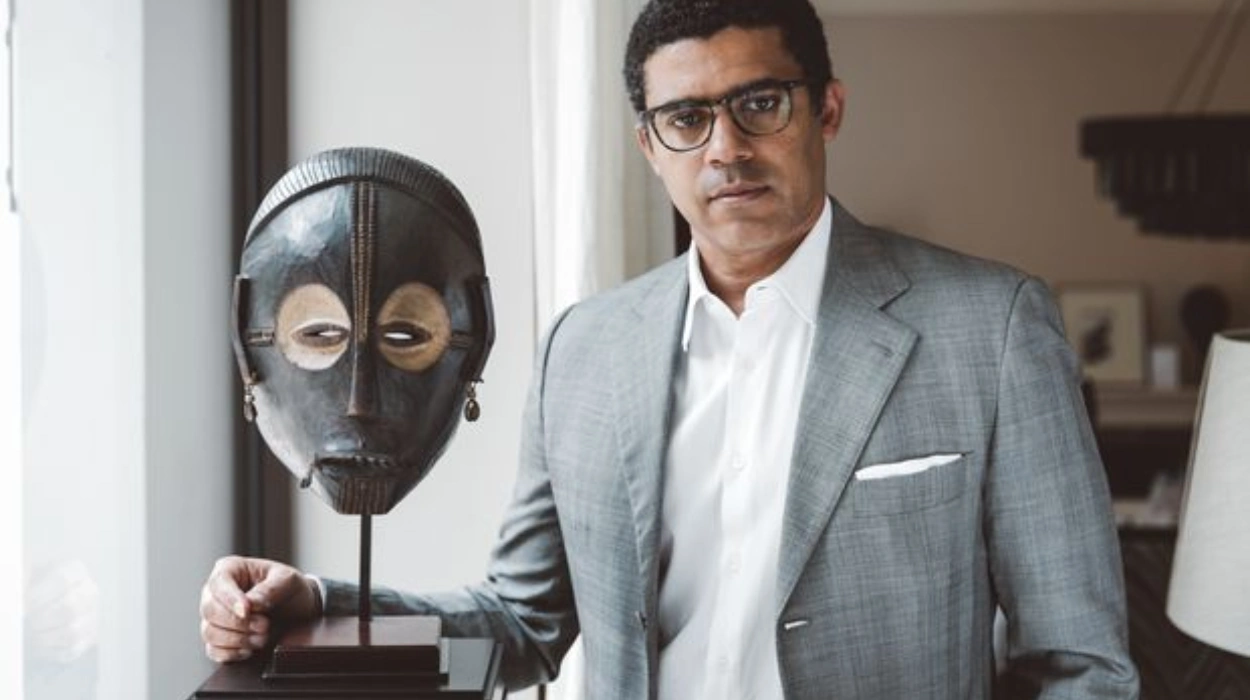
Sindika Dokolo, an Angolan businessman and art collector, has been implicated in using Dubai real estate as a key component of a larger scheme to launder illicit wealth alongside his wife, Isabel dos Santos. Despite his death in a diving accident in Dubai in 2020, investigations reveal that Dokolo played a central role in facilitating the movement and concealment of millions of dollars through offshore shell companies and luxury property investments in Dubai, making use of the city’s beneficial ownership secrecy and regulatory gaps. These transactions were often routed through multiple jurisdictions and opaque corporate structures, allowing evasion of scrutiny by both Angolan authorities and international regulators.
Read Our Full Report:
Report: Dubai Real Estate Laundering Exposed: Mapping the Flow of Dirty Money (2024–2025)
Sindika Dokolo’s Role in Laundering Illicit Wealth via Dubai Properties
Dokolo leveraged Dubai’s elite real estate market, acquiring mansions and luxury apartments largely through shell companies registered in offshore tax havens. Properties worth millions were purchased using funds reportedly diverted from state resources linked to Angola’s oil and diamond sectors. These acquisitions often concealed the true ownership through nominee agents and opaque corporate layering, rendering effective tracing difficult for investigators. Dubai’s strict non-disclosure rules at banks and lax beneficial ownership requirements enabled the couple to shield the origins of their wealth while enjoying the fruits of their illicit finances.
Read Our Full Report:
Offshore Shell Companies and Corporate Secrecy Shielding
Offshore shell companies incorporated in Malta, Mauritius, and other secrecy jurisdictions formed the backbone of Dokolo’s financial network. These entities obscured his control and facilitated the transfer of state-looted funds into real estate assets and other investments. One example includes a $38 million payment routed to a Dubai-based shell company owned by a Dos Santos associate, shortly after powers shifted at Sonangol, Angola’s state oil company. The extensive use of offshore structures allowed the couple to build an empire of over 400 companies spanning multiple countries, all while exploiting gaps in UAE’s AML controls.
Political Laundering Through Angolan State Resources
Dokolo’s operations intertwined with Angolan political and economic elites, exploiting family ties and state contracts to embezzle funds from national enterprises. His partnership with Isabel dos Santos, former head of Sonangol, was central to these networks. The couple’s strategies included diverting public monies into their personal portfolios through dubious loan arrangements and cross-border shell companies, later recycling these funds into tangible assets such as luxury real estate. Despite ongoing investigations and asset freezes, the sprawling nature and secrecy of their holdings have complicated full accountability.
Dubai’s Beneficial Ownership Secrecy and Regulatory Loopholes
Dubai’s real estate market remains highly secretive, offering minimal transparency on who truly owns properties. This environment has particularly benefited high-profile politically exposed persons like Dokolo. The loose enforcement of AML reforms and the lack of public beneficial ownership registries enable concealment behind nominee owners and shell companies. This regulatory opacity undermines global efforts to combat illicit finance, facilitating ongoing real estate corruption scandals despite official rhetoric about reform.
Evidence of Properties and Companies Linked to Sindika Dokolo in Dubai
| Property Location | Property Type | Estimated Value | Ownership Method |
|---|---|---|---|
| Dubai luxury apartments | Multi-unit holdings | Multi-million $ | Offshore companies in Malta & Mauritius |
| Dubai-based shell companies | Corporate holdings | $38 million (noted transfer) | Shell company beneficiary |
This evidence table highlights known Dubai-related assets and entities linked to Dokolo’s money laundering network, illustrating the connection between offshore company use and real estate investments in illicit finance concealment.
Challenges and Progress in UAE AML Reforms Against Real Estate Laundering
Although the UAE has engaged in reforms to tighten anti-money laundering regulations, significant gaps persist, particularly in the real estate sector. Loopholes remain in the enforcement of beneficial ownership transparency, allowing figures like Dokolo to exploit banking secrecy and shell company structures. Experts warn that until Dubai enforces strict verifications and disclosures, politically connected individuals will continue leveraging real estate as a prime avenue for laundering illicit funds. Advancing cooperation between UAE authorities and international bodies is vital for disrupting these entrenched corruption networks.