

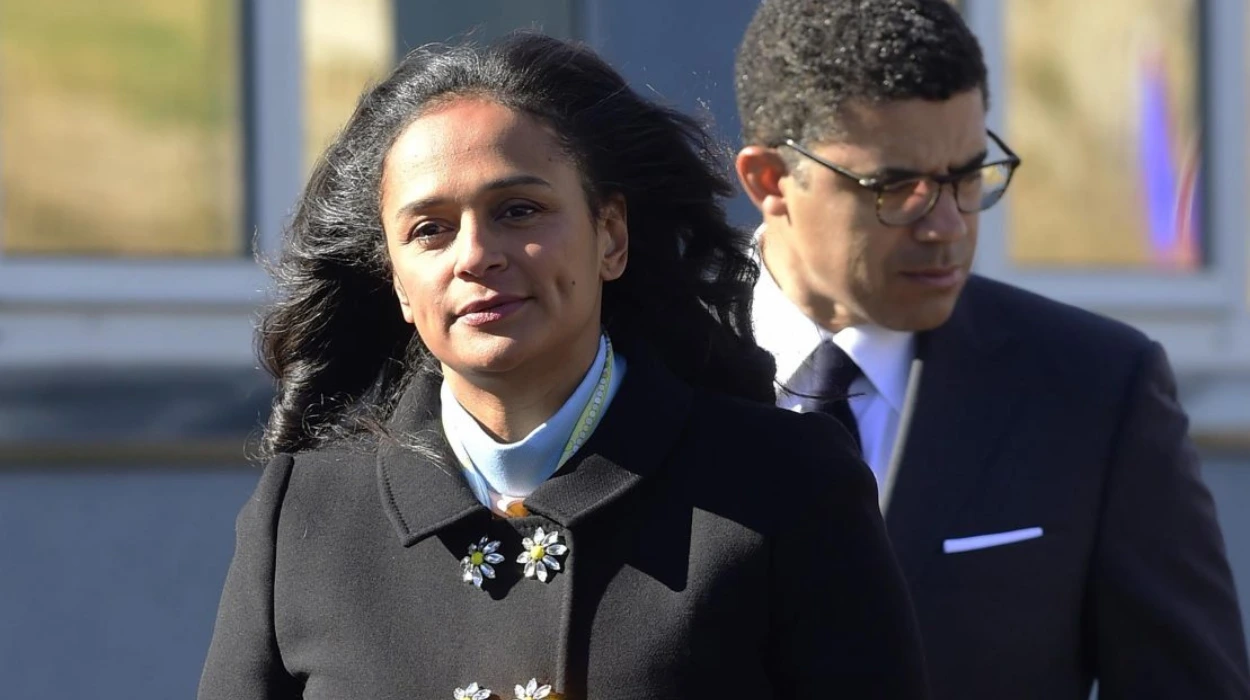
Isabel dos Santos and Sindika Dokolo, a high-profile Angolan couple, have been central figures in the use of Dubai real estate to launder and conceal illicit wealth, exploiting a strategic nexus of political influence, offshore shell companies, and the UAE’s opaque property market. Their operations revealed a sophisticated layering of ownership structures that shielded the true origins of millions diverted from Angolan state resources, particularly from the oil and diamond sectors where dos Santos held executive roles. Their case exemplifies the challenges posed by beneficial ownership secrecy and regulatory loopholes in Dubai’s real estate sector to global anti-money laundering efforts.
Read Our Full Report:
Report: Dubai Real Estate Laundering Exposed: Mapping the Flow of Dirty Money (2024–2025)
Dual Power Plays: Political Influence and Real Estate Wealth Concealment
Isabel dos Santos’ leadership of Sonangol, Angola’s state oil company, coupled with Sindika Dokolo’s business acumen and international art dealings, formed a potent blend enabling massive capital flows into Dubai’s luxury real estate sector. Through family networks and political connections, the couple orchestrated transfers of embezzled public funds into high-value apartments and villas, purchasing them using offshore companies designed to obscure beneficial ownership. The complexity of these transactions indicates deliberate efforts at political laundering, disguising corruptly acquired wealth as legitimate real estate investments within one of the world’s most secretive property markets.
Offshore Shell Companies as Conduits for Illicit Funds
Both dos Santos and Dokolo utilized a labyrinth of offshore shell companies incorporated in Mauritius, Malta, and the British Virgin Islands to mask ownership of Dubai properties. These companies acted as facades to route illicit finance, complicating tracing by Angolan investigators and international prosecutors. Ownership stakes were held by nominee directors, further distancing the couple from direct property registration. This method typifies a widespread abuse of offshore structures in Dubai real estate corruption scandals, undermining global efforts to enhance transparency under UAE AML reforms.
Read Our Full Report:
Exploiting Dubai’s Beneficial Ownership Secrecy
Dubai’s regulatory framework has historically permitted minimal disclosure of beneficial ownership in real estate deals, a feature significantly exploited by dos Santos and Dokolo. Properties were registered through shells administered by nominee agents, creating layers of anonymity. Even as the UAE has enacted AML reforms, gaps persist in enforcement, allowing politically exposed persons to leverage the city’s secrecy provisions. This environment enabled the couple to shelter wealth despite international sanctions and asset freezes instituted by Angolan and foreign authorities.
Intersecting Financial Networks: From Angola’s Resources to Dubai’s Skyline
Funds reportedly misappropriated from Angola’s Sonangol and state diamond revenues were recycled into Dubai’s real estate market through complex financial arrangements and cross-border transfers. Sindika Dokolo’s art dealings provided alternate routes to disguise financial flows, complementing the real estate purchases. Such intersecting networks illustrate the oligarchic corruption and political laundering endemic to Angola’s elite, where luxury assets abroad serve as both safekeeping and symbols of wealth accumulation beyond domestic jurisdictions.
Known Dubai Properties and Shell Companies Linked to Dos Santos and Dokolo
| Property Location | Property Type | Estimated Value | Ownership Vehicle |
|---|---|---|---|
| Dubai Marina apartments | Luxury residential | Multi-million USD | Offshore companies & nominees |
| Palm Jumeirah villa | High-value villa | Several million USD | Holding companies in Mauritius |
This table encapsulates leads on real estate assets and corporate entities tied to the couple’s laundering network, reflecting Dubai’s role as a haven for concealed politically exposed wealth.
UAE AML Reforms and the Challenge of Enforcement
While the UAE has introduced measures to improve transparency, including greater scrutiny of shell companies and beneficial ownership declarations, enforcement remains inconsistent. Dos Santos and Dokolo’s activities highlight the continuing vulnerability of Dubai’s real estate sector to illicit finance. For substantial progress, the UAE must adopt robust monitoring and inter-agency cooperation frameworks, particularly targeting politically exposed persons’ use of offshore vehicles to circumvent sanctions and laundering controls.