

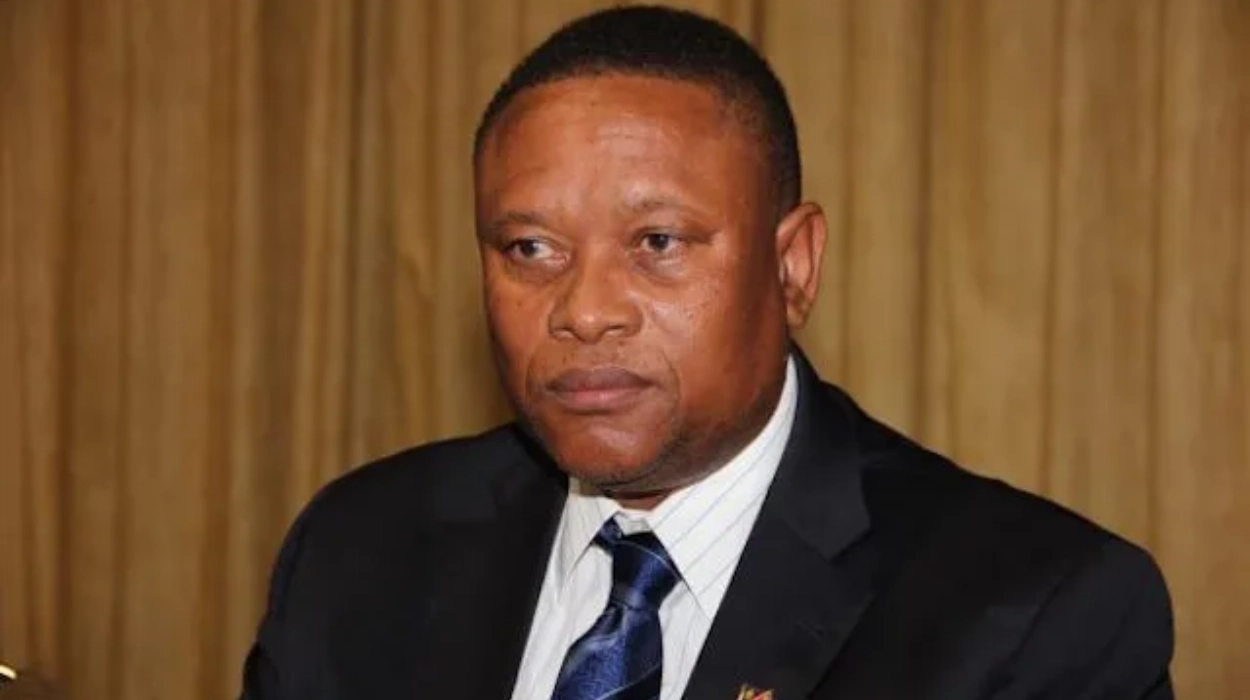
Bernhard Esau, former Namibian fisheries minister, is central to one of Namibia’s most notorious corruption cases, where illicit wealth was funneled into Dubai’s real estate market for laundering and concealment. According to investigations, Esau’s involvement in the Fishrot scandal saw him receive corrupt payments disguised through consultancy and fishing contract kickbacks. These illicit proceeds were laundered by acquiring luxury properties and commercial real estate in Dubai’s high-end developments, often held through offshore shell companies to disguise beneficial ownership. Dubai’s permissive regulatory environment on real estate ownership, combined with limited transparency, enabled Esau to convert and protect corrupt wealth from detection and seizure.
Bernhard Esau’s Political Laundering via Dubai Real Estate
The purchase of Dubai properties by Esau coincided with his tenure as fisheries minister when he facilitated significant fishing quota deals laden with corruption. His position granted access to public resources, which he allegedly diverted for personal enrichment. Esau’s real estate investments were layered through trusts and offshore entities registered in UAE free zones, allowing him to mask his direct control over these assets and bypass anti-money laundering checks. This method typifies political laundering, where high-ranking officials use complex corporate vehicles to integrate illicit funds into legitimate global markets like Dubai’s luxury property sector.
Offshore Shell Company Networks Obscuring Ownership
Esau’s real estate acquisitions were facilitated via a web of offshore shell companies designed to obscure true ownership. Such entities conduct transactions and hold property titles independently, creating a labyrinthine structure that protects assets from legal scrutiny. The anonymity these companies receive under UAE’s beneficial ownership secrecy laws creates significant challenges for law enforcement and financial watchdogs, allowing illicit finance to flourish with minimal risk. Despite UAE AML reforms aiming to enhance transparency, political elites linked to scandals like Fishrot exploit these loopholes profusely, maintaining their wealth hidden under layers of corporate secrecy.
The Fishrot Scandal’s Role in Namibian Corruption and Money Laundering
The Fishrot scandal entailed a kickback scheme involving Samherji, an Icelandic fishing firm, paying bribes to Namibian officials, including Esau, to control lucrative fishing quotas. The corrupt proceeds were funneled overseas, with Dubai’s real estate market becoming a prime conduit for laundering. Esau’s acquisitions abroad serve as tangible evidence of this illicit flow of funds, reflecting a broader pattern of extraction of national resources by politically exposed persons. The scandal has attracted international scrutiny, with Namibian authorities pursuing asset recovery efforts, yet Dubai remains a challenging jurisdiction for enforcement.
UAE AML Reforms and Their Limited Impact on Political Elites
While the UAE has tightened AML regulations, enforcement remains uneven, particularly regarding politically exposed persons with access to high-level networks and resources. Esau’s use of Dubai real estate underscores persistent regulatory gaps, including the difficulty of verifying beneficial ownership and monitoring property transactions involving offshore vehicles. This environment facilitates ongoing real estate corruption scandals where illicit finance from developing countries is laundered and preserved. Strengthening inter-jurisdictional cooperation and transparency is essential to dismantle such sophisticated laundering schemes.
Evidence Table: Dubai Properties Linked to Bernhard Esau
| Property Location | Type | Estimated Value (NAD/USD) | Ownership Structure |
|---|---|---|---|
| Multiple high-value villas | Luxury residential | Estimated at over N$30 million (~$2 million) | Held by offshore trusts and shell companies |
| Commercial offices | Office buildings | Included in portfolio | Owned through layered offshore structures |