

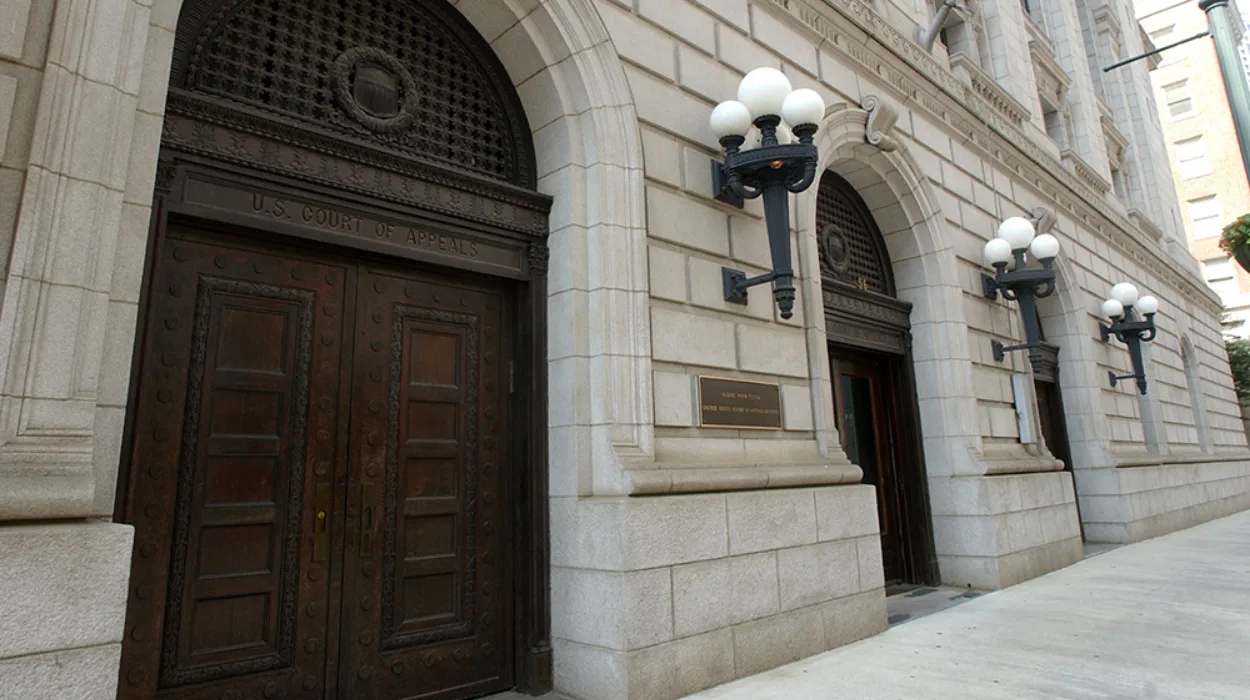
The U.S. Court of Appeals for the 11th Circuit reversed a lower court decision on 15 December 2025, upholding the constitutionality of the Corporate Transparency Act (CTA) in National Small Business United (NSBU) v. U.S. Department of the Treasury. The ruling affirms Congress’s authority under the Commerce Clause to require certain U.S. entities to report beneficial ownership information to FinCEN, combating anonymous shell companies used in money laundering, terrorism financing, and other crimes, amid ongoing litigation and prior enforcement pauses.
Inverted Pyramid Structure
The U.S. Court of Appeals for the 11th Circuit delivered a unanimous decision on 15 December 2025, overturning an Alabama district court’s injunction and affirming the Corporate Transparency Act (CTA) as constitutional. This landmark anti-money laundering law mandates that certain U.S. entities disclose beneficial ownership information to the Treasury Department’s Financial Crimes Enforcement Network (FinCEN). The panel, comprising judges appointed by both Republican and Democratic presidents, ruled that the CTA falls within Congress’s Commerce Clause powers, regulating economic activity with substantial interstate impact.
As reported by the FACT Coalition in their press release, the court found the CTA regulates activity “economic in nature” and that Congress “reasonably concluded that failing to require businesses to report beneficial ownership information would undercut its goal of regulating interstate financial crime.” The decision also rejected Fourth Amendment challenges, describing the reporting as a “uniform and limited requirement” with “nothing arbitrary or discretionary about its application.” This marks the first federal appellate court to fully review and uphold the CTA, reversing the 1 March 2024 district court ruling by U.S. District Judge Liles C. Burke, who deemed it an overreach beyond Congress’s enumerated powers.
Transparency International U.S. highlighted the ruling’s significance, noting it confirms Congress acted
“well within its constitutional authority to address the abuse of anonymous companies.”
The court recognised that
“bad actors have been using the anonymity of the corporate form to commit financial crimes, such as money laundering and financing terrorism,”
and that law enforcement has “long suffered from an information gap” due to states’ lack of owner disclosure requirements. The CTA thus “effectively prohibits anonymous business dealings” with aggregate effects on interstate commerce.
Court Ruling Details
The 11th Circuit’s opinion emphasised Congress’s findings on anonymous shell companies’ role in illicit activities, citing support from law enforcement, national security experts, and industry associations. During deliberations, amici curiae briefs were filed by bipartisan Members of Congress, national security and anti-corruption experts, and tax law experts backing the government’s position. FACT Coalition and partners submitted an amicus brief in the lower court, while Transparency International U.S., Foundation for Defense of Democracies (FDD), and Hudson Institute’s Nate Sibley filed one urging upholding the CTA for national security.
The court concluded the CTA imposes only a “uniform and limited reporting requirement” consistent with the Constitution. As noted in the FACT Coalition release, the ruling is final but subject to further appeal, potentially including an en banc 11th Circuit hearing or Supreme Court review. The decision lifts a longstanding injunction blocking Treasury enforcement against NSBU and its members.
In related prior proceedings covered by Thomson Reuters Tax & Accounting, NSBU argued the CTA usurps states’ corporate formation powers and violates the Fourth Amendment as an unreasonable search. During 27 September 2024 oral arguments, the panel questioned NSBU attorney Thomas Lee on enumerated powers standards and the Fourth Amendment’s scope, citing circuit precedent.
Stakeholder Reactions
Erica Hanichak, deputy director of the FACT Coalition, stated:
“The Court’s decision confirms what Congress understood and intended when it originally passed this legislation: that anonymous companies are drivers of fraud, drug trafficking, and the threats posed by terrorists and transnational criminal organizations.”
She added:
“Congress already gave our country’s law enforcement and national security officials the tools they need to address money laundering through shell and front companies. It’s long past time that we empower them to start using these tools to protect our communities.”
Frank Russo, Director of the CPAC Center for Combating Human Trafficking, said:
“Today’s decision by the 11th Circuit affirms what we’ve long known about the Corporate Transparency Act: establishing a beneficial ownership database is a constitutional use of Congress’s powers to provide effective tools to law enforcement in order to keep communities safe.”
Nate Sibley, a fellow at Hudson Institute and director of Hudson’s Kleptocracy Initiative, remarked:
“Today’s ruling validates a critical tool that U.S. law enforcement has consistently requested in order to take down the money laundering networks fueling Mexican cartels, Chinese scam factories, and other criminals who threaten the safety and prosperity of all Americans.”
Josh Birenbaum, deputy director of the Foundation for Defense of Democracies’ Center on Economic and Financial Power, commented:
“America’s national security depends upon protecting the homeland against adversarial governments, drug cartels, and foreign terrorists. But how can we defend against a threat we can’t see? For too long, the enemies of America have had easy tools to hide in plain sight, anonymously using American shell companies to do everything from buying up U.S. companies to laundering billions in fentanyl proceeds.
We applaud the 11th Circuit for upholding the CTA and giving law enforcement the tools it needs to stop these dangerous, anonymous companies and the criminals who use them.”
Scott Greytak, Deputy Executive Director for Transparency International U.S., declared: “The constitutional case for corporate secrecy has collapsed under appellate scrutiny. The Eleventh Circuit rejected the challengers’ claims and put the Corporate Transparency Act back on firm legal footing. While these questions will continue to move through other courts, today’s message from the highest court yet to review the CTA was unmistakable:
The Constitution is not a shield for illicit actors to perpetrate their crimes through anonymous companies.”
He further stated:
“Today’s decision should be a clear wake-up call for the U.S. Treasury Department. With the law’s constitutionality now upheld at the appellate level, the Department’s choice to exempt over 99 percent of companies Congress sought to cover is a policy choice—not a legal necessity—and one that should be immediately reversed.
For years, anonymous companies have been a legal invisibility cloak for money launderers, kleptocrats, drug traffickers, and sanctions evaders. In its decision today, the Eleventh Circuit didn’t indulge the myth that this secrecy is benign. It recognized what we laid out in our amicus brief: When transparency disappears, you don’t get privacy—you get crime.”
CTA Background and Prior Litigation
Enacted as part of the Anti-Money Laundering Act of 2020 within the National Defense Authorization Act for Fiscal Year 2021, the CTA targets “reporting companies”—domestic entities like LLCs and foreign entities registered in the U.S.—requiring beneficial owner details unless exempt (e.g., large operating companies, public firms). FinCEN maintains a non-public database accessible to law enforcement, financial institutions, and authorised partners.
Litigation arose from NSBU’s challenge, leading to Judge Burke’s 1 March 2024 injunction, deemed unconstitutional. FinCEN responded on 27 February 2025 by halting enforcement and planning an interim final rule extending deadlines beyond 21 March 2025 for pre-2024 entities, amid pauses from court cases.
Separate 5th Circuit proceedings involved a Texas district injunction lifted on 2 December 2024, permitting enforcement; U.S. Circuit Judge Catharina Haynes partly dissented, favouring plaintiff-limited relief over nationwide scope. The 5th Circuit later vacated its stay on 26 December 2024, prompting FinCEN’s deadline extension to 21 March 2025, prioritising high-risk entities.
MLex reported the 11th Circuit overturned the judge’s ruling, upholding CTA constitutionality. Value Edge Advisors noted the reinstatement, lifting the Treasury enforcement block. Skadden Arps advised that injunctions pause disclosures, but stays could mandate short-notice filing. Smith Law highlighted FinCEN narrowing CTA to foreign entities post-injunctions, eliminating U.S. reporting amid litigation.
FACT Coalition policy director Zorka Milin criticised the district ruling in a Bloomberg Law editorial, urging reversal of Treasury’s foreign-only limit, contrary to congressional intent.
Implications for Businesses and Enforcement
The ruling reinstates reporting for affected entities, though Treasury’s exemptions persist pending policy review. Companies formed before 1 January 2024 faced paused deadlines; post-ruling, FinCEN may adjust via rulemaking. Roofing Contractor noted appeals courts’ trend upholding enforcement during litigation.
DWT confirmed FinCEN’s 30-day grace from 19 February to 21 March 2025 for modifications, focusing national security risks. Businesses must monitor appeals, as Supreme Court involvement remains possible. The decision bolsters tools against shell company abuses impacting commerce, as affirmed by congressional findings.
This comprehensive coverage aggregates reports from FACT Coalition, Transparency International U.S., Thomson Reuters, MLex, and others, ensuring neutral attribution of all statements and developments as of 17 December 2025.