

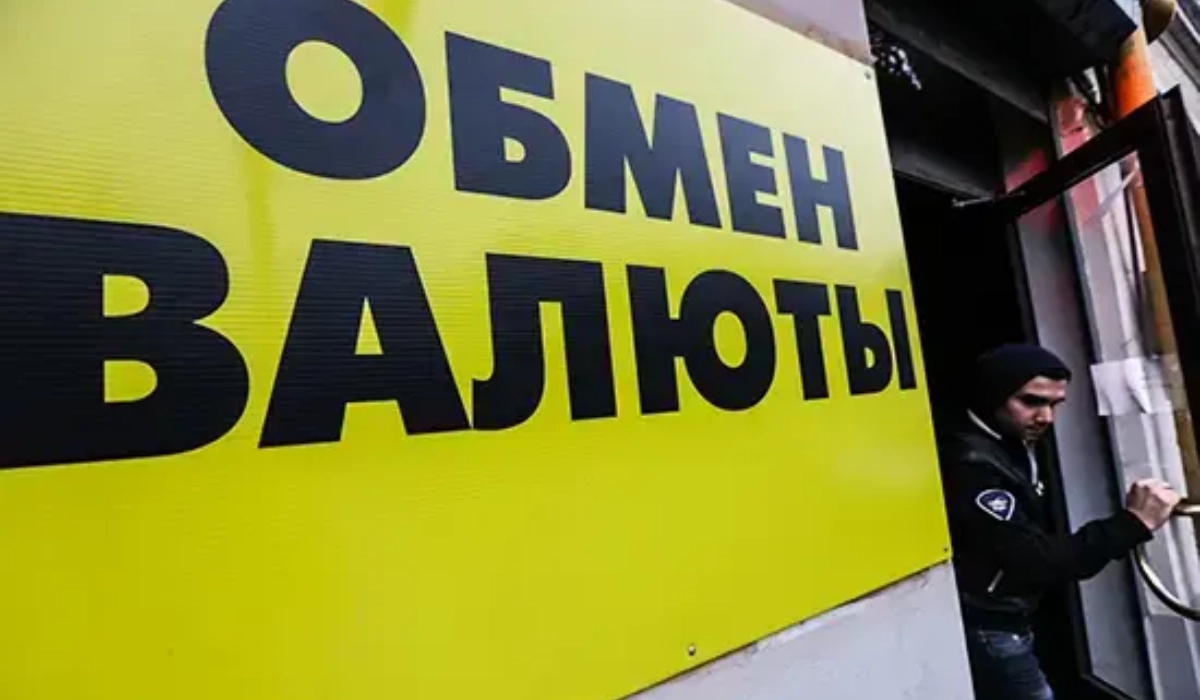
Faisalabad, Pakistan – January 6, 2026 – In a significant move to combat money laundering and illicit financial flows, Kyrgyzstan’s government has introduced stringent regulations requiring currency exchange offices to verify the origin of customers’ funds. This policy, effective immediately, applies to all transactions, including those involving foreigners, marking a pivotal step in the country’s anti-money laundering (AML) framework.
The Central Bank of the Kyrgyz Republic (NBKR) announced the directive on December 30, 2025, amid growing concerns over unregulated cash exchanges facilitating cross-border financial crimes. Officials emphasize that the measures aim to enhance transparency without disrupting legitimate trade or remittances.
Background: Rising Financial Crime Pressures in Central Asia
Kyrgyzstan, a landlocked nation in Central Asia with a population of about 7 million, has long served as a transit hub for remittances and informal trade. Remittances from migrant workers in Russia and Kazakhstan account for roughly 30% of GDP, per World Bank data. However, this influx has attracted illicit activities, including money laundering tied to drug trafficking, sanctions evasion, and cryptocurrency schemes.
Recent scandals have underscored the urgency. In 2024, Kyrgyz authorities dismantled a network laundering proceeds from opioid smuggling via exchange bureaus in Bishkek and Osh, seizing over $5 million. International bodies like the Financial Action Task Force (FATF) have repeatedly flagged Kyrgyzstan’s exchange sector for weak customer due diligence (CDD), urging reforms to exit the FATF “grey list” imposed in 2023.
The new rules respond directly to these pressures. “Unverified cash flows undermine our financial sovereignty,” NBKR Governor Abdyrakhman Mamataliev stated in a press release. “Exchange offices must now act as the first line of defense.”
Key Provisions of the New Currency Exchange Verification Rules
The regulations, outlined in NBKR Resolution No. 2025/45, impose mandatory verification protocols on over 1,200 licensed exchange points nationwide. Here’s a breakdown of the core requirements:
- Origin Verification for All Transactions: Operators must request and document proof of funds’ source for exchanges exceeding 100,000 Kyrgyz som (approximately $1,150 USD). Acceptable documents include bank statements, tax returns, invoices, or employment contracts.
- Foreigner-Specific Scrutiny: Non-residents face enhanced checks, requiring passports, visa details, and a “purpose of visit” declaration. High-risk nationalities—linked to FATF high-risk jurisdictions—trigger additional reporting.
- Transaction Limits and Reporting: Cash deals above 500,000 som ($5,750) must be reported to the NBKR’s Financial Intelligence Unit (FIU) within 24 hours. Digital tracking via a new centralized platform integrates with Interpol and Eurasian Economic Union (EAEU) databases.
- Penalties for Non-Compliance: Violations carry fines up to 1 million som ($11,500), license revocation, or criminal charges under Article 222 of the Criminal Code for facilitating money laundering.
- Training and Tech Mandates: Exchanges must train staff on red flags like structuring (splitting large sums) and adopt biometric verification tools by June 2026.
These rules align with FATF Recommendation 10 on customer due diligence, positioning Kyrgyzstan to strengthen its AML compliance rating.
Implications for Businesses, Remittance Users, and Foreigners
For local businesses, the changes could streamline legitimate operations while curbing underground “hawala” networks. “We’ve seen a 20% drop in suspicious transactions already,” noted Almazbek Asanov, head of the Bishkek Exchange Association. However, smaller operators worry about compliance costs, estimated at $2,000–5,000 per outlet for software and training.
Remittance-dependent families may face delays. A typical migrant worker sending $500 monthly from Russia now risks scrutiny if lacking paperwork. Industry experts predict a short-term shift to banks, potentially boosting formal channels.
Foreigners, including tourists and investors, will notice the tightest impact. Expats in Bishkek’s business districts report mixed reactions. “It’s prudent but could deter FDI,” said Elena Petrova, a Russian entrepreneur operating in Osh Free Economic Zone. The policy echoes similar measures in neighboring Kazakhstan and Uzbekistan, part of a regional AML harmonization push under the EAEU.
SEO tip for readers: For “Kyrgyzstan money origin checks for foreigners,” this regulation prioritizes risk-based approaches, exempting low-value tourist exchanges below 50,000 som.
Official Statements and Stakeholder Reactions
Government voices project confidence. Finance Minister Adylbek Kasymaliev hailed the rules as “a bulwark against hybrid threats,” linking them to Kyrgyzstan’s 2025 National Security Strategy. FIU Director Kubanychbek Kulmatov added, “Foreign-sourced funds will no longer flow unchecked; we’re integrating AI-driven analytics for real-time monitoring.”
Critics, including opposition MP Kamchybek Tashiev, decry overreach. “This burdens honest citizens while criminals adapt,” he posted on Telegram, garnering 15,000 views. Business lobbies like the Kyrgyz Chamber of Commerce seek grace periods for rural exchanges.
Internationally, the move earns praise. FATF spokesperson Maria Gonzalez tweeted: “Commendable progress toward grey-list exit.” The U.S. Treasury’s FinCEN, which blacklisted Kyrgyz exchanges in 2023, monitors implementation closely.
Broader Context: Kyrgyzstan’s AML Evolution and Regional Trends
Kyrgyzstan’s reforms build on 2024 amendments to the Law on Countering Money Laundering, which virtual asset service providers (VASPs) and real estate sectors. Crypto exchanges, booming post-2022 Bitcoin legalization, now face parallel origin checks amid $200 million in annual volume.
Regionally, this fits Central Asia’s crackdown. Tajikistan mandated similar verifications in 2025, while Russia’s invasion of Ukraine amplified sanctions screening. Kyrgyzstan, neutral in geopolitics, balances ties with Moscow, Beijing, and the West—making robust AML vital for aid eligibility.
Challenges persist. Corruption perceptions rank Kyrgyzstan 141/180 on Transparency International’s 2025 Index, eroding enforcement trust. Rural enforcement lags, with 40% of exchanges in remote areas lacking internet.