

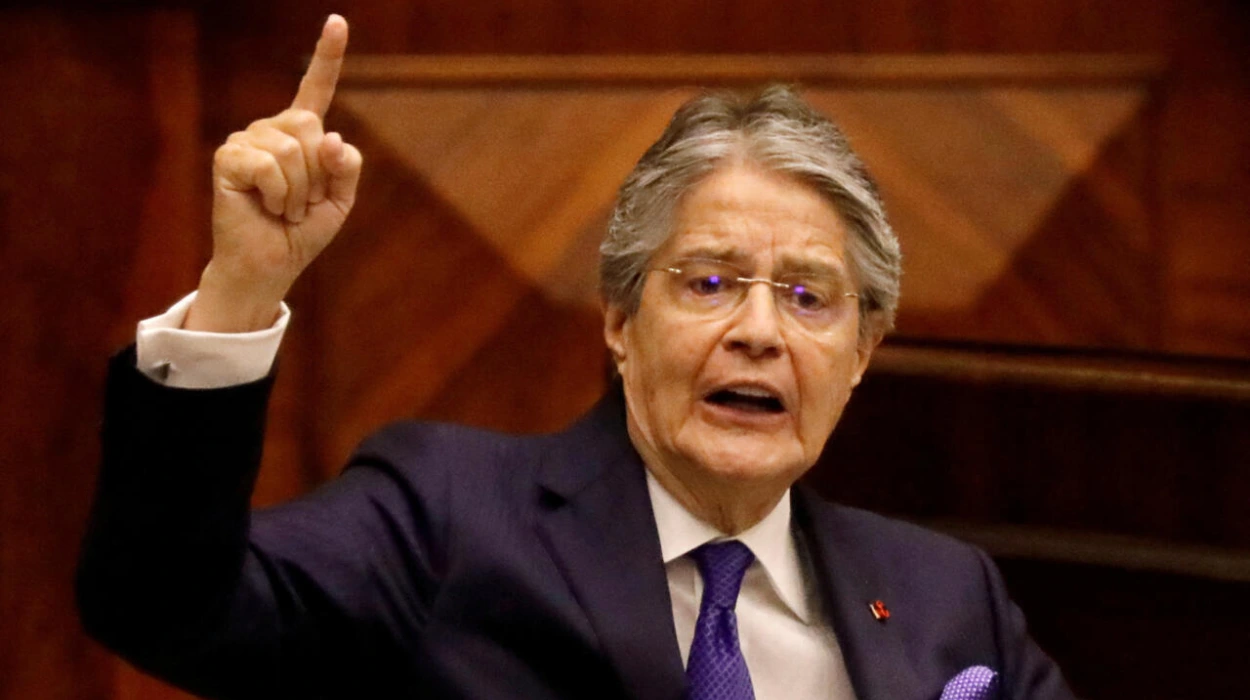
Guillermo Lasso, Ecuador’s president and former banker, features in the Pandora Papers, exemplifying global tensions between offshore wealth, political power, and public accountability. His offshore financial history offers critical insight into how political elites navigate secrecy jurisdictions and the implications for transparency.
Understanding Offshore Finance and Tax Havens
Offshore finance involves placing assets in countries or jurisdictions with low or zero taxation and strict privacy laws, called tax havens. These jurisdictions enable individuals and corporations to minimize tax liabilities and keep financial activities hidden through vehicles such as trusts, shell companies, and private interest foundations.
Guillermo Lasso’s Offshore Connections: Ambiguity and Accountability
Leaked documents from the Pandora Papers reveal that Guillermo Lasso has been linked to at least 10 offshore entities, including companies and trusts based in Panama, South Dakota, and Delaware. These offshore vehicles include private interest foundations such as Bernini and Barberini and trusts like Bretten Trust and Liberty US Trust.
Notably, in 2017, Lasso authorized transferring ownership of companies held under the Bernini and Barberini foundations in Panama to newly created trusts in South Dakota supervised by Trident Trust. Under the terms, monthly posthumous distributions were planned for family members, including $20,000 for Lasso’s wife and smaller amounts for his children and brother.
Lasso has publicly stated that he has no ongoing legal or beneficial interest in these trusts and that all offshore entities associated with him have since been dissolved or have no current legal existence. He maintains compliance with Ecuadorian law forbidding politicians from holding offshore companies and asserts these structures were established for legitimate past purposes unrelated to his public office.
Offshore Finance vs. Political Leadership: Transparency Issues
Despite Lasso’s assurances, the involvement with multiple offshore vehicles raises questions about transparency and the potential for hidden wealth among political elites. Ecuador, like many developing economies, struggles against tax avoidance, corruption, and economic inequality, challenges that are exacerbated when public officials engage with offshore secrecy.
The International Monetary Fund (IMF) and World Bank stress that offshore financial practices erode domestic tax bases vital for public investments and social programs. Transparency watchdogs highlight that political leaders’ involvement in offshore finance undermines public confidence in their commitment to equitable economic policies and anti-corruption efforts.
Contextualizing Ecuador’s Political Economy
Guillermo Lasso’s rise from banking magnate to president during Ecuador’s turbulent economic phases adds complexity to his offshore connections. Ecuador’s economy relies heavily on oil exports and remittances, with fiscal pressures and social demands creating a fragile governance environment.
Ecuador has improved its anti-money laundering regulations, yet the Pandora Papers spotlight persistent gaps in enforcement and beneficial ownership transparency. According to Transparency International’s Corruption Perception Index, Ecuador continues to face moderate corruption risks, reflecting challenges in holding powerful figures accountable.
Offshore Entities and Their Functions
The mix of private interest foundations and trusts linked to Lasso typifies common offshore structures used for wealth management and inheritance planning. Foundations in Panama typically serve to separate legal ownership from beneficial owners, often with minimal disclosure requirements.
Likewise, US trusts in states like South Dakota and Delaware offer asset protection and tax benefits under some of the world’s most opaque legal regimes. While these entities can have legitimate uses, their secrecy complicates efforts to ensure politicians’ wealth is transparent and free from illicit origins.
Statistical Insights
- The Panama, South Dakota, and Delaware jurisdictions are frequently named among top secrecy havens globally in the Financial Secrecy Index.
- Ecuador’s GDP per capita stands near $6,000, but poverty rates remain significant, intensifying public scrutiny on wealth and power asymmetries.
- Transparency International ranks Ecuador around 94th globally for corruption perceptions, indicating persistent governance challenges.
- According to ICIJ data, over 300 current and former politicians worldwide appear in the Pandora Papers, highlighting the global scale of offshore use.
Governance and Public Accountability Challenges
Lasso’s offshore financial ties represent a broader dilemma: the challenge of reconciling wealth accumulation mechanisms used by political elites with the need for accountability and public trust. Offshore secrecy enables obscuring assets that may influence policymaking or reflect conflicts of interest.
The lack of robust international standards for beneficial ownership transparency continues to allow high-level figures to exploit gaps in regulation. This weakens democratic institutions, especially in countries where judicial independence and anti-corruption agencies are still developing.
Reflecting on the Broader Picture of Global Financial Secrecy
Guillermo Lasso’s case sheds light on a pervasive issue in global finance: how politicians and affluent individuals use offshore structures to maintain financial secrecy. Although Lasso denies current involvement with these entities, the history of founding and controlling multiple offshore companies and trusts calls for rigorous scrutiny.
The Pandora Papers underscore that political leaders worldwide often engage with offshore havens in ways that challenge transparency and equitable governance. To address these concerns, stronger cross-border collaboration on financial transparency, enhanced disclosure of beneficial ownership, and tighter regulation are essential.
Ultimately, cases like Lasso’s reveal the paradox faced by many nations striving for democratic governance: leaders who benefit from opaque financial architectures risk eroding the very systems of accountability and trust needed for sustainable development and social equity.