

Offshore finance involves creating companies or trusts in jurisdictions with low or no tax rates and strong privacy laws, known as tax havens. These structures allow individuals and corporations to reduce tax liabilities, hide ownership, and protect assets from scrutiny. Although legal, such mechanisms often facilitate tax avoidance, money laundering, and corruption, complicating transparency and governance worldwide.
Horacio Cartes and Offshore Wealth: Unpacking the Evidence
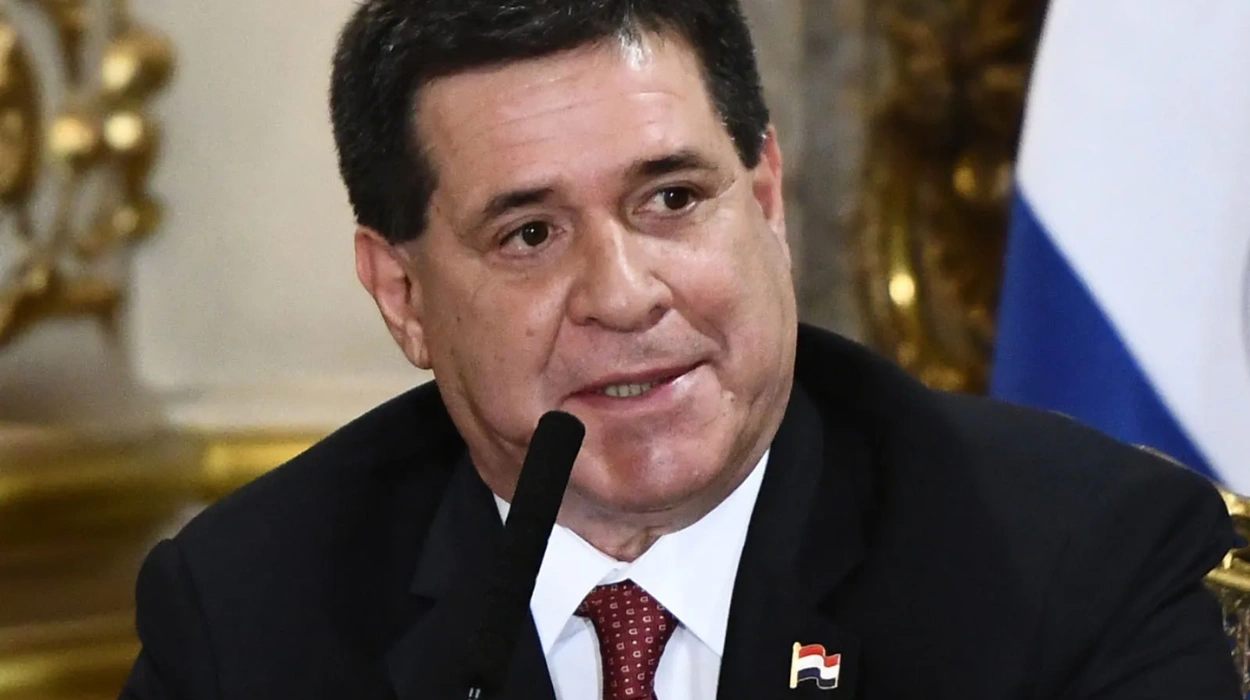
Horacio Cartes, former president of Paraguay and a dominant business figure, appears prominently in the ICIJ Pandora Papers database. During his presidency from 2013 to 2018, Cartes and his family owned offshore companies in Panama with valuations exceeding $1 million. These include Dominicana Acquisition SA, connected to Miami real estate and accounts tied to Grupo Cartes’ Banco BASA, a bank under Cartes’ corporate umbrella.
Leaked documents reveal that while Cartes’ legal advisors argue these offshore companies were used for estate planning and asset transfers and complied with tax laws, the creation and maintenance of bearer shares which mask ownership identities indicated a lack of transparency until Panama’s 2015 reforms. Cartes’ family also controlled Manantial Azul Development Corp. and Florale Business Corp., both focused on real estate and banking activities.
Notably, these companies are currently suspended due to nonpayment of fees, raising questions about the longevity and usage of such vehicles for financial opacity. The fact that bearer shares were only transferred to named owners following regulatory changes signals how offshore structures can evolve to evade scrutiny until legal pressure mounts.
Power, Wealth, and Transparency in Paraguay
Paraguay is marked by significant inequality and a political landscape often criticized for weak oversight and corruption risks. Cartes’ control of a sprawling corporate conglomerate with ventures from agriculture to banking illustrates the interconnection of economic power and political influence.
The presence of offshore companies linked to the sitting president and immediate family during governance reveals challenges in enforcing transparency norms. The use of offshore companies to manage assets especially abroad—creates a veil behind which potential conflicts of interest and asset concealment thrive.
International financial institutions such as the IMF and World Bank emphasize transparency reforms as a condition for sustained aid and credit to countries like Paraguay. Nevertheless, the case of Cartes suggests regulatory frameworks and enforcement may lag behind the sophisticated means available for elite wealth shielding.
Offshore Finance: Broader Implications for Governance
Horacio Cartes’ offshore ties represent a microcosm of a pervasive global issue where political elites utilize financial secrecy to shield wealth. According to estimates by the Tax Justice Network and the ICIJ, nearly $10 trillion in wealth is held in offshore havens, undermining tax bases worldwide and fostering unequal economic conditions.
While legal in nature, offshore structures often circumvent the spirit of financial regulation designed to promote equity and accountability. Transparency International highlights that opaque wealth among political leaders corrodes trust in public institutions and impedes anti-corruption efforts. Cartes’ case exemplifies how offshore finance can conflict with public responsibility, particularly when hidden assets coincide with policymaking power.
The Role of Reform and Enforcement
Recent international moves, including Panama’s transparency overhaul and global initiatives like the OECD’s Common Reporting Standard, aim to dismantle the opacity surrounding offshore holdings. However, cases like Cartes’ reveal gaps remain, particularly where enforcement is inconsistent or political will is compromised.
Paraguay’s challenge, mirrored in many developing economies, lies in balancing legitimate business activities with the imperative for political figures to maintain full disclosure and avoid even the appearance of impropriety. This balance is critical to fostering economic development, restoring trust, and attracting sustainable investment.
Critical Reflection on Horacio Cartes’ Offshore Involvement
The Cartes family’s use of offshore companies during his tenure highlights tensions between legal tax planning and ethical governance. Public officials must not only comply with the law but also embody transparency to uphold legitimacy. The maintenance of bearer shares and delayed compliance with transparency regulations undermines this principle.
Ultimately, Horacio Cartes’ offshore financial activities mirror a global challenge: financial secrecy for elites undermines fair governance and the equitable distribution of national wealth. His case underscores the urgent need for international cooperation, rigorous enforcement, and proactive transparency reforms to restrict offshore finance from eroding public accountability.