

Offshore finance refers to the use of foreign jurisdictions commonly called tax havens that offer low or zero tax rates and strict secrecy laws to create companies or trusts. These mechanisms allow individuals and corporations to hold wealth and conduct financial activities obscured from their home countries, often minimizing taxes or hiding assets. While legal in many respects, offshore finance can facilitate corruption, tax evasion, and undermine global financial transparency.
Laurent Lamothe and Offshore Holdings: A Data-Driven Link
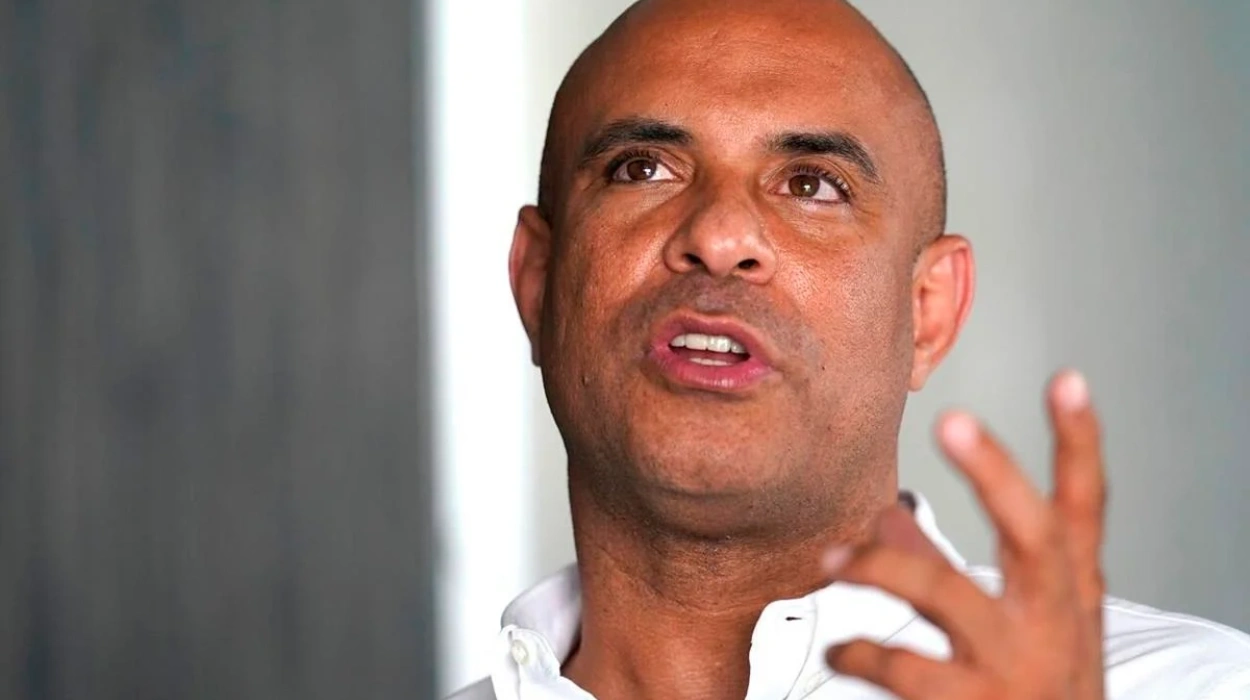
Laurent Lamothe, former Prime Minister of Haiti and an entrepreneur in telecommunications, appears in the ICIJ’s Pandora Papers offshore leaks database with ties to multiple companies registered in the British Virgin Islands, a renowned tax haven. Between 2002 and 2008, Lamothe established three offshore companies through Trident Trust, which he partially retained ownership of even during his tenure in government. One such entity, Lightfoot Ventures Ltd., was described internally at Trident Trust as a significant telecommunications provider across regions including Haiti, South Africa, and the U.S.
Leaked documents do not specify the nature or volume of Lamothe’s offshore holdings, reflecting a common opacity in offshore structures. However, his involvement raises critical questions about the use of offshore vehicles to shield wealth linked to public officials in countries grappling with development challenges and financial transparency deficits.
ICIJ reporting and Haitian media have pointed to gaps between Lamothe’s public stance on anti-corruption and his offshore financial positions such as when he advocated anti-corruption laws in Haiti’s Parliament in 2014 while reportedly keeping beneficial ownership in offshore firms. Though he resigned from directorship before entering government, he stayed the beneficial owner, a fact scrutinized during Senate investigations that Lamothe dismissed as politically motivated. Haiti’s audit court reportedly cleared him, but opaque offshore involvement and refusal to answer detailed questions continue to cloud public trust.
Offshore Finance, Power, and Secrecy: The Broader Haitian Context
Haiti ranks among the poorest nations worldwide but is also plagued by political instability and endemic corruption. The existence of offshore entities linked to high-ranking officials like Lamothe despite anti-corruption efforts illustrates systemic challenges in ensuring transparency and accountability. The World Bank and IMF often tie aid and investments to governance reforms, but offshore financial secrecy can undermine such efforts by enabling resource diversion.
Prominent watchdog groups argue that offshore structures facilitate illicit financial flows out of developing countries, draining resources needed for public services. Lamothe’s offshore ties underscore a pattern observed globally, where political elites use tax havens to insulate personal wealth from public scrutiny, raising ethical concerns about governance and the equitable distribution of national wealth.
The Global Picture: Offshore Wealth and Public Accountability
Lamothe’s case typifies how political leaders, especially in fragile states, engage with offshore finance amid global financial secrecy frameworks. According to ICIJ data and other investigations like the Panama and Pandora Papers, an estimated trillions of dollars are held offshore worldwide, often concealed behind layers of shell companies.
Studies by the IMF and OECD note that the secrecy provided by jurisdictions such as the British Virgin Islands, Cayman Islands, and Panama enables tax avoidance and sometimes evasion, complicating efforts to combat corruption and illicit financial outflows. Furthermore, these financial flows disproportionately affect countries with weaker institution building, entrenching inequality and hampering economic development.
Transparency International highlights how offshore wealth accumulation by elites exacerbates governance deficits and public cynicism, complicating reform efforts. Lamothe’s refusal to fully clarify his offshore holdings exemplifies the accountability challenges linked to offshore financial secrecy.
Critical Analysis: Laurent Lamothe and the Paradox of Governance
The dichotomy in Lamothe’s public and private financial affairs presents a critical case study. As an anti-corruption advocate while in office, his undisclosed beneficial ownership of offshore companies illustrates inherent conflicts between political rhetoric and financial practices. This contradiction erodes public trust and highlights weaknesses in regulatory frameworks both domestically and globally.
Lamothe’s narrative also reflects how offshore finance allows political figures to operate above accountability standards that they impose on others or promote publicly. His case is emblematic of a broader phenomenon where offshore secrecy not only protects private wealth but perpetuates unequal power dynamics, especially in developing countries.
Implications for Global Financial Policy and Reforms
Lamothe’s offshore involvement suggests several lessons for global and national policymakers:
- Strengthening Beneficial Ownership Transparency: Countries must require public officials to disclose full beneficial ownership of offshore companies to prevent conflicts of interest.
- Enhancing International Cooperation: The global community should intensify information sharing and implement standards across jurisdictions to close secrecy loopholes used by elites.
- Linking Aid to Governance Transparency: Development institutions must condition aid on measurable reforms in financial transparency and anti-corruption compliance.
- Civil Society and Media Role: Investigative journalism, as demonstrated by ICIJ’s Pandora Papers, is critical for exposing hidden wealth and pressuring policymakers for reform.
Reflecting on Laurent Lamothe’s Case in Global Financial Secrecy
Laurent Lamothe’s offshore companies, maintained secretly amid a public anti-corruption drive, encapsulate the challenges of offshore finance intertwining with political power. His story illustrates how global financial secrecy mechanisms hinder public accountability, particularly in vulnerable countries like Haiti.
The global magnitude of offshore wealth conceals networks that can undermine democracy, economic justice, and development. Lamothe’s case is a stark reminder that without robust transparency and enforcement, financial secrecy remains a formidable barrier to equitable governance and sustainable societal progress.