

Offshore tax havens like the British Virgin Islands (BVI) function through shell companies that obscure beneficial owners via nominees, trusts, and lax reporting, shielding assets from taxes, audits, and public view. These jurisdictions enable cross-border wealth parking with minimal disclosure, often layered across borders for added anonymity. Though defended as privacy tools, they facilitate evasion, as the Pandora Papers’ 11.9 million leaked files from 14 secrecy providers starkly reveal.
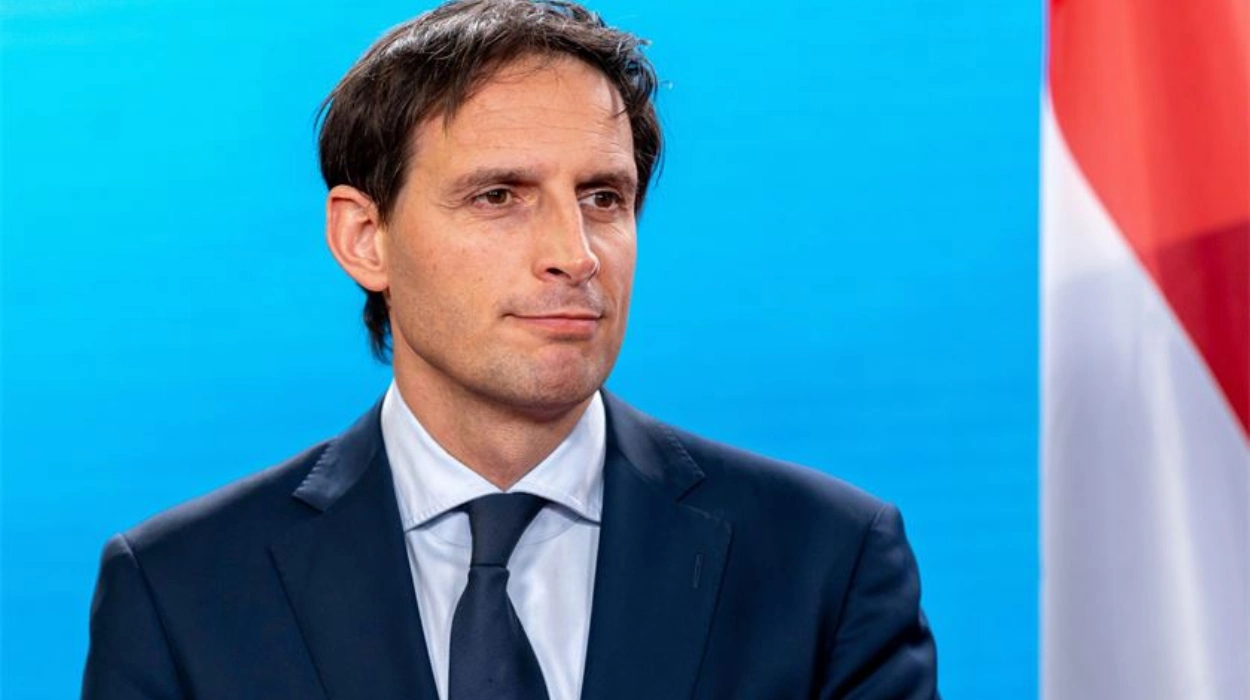
Wopke Hoekstra, Netherlands Minister of Finance from 2017, illustrates this irony: documents link him to BVI firm Candace Management Ltd. shares acquired as a senator, sold only days before his appointment raising pointed questions about conflicts in a role demanding transparency.
Candace Management: A Web of Bankers and Safaris
Leaked records show Hoekstra obtained Candace Management Ltd. shares in 2009, adding more in 2013 and 2014 while serving on Senate committees for finance, foreign affairs, and justice. By May 31, 2017, he held 627 shares in the BVI entity. Fellow shareholders included ABN AMRO Bank executives: Tom de Swaan (over 1,500 shares), ex-chairman of ABN AMRO’s supervisory board and UK Financial Services Authority member; and Jeroen Harderwijk (over 15,300 shares), former ABN AMRO director.
Candace owns 25% of African Spirit Group (Asilia Africa), a luxury safari operator co-founded by Harderwijk, praised by Conde Nast Traveler in 2019 for progressive hiring. NorFund, Norway’s development fund, holds 32%. Hoekstra emailed ICIJ that he divested one week before his October 2017 finance minister role—yet the timing, post-McKinsey tenure and amid parliamentary duties, critically invites scrutiny: did a top fiscal overseer prioritize personal offshore gains over divestment norms?
This ABN AMRO-linked network, blending Dutch banking elite with exotic investments, underscores how policymakers embed in secrecy structures they regulate.
Numbers Behind the Global Veil
Hoekstra’s case fits a vast pattern. Pandora Papers exposed 336 politicians and public officials worldwide, including ministers from G7 nations. Tax Justice Network estimates $21-32 trillion in offshore wealth evades $200-300 billion in annual taxes, with IMF data showing advanced economies lose 1-2% of GDP to base erosion.
In Europe, where Hoekstra operated, the EU loses €150-190 billion yearly per Commission figures; World Bank reports secrecy jurisdictions host 2.5 million entities, correlating with lower transparency scores Netherlands at 80/100 on Transparency International’s 2023 Corruption Perceptions Index, yet flagged for facilitating outbound flows. Pandora revealed 29 current/former ministers with offshore ties, amplifying inequality: top 1% capture 22% of income (World Inequality Database) partly via havens.
Europe’s Facade of Fiscal Virtue
The Netherlands positions as a gateway home to “conduit” firms routing €4 trillion annually (EU Tax Observatory). Hoekstra, as finance minister, championed EU tax harmonization and anti-haven crackdowns, yet his Candace stake critiques this duality: advocating public austerity while holding BVI shares in a bank-tied safari venture.
ABN AMRO, bailed out with €22 billion in 2008 taxpayer funds, ties directly de Swaan and Harderwijk’s roles evoke “revolving doors.” OECD’s 2023 harmful practices list spared Netherlands but urged beneficial ownership registers; partial compliance persists, per FATF evaluations.
Conflicts at the Apex of Power
Public officials face heightened scrutiny. IMF studies link politician-owned offshore assets to policy biases, estimating 10-15% corruption risk premium in haven-reliant systems. Hoekstra’s McKinsey-to-politics path—retaining consulting work in Senate—mirrors patterns where 80% of Pandora-exposed figures hailed from secrecy jurisdictions (ICIJ).
Selling shares pre-appointment appears compliant, yet the proximity acquiring during oversight of finance fuels critical doubts on judgment. Global Witness reports decry such “elite capture,” where ministers enforce rules selectively. Dutch voters, funding social nets at 25% GDP (World Bank), deserve unconflicted stewards; offshore opacity erodes this.
Watchdog Warnings and Reform Stagnation
Pressure mounts unevenly. Post-Pandora, EU pushed public registries, but opt-outs linger; Common Reporting Standard (CRS) exchanges data across 100+ nations yet misses full beneficial chains. Tax Justice Network scores Netherlands 62/100 for transparency middling amid its €2 trillion in treaty-shielded flows.
Hoekstra’s non-response beyond divestment claims amplifies gaps: no disclosure of proceeds or safari venture oversight. World Bank urges “ultimate beneficial owner” mandates; without enforcement, ministers like him exploit twilight zones between legal and ethical.
Policy Hypocrisy in the Spotlight
Netherlands’ corporate tax rate 25.8% draws multinationals, yet outbound havens thrive. Hoekstra’s role in EU blacklists (e.g., Panama pre-delisting) contrasts his BVI exposure, critiquing a system where enforcers partake. IMF recommends politician asset bans in havens; few adopt.
Hoekstra’s Case: Symbol of Enduring Secrecy
Wopke Hoekstra’s Pandora Papers links epitomize global financial secrecy’s insidious reach even into Europe’s fiscal bastions. A finance minister decrying tax avoidance held substantial BVI shares in an elite bankers’ safari holding, divesting only at the 11th hour. This reveals not isolated opportunism, but systemic flaws: 600 ICIJ journalists across 117 countries uncovered patterns sustaining $30 trillion shadows.
It indicts a world where power brokers sworn to equity leverage havens they publicly condemn, per World Bank analyses. Hoekstra’s saga demands reckoning: mandatory pre-office divestments, real-time public disclosures, and haven bans for officials. Absent these, secrecy endures, trust fractures, and inequality festers proving elites’ wealth shields accountability more than ever.