

Offshore finance thrives in tax havens jurisdictions like the British Virgin Islands (BVI) and Belize that offer anonymity through shell companies, trusts, and foundations. These entities allow assets to be shielded from public scrutiny, taxes, and regulations, often via nominee directors and bearer shares. While legal, they enable elites to obscure wealth origins, as exposed by leaks like the Pandora Papers.
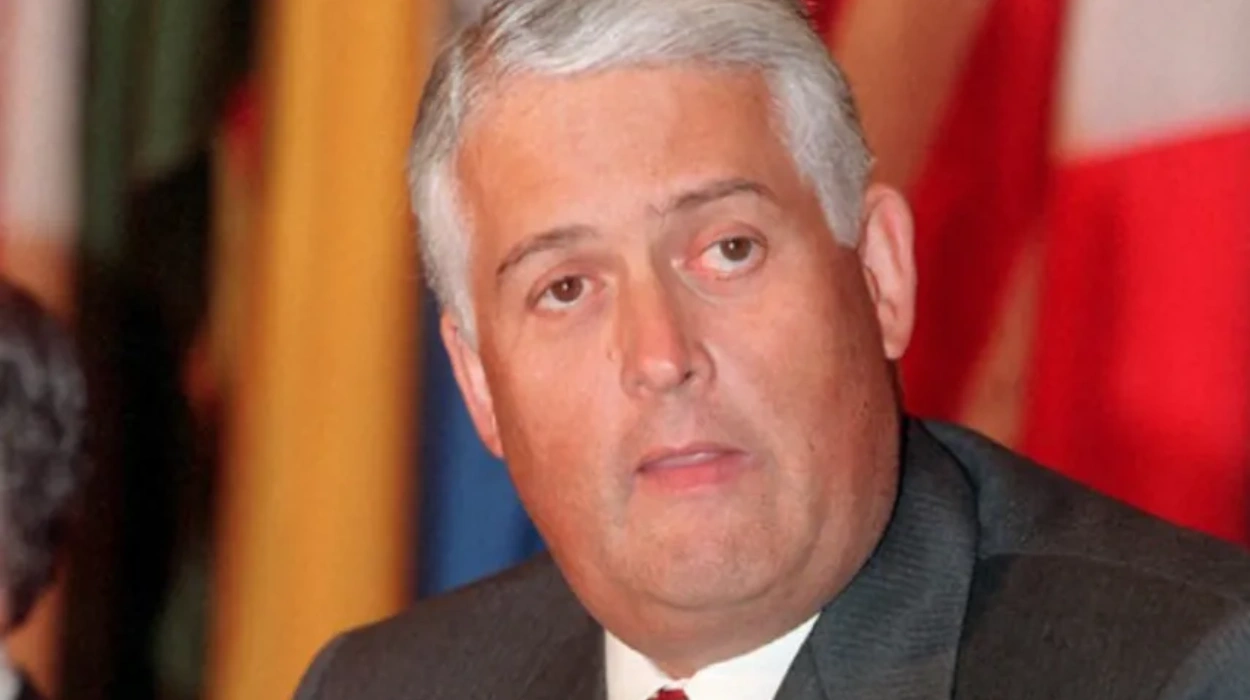
The International Consortium of Investigative Journalists (ICIJ) revealed over 11.9 million files from 14 financial firms, implicating 336 politicians and public officials worldwide. Ernesto Pérez Balladares, Panama’s president from 1994 to 1999, exemplifies this pattern: leaked documents tie him directly to offshore vehicles created during his tenure, raising questions about self-enrichment amid public service.
A President’s Offshore Web Unravels
Pérez Balladares, who rose from finance minister where he negotiated Panama Canal treaties to the presidency post-Noriega, didn’t just oversee policy; he allegedly built personal secrecy structures. ICIJ files show his role in three offshore companies: Berkland Investments Ltd. and Barlock Investments Ltd., both BVI-registered during his presidency, and Bradeton Investments Ltd. in Belize.
Berkland, active from 1995 to 2004, listed Pérez Balladares as an authorized signatory on its bank account. In 2003, Panamanian prosecutors froze $4 million in that account amid bribery probes funds transferred just weeks prior ($850,000) to Luntrel Investments Ltd., another BVI entity owned by his three daughters. Luntrel later funneled $50,000 to his 2018 presidential bid, per La Prensa reporting.
Critically, these weren’t passive holdings. Bradeton, set up six weeks before his term ended in 1999, acted as trustee for Berkland shares, with one daughter as owner. Barlock, registered in 1998, named his wife as owner. Overarching this was the Seaside Foundation, a 2003 Panamanian private interest foundation where Pérez Balladares served as “protector” empowering him to direct asset distribution tax-free to his daughters as beneficiaries. Its accounts spanned Panama and the Bahamas, embodying unchecked discretion.
Pérez Balladares ignored ICIJ’s requests for comment, fueling perceptions of evasion. This network, woven while Panama grappled with post-dictatorship reforms, underscores a leader prioritizing opacity over transparency.
Global Scale: Stats Behind the Shadows
Pérez Balladares’ case mirrors a systemic issue. The Pandora Papers exposed 29,000 offshore accounts linked to Latin American power players alone, per ICIJ analysis. Globally, the Tax Justice Network estimates $21-32 trillion in untaxed offshore assets, depriving governments of $200-300 billion annually in revenue funds that could bolster public services.
The IMF warns tax havens erode domestic tax bases, with developing nations losing 2-3% of GDP yearly. World Bank data shows Panama, a hub due to its canal and lax rules, hosts over 400,000 International Business Companies (IBCs), many dormant shells. Watchdogs like Transparency International note 80% of Pandora politicians hailed from secrecy jurisdictions, correlating with corruption perceptions: Panama scores 35/100 on its 2023 index.
In Latin America, where inequality festers Gini coefficients averaging 0.48 per World Bank such havens exacerbate divides. Pérez Balladares’ $4 million frozen Berkland funds, amid Panama’s 1990s poverty rates above 50%, highlight this disconnect: leaders amass hidden wealth while citizens face austerity.
Panama’s Canal of Secrecy
Panama’s geography birthed its financial allure. Pérez Balladares’ Canal treaties paved joint U.S.-Panama control, boosting GDP but embedding a dual economy: visible trade versus invisible finance. Today, Panama’s registry rivals BVI’s 400,000 entities, per ICIJ.
Private foundations like Seaside exemplify Panamanian innovation assets untaxed, beneficiaries anonymous. The OECD’s 2023 list flags Panama for harmful practices, despite reforms. Pérez Balladares’ protector role in Seaside critiques this: a ex-finance minister exploiting tools he helped normalize, blending statecraft with self-interest.
Power, Accountability, and the Erosion of Trust
Offshore secrecy isn’t victimless. IMF studies link it to money laundering, estimating $1-2 trillion flows yearly, undermining anti-corruption efforts. Pérez Balladares’ family transfers from Berkland to Luntrel, then politics suggest laundering risks, especially post-bribery freeze.
Public officials like him swear fiduciary oaths, yet Pandora reveals 35 current/former heads of state with offshore ties. Watchdog reports from Global Witness decry this as “state capture,” where leaders hollow out institutions. In Pérez Balladares’ era, Panama privatized state firms; his offshore moves question if public assets fueled private gain.
Reforms lag: the EU blacklisted Panama in 2020 before delisting, but enforcement falters. FATF mutual evaluations give Panama partial compliance on beneficial ownership, per 2024 reviews.
Broader Implications: A Call for Reckoning
Ernesto Pérez Balladares’ offshore entanglements represent the archetype of global financial secrecy’s elite beneficiaries. A democratically elected leader, instrumental in Panama’s democratic dawn, allegedly diverted from accountability via havens designed for the powerful. This isn’t isolated Pandora’s 600 journalists across 117 countries unveiled patterns where 1,000+ companies hid billions.
Yet it indicts a system: havens persist because demand from politicians endures, per World Bank analyses. Pérez Balladares’ silence amplifies the critique when leaders evade scrutiny, public trust erodes, inequality widens, and democracies weaken. True reform demands registers of beneficial owners, automatic info exchange (as in CRS, covering 100+ nations), and political will to close loopholes.
His case endures as a cautionary mirror: power unchecked by transparency breeds shadows where wealth multiplies, but accountability fades.